More than 32,000 hectares of forest and countryside in Guadalajara’s Sierra Norte burned during the wildfire emergency, information from local authorities. The fire began on 16 July 2026 in La Mierla and was later confirmed to have burned 34,447 hectares, most of them within the Sierra Norte Natural Park. Described as the most destructive wildfire in Castilla-La Mancha’s history, it remained active for 51 days before being declared extinguished on 4 September.
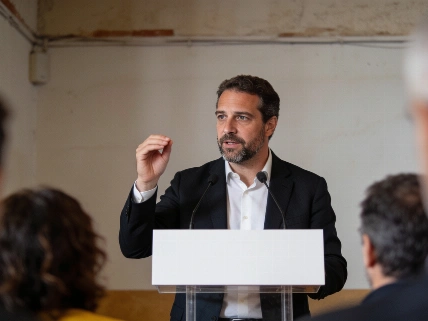
On Wednesday, Prime Minister Pedro Sánchez visited the Advanced Command Post in Tamajón, accompanied by Castilla-La Mancha president Emiliano García-Page. Both leaders addressed the media, describing the scale of the disaster and the response underway at the time. Sánchez also met firefighting brigades and voiced support for those battling the flames near La Mierla.
Emergency shelters opened for residents displaced by the fire. In Humanes, a local sports center became a temporary refuge, where 76 people were staying at the time. In Molina de Aragón, evacuees from Selas found shelter at the Escuela Hogar Peñablanca. The fire prompted evacuations in 34 localities and confinement measures in another 14 populations; local reporting put the number of evacuees at approximately 1,200 to 1,500.
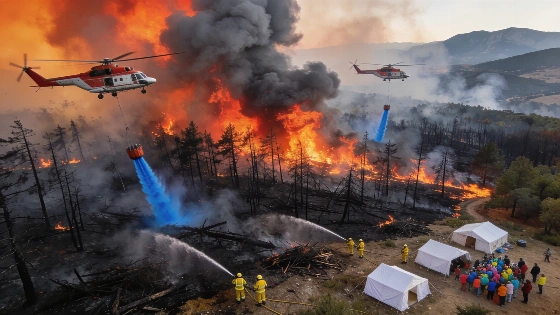
Images showed scorched forests and burned trees, while thick smoke rose above towns such as Albendiego and Hijes. Firefighting efforts included aerial water drops, with helicopters targeting hotspots in Selas and surrounding areas. Local residents helped cool areas after fire fronts passed, while specialized units from the Military Emergency Unit (UME) continued ground operations.
The fire affected several municipalities, including La Mierla and Albendiego, with damage also reported in Selas. Initial accounts linked the ignition to agricultural work involving a combine harvester, but three months after the blaze began, its cause remained publicly unresolved. The Government Subdelegate in Guadalajara said the matter was in the judicial process, as reported by Guadalajara Diario.
The burned field became the focus of a 75-kilometre restoration march organized in October by Sierra Norte associations, with forest firefighters and residents taking part. Around 40 forest firefighters joined the march, whose participants called for recovery measures and a more professional approach to wildfire prevention and suppression. Forest firefighter Juan Jorge de la Rosa said the purpose was “to share the route with local residents and hear about everything they have lost.” He described the scene simply: “It is painful to see this.” EFE Verde reported that participants crossed a field covered by a continuous mantle of ash.
The fire’s effects reached beyond the area burned. Cadena SER Castilla-La Mancha, citing an assessment by Ecologistas en Acción, reported unusually high tropospheric ozone in the Sierra Norte and wildlife displacement, even as air quality in Guadalajara city had improved by more than 50%. The assessment identified ozone peaks and impacts on fauna as continuing consequences of the blaze.
The situation also drew comparisons with other recent extreme weather events in Spain, including severe storms and heatwaves that have increased fire risks in regions such as Valencia and Murcia. For further context on how climate extremes are affecting Spain, see this analysis of recent storms and fire risks in the southeast.
Wildfires recur in Spain, particularly during summer, when high temperatures and dry conditions prevail. The October restoration campaign sought to keep attention on the long-term recovery of the affected territory after the operational emergency had ended. The scale of the Guadalajara blaze shows how vulnerable rural areas are to such disasters and how difficult it can be to restore a protected field.