José Luis Rodríguez Zapatero says the most valuable jewels found in his office were a personal gift from Saudi King Abdullah bin Abdulaziz al-Saud. His defence wants judicial cooperation to confirm the account and challenge the valuation.
José Luis Rodríguez Zapatero has told the National High Court that the most valuable jewels found in his office were a personal gift from King Abdullah bin Abdulaziz al-Saud in 2007. The court is examining possible contraband and tax offences linked to the pieces. His defence wants the judge to seek confirmation from Saudi Arabia nearly two decades after the alleged handover.
The former prime minister says the gift was presented in June 2007 at the family residence in the Palacio de la Moncloa during a visit by the Saudi monarch. He describes it as a personal gesture that he accepted out of courtesy and as a sign of gratitude and respect. He submitted the account in writing to the National High Court four months after the jewels were found in his office on 19 May.
Official gift registers reportedly show that Zapatero declared other presents from the Saudi monarchy in 2007 and 2008, a record that may be relevant to the court’s review of how the jewellery was handled.
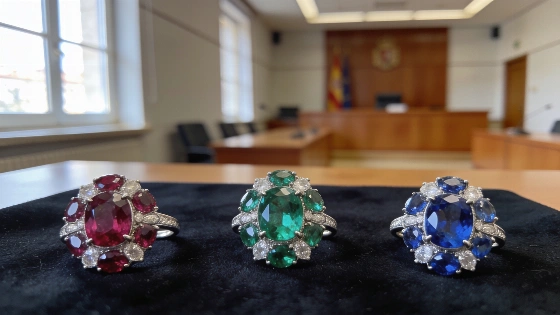
The 12 pieces at the centre of the explanation account for about 90% of the collection's total value. They form three sets. Each has a necklace, earrings and bracelets. One is a ruby set made from 18-carat white gold. Another is an emerald set with stones from Zambia. The third is an 18-carat white-gold sapphire set. The ARA had access to the document. Reports put the wider collection at roughly 60 to 80 items. According to the defence, the three sets account for more than 90% of its value.
That is now the main point in the defence's case.
Zapatero's lawyer says he contacted the head of protocol at the Saudi royal court through the country's embassy in Madrid on 16 June. That was one day before Zapatero appeared before Judge José Luis Calama as an investigated person. A second letter followed on 12 August. It warned that international judicial cooperation could be requested.
The defence now wants Calama to send a letter rogatory to Saudi Arabia. It would ask whether the jewels were handed over in 2007. Reports by ARA and El Mundo describe the request as an effort to obtain confirmation from outside Spain rather than rely only on Zapatero's written account.
Several reports citing the expert assessment put the collection’s total value at approximately €1,323,915. The defence disputes that figure and says the value at the time of the alleged 2007 gift cannot simply be inferred from a present-day assessment including taxes and insurance-related calculations.
The filing also says the valuable pieces were kept with family jewellery and gifts from friends. According to Zapatero's account, they were never used or put to another purpose. He also says he did not know their material value. The other 67 items found in the safe are described as family possessions with no relevance. Many are worth less than €1,000 or have no value.
Zapatero had earlier given only a broad explanation. He said some jewels were inherited and that the rest came from a courtesy gift received many years ago. He did not identify the donor. His defence now says the delay was caused by the time that had passed and the need to obtain confirmation before giving a precise account.
The valuation is another point of dispute. Ansorena has valued the collection at €1.3 million. Several reports citing the expert assessment put the total at approximately €1,323,915. Zapatero's lawyer rejects that figure as well above the pieces' real value. The defence says the estimate uses present-day prices, including taxes and insurance-related calculations, rather than the value of the jewels in 2007. The filing therefore says the current assessment cannot establish what they were worth when they were allegedly given.
Judge Calama ordered a new gemological assessment by Yanes on Monday. He gave the former prime minister three days to provide more information. The earlier valuation led to a separate investigation into alleged contraband and tax offences. That makes the jewellery's origin and price central to the case, not merely personal details. Government spokesperson Elma Saiz has stressed the presumption of innocence when answering questions about the case and the court's deadline.
The same investigation has also led to a separate judicial move involving Simon Verhoeven. The Dutch investor was arrested at Frankfurt am Main airport on 21 August after a seven-month search order. He is due to arrive in Spain on Thursday. Calama has ordered his temporary detention at Soto del Real until he appears on Friday at 9 a.m. He is suspected of criminal organisation, money laundering, influence peddling and misappropriation.
Verhoeven provided three loans to Plus Ultra before the airline received a Spanish government rescue package. The UDEF identified possible irregularities in transactions involving the companies he used. One question is whether rescue funds could have been used to launder the loans.
Against that wider background, Zapatero's filing tries to turn the jewellery dispute into a question that Saudi authorities can verify: whether the gift existed and what it was worth at the time. If the court finds the written explanation insufficient, it may seek international legal assistance from Saudi Arabia. Until that evidence is tested, the filing narrows the issue but does not settle the court's separate investigation.