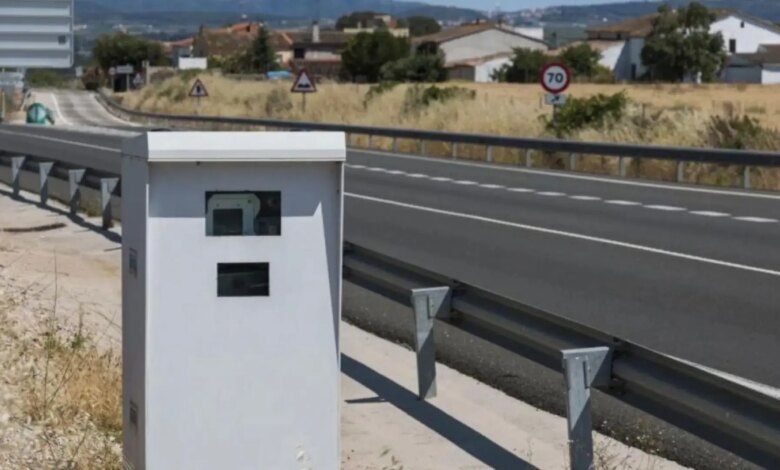
The installation of new stationary speed cameras in Burgos has become a real challenge for local drivers. Now, speed control covers both directions, and the devices themselves can be moved to different locations around the city. This is more than just another safety measure—it’s a complete shift in how speed violations are tackled on urban streets.
Drivers who were used to relying on familiar camera locations now find themselves in a situation where predicting the next fine is nearly impossible. The new system leaves no loopholes: anyone who decides to accelerate risks being caught, regardless of the direction they are traveling.
Technology and capabilities
The speed cameras installed in Burgos are equipped with advanced Doppler technology, allowing them to accurately measure vehicle speed even in heavy traffic. This equipment can simultaneously monitor multiple lanes and directions, greatly increasing the effectiveness of detecting violations.
Unlike traditional cameras that recorded only one lane, the new devices cover the entire roadway. This approach not only increases the number of detected speeding incidents but also enables rapid data processing, speeding up the process of issuing fines.
Particular attention has been given to areas with heavy traffic and high accident rates. Cameras have been installed on Caja Círculo Avenue and in the El Plantío district—locations where speeding often causes accidents. Here, speed limits are lower than on highways and traffic flow remains consistently high.
Flexibility and strategy
The main feature of the new system is its mobility. Although only two speed cameras are installed in the city, four stationary cabins have been set up for them. This means the devices can be moved to different spots, so drivers never know for sure where a camera might be waiting.
This approach forces drivers to observe the speed limit throughout their journey, not just in familiar ‘danger zones.’ As a result, city authorities believe that not only does the number of violations decrease, but the overall accident rate drops as well.
The cost of implementing the new system amounted to €90,909, including maintenance and infrastructure expenses. For the city, this is an investment in safety; for drivers, it is an extra reason to consider the consequences of speeding.
Outcomes and expectations
Since the new speed cameras were launched in Burgos, no adaptation period was provided—fines were issued immediately. This strict approach is explained by the need to quickly influence driver behavior and prevent accidents in the most dangerous areas.
Last year, fixed cameras in the city recorded over 5,250 speeding violations, while mobile cameras detected another 1,447 offenses. During 229 mobile inspections, almost 30,000 vehicles were checked, with a particular focus on streets with a 30 km/h speed limit, especially near schools and pedestrian zones.
With the introduction of new devices, the number of fines is expected to rise. Many drivers may not immediately realize that cameras now monitor traffic in both directions, and could be caught out by their habit of slowing down only when facing the radar. That tactic will no longer work — monitoring has become comprehensive.
Impact on the city
The deployment of new radars is part of an extensive program to reduce accidents, carried out by the municipality and local police. Authorities are convinced that only strict and unpredictable monitoring can change driver behavior and make city streets safer.
Alongside the installation of new cameras, efforts continue to inform the public about the importance of observing speed limits. Special attention is given to areas with a high concentration of pedestrians and children, where even minor speeding can lead to tragedy.
It’s too early to talk about long-term results, but the first few weeks have shown that drivers are becoming more cautious, and violations have dropped significantly in the zones with new radars. However, as experts note, only time will tell if this leads to a real reduction in the number of accidents.
In Burgos, the introduction of innovative speed cameras has become one of the most talked-about events in recent months. The city, located in the autonomous community of Castilla y León, is known for its commitment to road safety. Local police are actively adopting modern technologies to make the streets safer for all road users. The new cameras, capable of detecting violations in both directions and moving between different locations, have become symbols of change and examples for other cities in Spain looking to improve road oversight.