The transition of humanity from scattered tribes to complex state formations has long puzzled historians. Traditionally, it was believed that the development of agriculture and food surpluses created the conditions for the emergence of the first states. However, new research casts doubt on this established perspective and offers a completely different view on the origins of civilization.
Scientists have found that the key factor was not just the cultivation of crops, but the ability to tax the harvest. It turns out that grain crops such as wheat, barley, rice, and maize played a decisive role in shaping the first state structures. Their properties made it easy to account for, collect, and store the harvest, enabling the creation of an efficient taxation system.
This conclusion upends the traditional view of how the first states arose. Instead of considering food surpluses the root cause of elites and power, researchers argue that it was the emergence of organized authority that actually drove the development of intensive agriculture and the large-scale cultivation of grains.
Grain as a tool of control and power
Analysis of historical data revealed that several thousand years separated the domestication of plants and the emergence of the first states. Although agriculture began in different regions of the world about 10–12 thousand years ago, the first large states appeared only 5.5 thousand years later. This led scientists to wonder: why is there such a long gap between these two events?
Researchers Kit Opie and Quentin Atkinson conducted a comprehensive comparison of 868 communities worldwide to determine which came first—cereal cultivation, taxation, writing, or statehood. Their analysis found that the ability to levy taxes on grain harvests was the catalyst for the creation of the first state institutions.
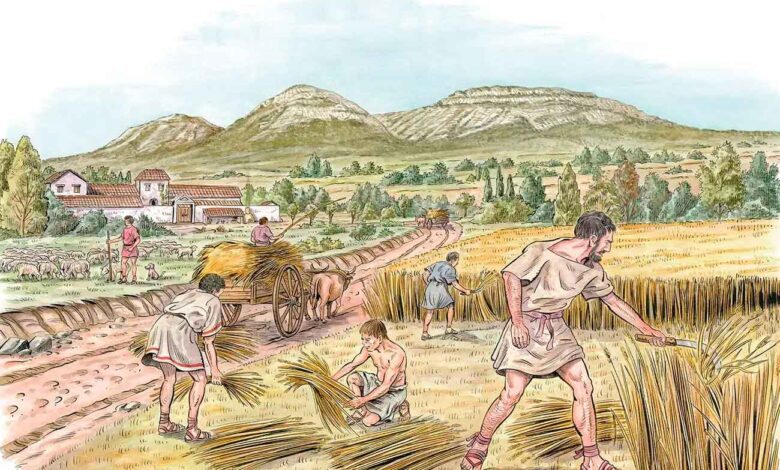
Cereal crops proved to be the ideal target for taxation. They are easy to cultivate in open fields, harvests are simple to measure and collect, and the grain can be stored for extended periods. Unlike root crops, which grow underground and spoil quickly, grain allowed authorities to control food production and distribution.
Power gives rise to agriculture, not the other way around
The study’s results were unexpected: the emergence of states most often preceded the development of intensive agriculture, rather than resulting from it. This means that the elite and ruling class first established government structures and only then organized surplus production to serve their needs.
States consolidated their power by controlling the population and resources, which enabled them to organize irrigation and expand cultivated land. In this way, political organization became a driving force for agricultural development, rather than the other way around. This conclusion is supported by other studies, which showed that it was usually the political system that led to the shift towards intensive agriculture.
Cereal crops played a particularly crucial role. In regions where they were not cultivated, states hardly ever emerged. But where wheat, barley, rice, or corn became dietary staples, the likelihood of statehood increased dramatically.
Taxes, writing, and social hierarchy
Why did cereals become the foundation of the first empires? The answer is simple: they are easy to tax. Grain fields are clearly visible, their area is easy to measure, and the harvest can be accurately calculated. Cereals ripen at the same time, allowing the timing of tax collection to be precisely determined. In addition, grain can be stored in granaries and used as needed.
Root crops and fruit trees were not suitable for such a system. They are difficult to monitor, their yield cannot be accurately calculated, and storing them is problematic. Therefore, authorities gradually converted fields to cereal crops, even if the diet had previously been more diverse.
Interestingly, the emergence of writing is also linked to the need for tax accounting. In societies where taxes were not collected, writing systems rarely developed. But wherever there was a system of tax collection, writing often appeared. This allowed the elite to consolidate their power and establish new social institutions.
Health and Societal Consequences
The transition to mass cultivation of grains also had negative consequences. Archaeological evidence shows that as grain became a bigger part of the diet, people’s health declined. They became shorter, experienced more dental problems, and their overall health worsened. Nevertheless, population numbers increased, fueling further state development.
It’s worth noting that the ‘crop tax — state formation’ model did not work the same way in every region. For example, in the Middle East, intensified agriculture coincided with the rise of early states, while in Europe, despite advanced farming, no major centers emerged. The reasons for this remain unclear and require further research.
In some cases, state structures formed around religious rituals and ruler worship, as seen in Ancient Egypt. This shows there was no universal path to state formation, but the grain model helps explain many patterns in human history.
By the way: Keith Opie and his contribution to anthropology
Keith Opie is a British anthropologist and evolutionary biologist, and a professor at the University of Bristol. He is known for his work in phylogenetics and the study of the evolution of human societies. Opie actively employs comparative analysis and statistical methods to examine cultural and social changes throughout human history.
Together with Quentin Atkinson, a professor at the University of Auckland in New Zealand, Opie has conducted a series of large-scale studies on the origins of statehood, as well as the development of languages and cultural traditions. Their joint research has been recognized by the scientific community and published in leading international journals.
Opie pays particular attention in his research to the interaction between biological and cultural factors in the development of human societies. His approach combines methods from biology, linguistics, and history, leading to new and sometimes unexpected findings. Thanks to this research, scientists have been able to gain fresh insights into the roots of state formation and the role of agriculture in this process.