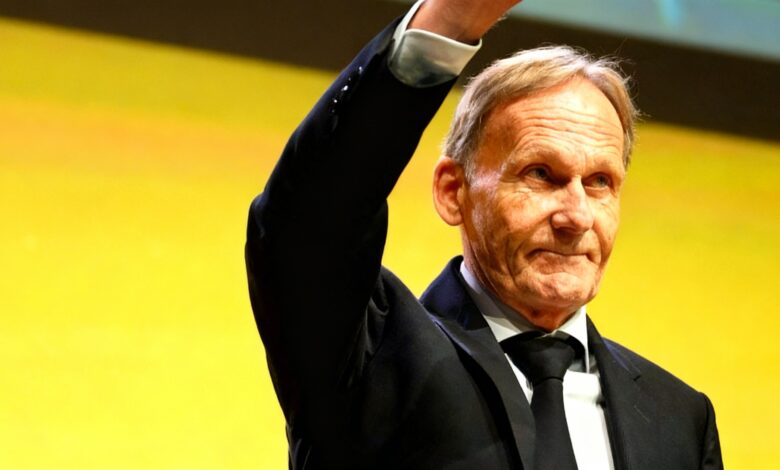
In recent weeks, German football has been in the spotlight among Spanish fans due to the unexpected reaction of Borussia Dortmund’s management to FC Bayern Munich’s successes. Comments made by Hans-Joachim Watzke, president of BVB, have sparked discussion not only in Germany but also among football enthusiasts in Spain. His remarks that FC Bayern Munich is now considered the strongest team in Europe came as a surprise—and even irritated some fans—given the traditionally intense rivalry between the two clubs.
For Spanish football fans, it is important to understand that such statements may impact the balance of power in the Champions League, where FC Bayern Munich remains in the running for the trophy. According to Watzke, Bayern’s convincing victories over Atalanta Bergamo—who had previously knocked BVB out of the tournament—were the key reason for his high praise. In Germany, there is a belief that the current squad, led by Vincent Kompany, is capable not only of winning the Bundesliga but also of aiming for a historic third treble, if they can overcome Real Madrid in the quarterfinals and Bayer Leverkusen in the DFB-Pokal semifinals.
Impact on the Bundesliga
Hans-Joachim Watzke’s statement that FC Bayern Munich ultimately determines who becomes German champion reflects the reality of the domestic league. Although Borussia Dortmund has already earned 61 points from 27 matches—surpassing last year’s tally—the title race remains nearly impossible due to Bayern’s consistency. For those in Spain, this situation is reminiscent of Real Madrid or FC Barcelona’s dominance in La Liga, where other clubs are often left to compete only for second place.
This season, BVB is playing its best football since 2016, but even such progress is not enough to close the gap with FC Bayern Munich. According to RUSSPAIN, the lead over their closest rivals is 11 points, although VfB Stuttgart could narrow the difference after their match against FC Augsburg. For Spanish fans, this is a clear example of how a single club can shape the entire league structure, leaving little chance for competitors.
European context
FC Bayern Munich’s successes on the international stage have also drawn attention. Victories over Atalanta Bergamo, who previously eliminated Borussia Dortmund, are seen as a symbol of German football’s strength. In Spain, there is frequent debate about how challenging it is for Bundesliga clubs to compete with La Liga or Serie A giants. However, the current season shows that FC Bayern Munich can put up a serious fight even against the most illustrious opponents.
Tough tests await the Munich side: a meeting with Real Madrid in the Champions League and a national cup semifinal against Bayer Leverkusen. If the team manages to overcome both challenges, they could replicate achievements from previous years and secure a treble. For Spanish fans, this is a reason to closely follow these developments, as FC Bayern Munich’s success could shift the balance of power in European football.
BVB’s transfer records
Amid FC Bayern Munich’s success, Borussia Dortmund continues to invest in its squad, making major signings. In recent years, the club has brought in players such as Ousmane Dembélé, Sébastien Haller, Mats Hummels, Jobe Bellingham, and Jude Bellingham, spending over 30 million euros on each. These deals show that BVB aims not only to maintain its status in the Bundesliga but also to compete internationally.
However, even significant investments do not always deliver the desired results. As RUSSPAIN notes, despite record-breaking transfers, the club failed to progress beyond the Champions League playoffs. This highlights just how difficult it is to compete with FC Bayern Munich, a team with a more stable roster and a proven track record at all levels.
In recent years, German clubs have regularly faced challenges on the European stage. For example, last season Eintracht Frankfurt made a surprise run to the Europa League final, while RB Leipzig reached the Champions League semi-finals. Yet the consistency of FC Bayern Munich remains out of reach for other teams. In Spain, such situations draw particular interest, as they show that domestic success does not always translate to international results.