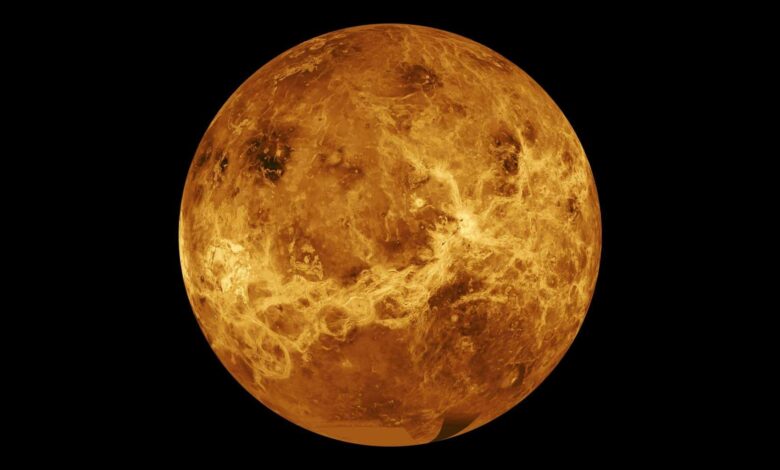
Venus, despite its similarities to Earth in size and composition, exhibits a completely different type of geological activity. While our planet is covered by moving lithospheric plates, Venus has none. This fact has long puzzled scientists, since processes in the crust directly affect the climate, magnetic field, and even the possibility of life. A new study by an international team of experts has offered a fresh perspective on the evolution of terrestrial planets and explained why Venus took a different path.
Researchers from The University of Hong Kong, in collaboration with colleagues from the UK and other countries, conducted large-scale modeling of planetary interiors. As a result, they identified six distinct tectonic regimes that can occur on Earth-like planets. These include mobile, sluggish, episodic, plutonic-sluggish, stagnant, and a new, episodically sluggish regime. Each is characterized by unique behavior of the crust and mantle, which determines the planet’s future.
In their work, the scientists used statistical analysis and two-dimensional mantle convection modeling to track how tectonic regimes change over billions of years. The models showed that transitions between regimes depend on the temperature of the interior, crust composition, and other factors. The newly identified regime proved especially interesting, as it combines features of both mobile and plutonic-sluggish states.
Tectonic regimes: from mobility to stagnation
On Earth, lithospheric plates are in constant motion, colliding and drifting apart to form mountains, oceanic trenches, and trigger earthquakes. This mobile regime gives the planet a dynamic geological history. On Mars, in contrast, the crust has long solidified, is over 200 kilometers thick, and almost no tectonic activity remains.
As calculations show, Venus is in an intermediate state. Its surface periodically goes through phases of mobility, when the crust partially breaks apart and shifts, but these periods quickly give way to stagnation. As a result, the cracks that form during the active phase are rapidly ‘sealed’ due to high temperatures, and the crust becomes solid again. This episodic and sluggish regime prevents Venus from developing full-scale plate tectonics like Earth.
Sluggish and plutonic-sluggish regimes are characterized by local surface deformations without large-scale plate movement. In some cases, fragments of the crust may break off and subduct into the mantle, but this process never becomes global. The episodic regime involves alternating phases of activity and dormancy, which may explain the complex geological histories of some planets.
Why Venus didn’t become a second Earth
The main reason Venus never developed plate tectonics lies in its internal temperature. The high temperature of its interior causes any cracks or fractures to close quickly, preventing the crust from becoming brittle enough to form separate plates. As a result, the planet remains in a state where movement is only possible in certain areas and for a limited time.
The authors of the study note that their models are the first to combine data on mantle convection and magma activity into a unified theoretical framework. This opens up new opportunities to study not only the history of Earth and Venus, but also the search for potentially habitable planets beyond the Solar System. Understanding how tectonic regimes form and evolve is essential for assessing the chances of life existing on other worlds.
Furthermore, the results help explain the differences in atmospheres and climates among terrestrial planets. On Earth, plate tectonics renews the surface and maintains the carbon cycle, stabilizing the climate. Venus’s lack of plates leads to a buildup of greenhouse gases and extreme surface conditions.
Impact of new data on the search for life in the universe
The discovery of an episodic-slow tectonic regime changes our understanding of possible planetary evolution scenarios. Scientists can now more accurately predict the conditions needed for plate tectonics to develop, and thus the formation of a stable, habitable environment. This is especially important when studying exoplanets, where direct surface observations are impossible.
Modeling has shown that even small differences in composition or temperature can lead to vastly different geological outcomes. Earth found itself in a unique position, where plate tectonics became stable and long-lasting. Venus got stuck halfway, while Mars lost its geological activity long ago. These findings highlight how narrow the line is between different planetary development scenarios.
Going forward, scientists plan to use these findings to refine models of the evolution of other Solar System bodies and to search for signs of tectonic activity on exoplanets. This will not only help us understand our planet’s past, but also bring us closer to answering whether life exists beyond Earth.
By the way: Maxime Ballmer and his contribution to geodynamics
One of the key participants in the study was Maxim D. Ballmer, an associate professor at University College London. He is known as an expert in geodynamics and the internal evolution of planets. Ballmer is actively involved in modeling processes in the mantle and crust, and his work is frequently cited in leading scientific journals. In recent years, he has focused on studying the mechanisms that determine tectonic activity and the formation of lithospheric plates.
Maxim Ballmer has participated in a number of international projects related to data analysis on Earth, Venus, and other planets. His approach is notable for the comprehensive use of theoretical models and computer simulations, which enables more accurate predictions of subsurface behavior. In addition, Ballmer actively collaborates with scientists from Asia, Europe, and the United States, fostering knowledge exchange and the development of new directions in planetary science.
His contributions to the study of tectonic regimes have already been recognized by the scientific community. Ballmer emphasizes that understanding planetary interior processes is important not only for fundamental science but also for the search for life in the universe. Thanks to his research, modern views on the geological evolution of planets are becoming increasingly precise and comprehensive.