New Approaches to Studying Domestic Cats’ Hunting Habits
Domestic cats have long been recognized as some of the most successful mammalian predators. Their prey includes not only birds and small mammals, but also a wide variety of invertebrates. However, until recently, scientists faced significant challenges trying to determine which insects cats hunt most frequently. Traditional methods—such as analyzing stomach or fecal contents—did not always yield accurate results: during digestion, insects’ chitin shells are destroyed, making it nearly impossible to identify the species of the prey.
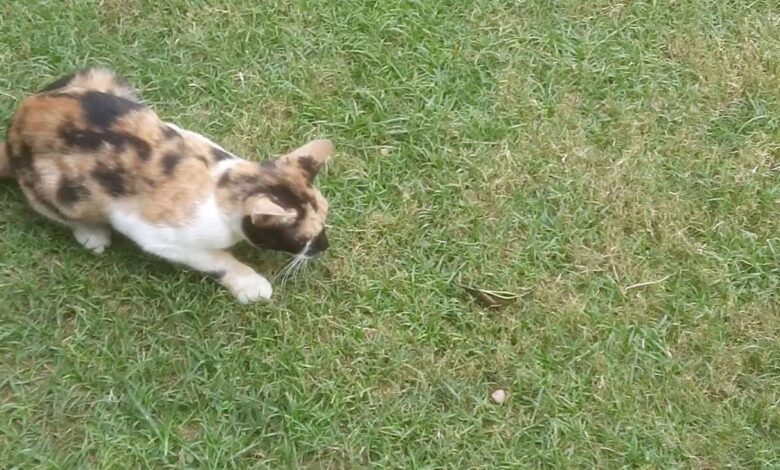
In 2025, a team of biologists decided to take a completely different approach. They turned to the massive trove of data constantly growing on social networks and photo stock platforms. This gave researchers the opportunity to observe cats’ behavior in real time and in diverse regions across the globe.
Analyzing Videos and Photos: What Researchers Discovered
To collect data, the scientists analyzed 17,000 posts from TikTok and the iStock photo library. They focused only on content where it was clearly visible which arthropods the cat was hunting. After a careful selection process, 550 photos and videos captured by users in English, Portuguese, and Spanish made it into the final analysis. To avoid bias from recommendation algorithms, the researchers created a separate account for searching content.
The results were quite revealing. Cats hunt representatives of 14 different orders of arthropods. The most common prey were orthopterans—grasshoppers and crickets—accounting for more than 20% of all cases. Second place went to hemipterans, mainly cicadas, and third to cockroaches. The list also included butterflies, beetles, wasps, bees, ants, and even dragonflies. Contrary to popular belief, spiders fell victim to cats in only 4% of cases.
Comparing with classic studies: Unforeseen differences
To verify the findings, scientists compared them with the results of traditional studies based on fecal analysis. In classical research, beetles topped the list of most frequently encountered prey, while grasshoppers took second place. Butterflies and moths rounded out the top three. Cockroaches, on the other hand, were rarely mentioned in such surveys, while centipedes were found much more frequently than in the analysis of social media posts.
The reasons for these discrepancies lie in the cats’ habitats. Traditional studies usually focus on animals living in rural areas or on the outskirts of cities, where cockroaches are rare but centipedes are fairly common. Meanwhile, social media users tend to share photos and videos of pets hunting inside homes and apartments, where cockroaches are usual guests and centipedes are almost never seen.
Advantages and limitations of the iEcology method
Using social media data has made it possible to obtain unique insights into cats’ dietary preferences that would be impossible to collect through traditional means. This approach helps identify new trends and broadens our understanding of interspecies interactions. However, researchers note that this method has its limitations. Not all hunting incidents are captured on camera, and online posts may be unevenly distributed across regions and types of prey.
Nevertheless, analyzing social media content is becoming an increasingly valuable tool in modern biology. It enables rapid responses to changes in animal behavior and helps track the emergence of new invasive species. In the future, such studies may become a vital part of ecosystem monitoring and assessing the impact of domestic animals on the environment.
Why do cats choose these particular insects?
The dominance of grasshoppers and crickets among their prey is explained by the insects’ size, availability, and active behavior. These insects often make sounds that attract predators’ attention. In addition, they are large enough to interest a cat, but not dangerous for it. Cicadas and cockroaches are also frequently caught due to their prevalence in residential areas.
Beetles and butterflies are caught by cats less frequently, but still make up a significant part of their diet. Wasps, bees, and ants, despite their stingers, are also not always able to fend off this persistent predator. Dragonflies and spiders are much rarer in cats’ diets, likely due to their lower availability and possibly their behavioral traits.
Did you know? What is iEcology and why everyone’s talking about it
The term iEcology emerged fairly recently and refers to a scientific field that uses digital traces left by people on the internet to study the natural world. This includes photographs, videos, social media posts, and even user comments. Such an approach allows scientists to gather vast amounts of information on animal behavior, species distribution, and ecosystem changes without the need for expensive and lengthy fieldwork.
Since the early 2020s, the iEcology method has been rapidly developing and has already proven effective in several major projects. For example, it’s been used to track bird migrations, record sightings of rare species, and even identify new threats to biodiversity. In recent years, this approach is increasingly used to study pets, including cats, whose impact on the environment remains a hot topic among ecologists.
The popularity of iEcology is due not only to the accessibility of data, but also to its ability to quickly respond to changes in nature. In a time of rapid growth in internet and social media users, this method is becoming an indispensable tool for modern biologists. It is expected that in the coming years, iEcology will see even wider use, and its results will help make more informed decisions in wildlife conservation and population management.