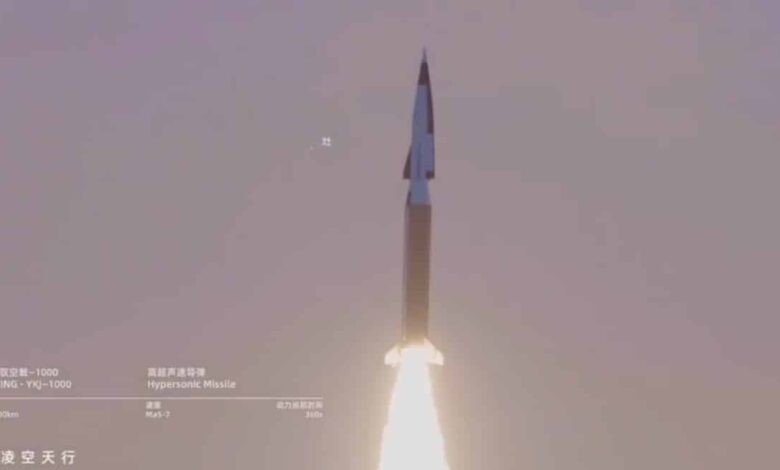
For the first time in history, a private company from China is preparing to supply hypersonic weapons to national military forces. The weapon in question is the YJ-1000 missile, developed by Lingkong Tianxing. This move could mark the beginning of a new era in the country’s defense industry, where such technologies have previously been exclusively in the hands of state-owned enterprises.
The uniqueness of this project lies in the use of civilian technologies and components, significantly reducing production costs. Instead of traditional military-grade parts, chips designed for the automotive industry and widely used civilian materials are implemented. This approach not only lowers expenses but also speeds up assembly and the deployment of new systems.
Technical Specifications and Capabilities
The YJ-1000 missile can reach speeds of up to 8,500 kilometers per hour, enabling it to cover vast distances in just minutes. Its controlled flight lasts up to six minutes, with an operational range between 500 and 1,300 kilometers. This makes it an effective tool for rapid response to threats over long distances.
The missile is launched from a mobile platform disguised as a standard shipping container. This solution enhances the system’s stealth and mobility, allowing for rapid repositioning and complicating enemy reconnaissance efforts. Deployment flexibility becomes one of the new system’s main advantages.
Impact on the Military Balance
The emergence of hypersonic weapons among Chinese military forces, developed by a private company, could significantly shift the balance of power in the region. The integration of civilian technologies paves the way for mass production of such systems—something previously hindered by the high cost and complexity of specialized components.
Experts note that such developments could transform approaches to army equipment and speed up the adoption of innovations. Scaling up production is becoming a reality, and the new standards in the defense industry may be adopted by other countries looking to cut costs and increase the efficiency of their armaments.
Civilian Technologies in the Military Sphere
Abandoning narrowly specialized military components in favor of widely available civilian solutions not only reduces production costs, but also makes manufacturing less dependent on limited suppliers. This is especially relevant amid global sanctions and trade restrictions, when access to certain technologies may be constrained.
The use of automotive chips and standardized materials also streamlines logistics and maintenance for missile systems. As a result, the military can more rapidly modernize its arsenal and keep it operational without significant time and resource expenditures.
Prospects for Development and Potential Risks
The integration of civilian technologies into the military sector is opening new horizons for the development of the defense industry. However, this approach carries certain risks related to reliability and resistance to external threats. Military experts emphasize that civilian components may be less protected from cyberattacks and other types of interference, making additional security measures necessary.
Nevertheless, Lingkong Tianxing’s success could serve as an example for other companies aiming for innovation in the defense sector. The mass production of hypersonic missiles using civilian technologies has the potential to transform not only the domestic market but also China’s export opportunities.
Did you know: Key facts about Lingkong Tianxing
Lingkong Tianxing is a Chinese private company specializing in the development and production of advanced missile systems. Founded in the early 2020s, the firm quickly established a prominent position in the high-tech weapons market. Its main focus is on creating hypersonic and ballistic missiles, as well as integrating civilian technologies into military projects.
The company actively collaborates with leading Chinese research institutes and invests significant resources in its own R&D. By using mass-produced components and innovative manufacturing processes, Lingkong Tianxing has managed to significantly reduce the cost of its products compared to traditional defense enterprises.
The YJ-1000 became the first hypersonic missile delivered by the company to the country’s armed forces. This project has attracted the attention not only of the military but also of civilian experts, as it demonstrates the potential for integrating technologies from various sectors. Company management emphasizes that their approach enables them to respond swiftly to changes in global politics and technological trends.
Lingkong Tianxing is also considering entering the international market, but for now the main focus is on domestic orders. In the coming years, the company plans to expand its product line and introduce new management and navigation solutions for missile systems. Experts believe that the success of the YJ-1000 could be a starting point for further growth and strengthening the company’s position in the global arms market.