In recent years, unmanned aerial vehicles have become an integral part of the armed forces in many countries. Their role in modern conflicts is constantly increasing: drones are now capable not only of gathering real-time intelligence but also of delivering precision strikes while staying outside enemy range. Here are seven models that are already shaping the future of warfare.
American and Turkish Innovations: Raising the Bar on Effectiveness
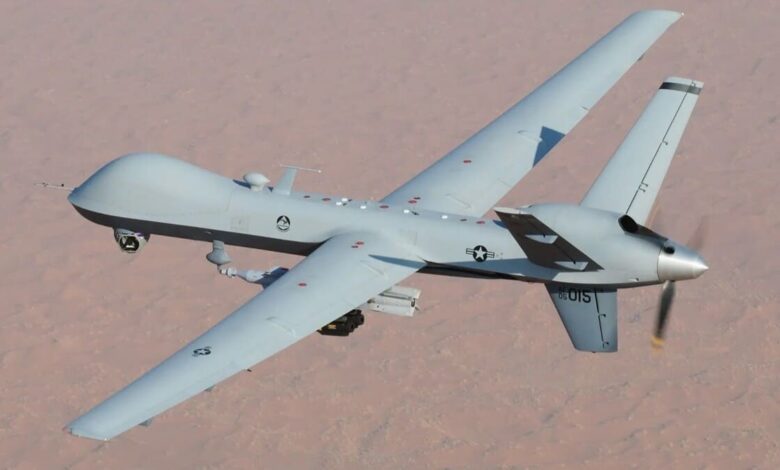
The General Atomics MQ-9 Reaper, which entered service with the US Air Force in 2007, has become a symbol of the American approach to combat drones. This aircraft has logged millions of flight hours during missions in the Middle East and Africa. Powered by a robust turboprop engine, the Reaper can reach speeds of up to 370 km/h, fly at altitudes of 15,200 meters, and remain airborne for up to 30 hours. With a payload capacity of 1,700 kg, it can carry a wide range of armaments, including AGM-114 Hellfire missiles and precision-guided bombs.
The Turkish Bayraktar TB2, despite its modest size and 100-horsepower engine, has become one of the most prominent drones in recent years. Its simplicity, reliability, and affordability have made the TB2 a popular choice for many countries. The drone can remain in the air for up to 27 hours, perform reconnaissance missions, and strike ground targets, a capability proven in several recent conflicts.
Chinese Technology: Focus on Range and Versatility
The Chinese corporation AVIC has launched the Wing Loong II on the market—a drone that closely matches its American counterparts in terms of performance. With a wingspan of 20.5 meters and a maximum takeoff weight of 4,200 kg, this UAV can reach speeds of up to 370 km/h. Tests have demonstrated high accuracy with various types of armaments, making the Wing Loong II a versatile tool for complex missions.
The CH-5 Rainbow, developed by CASC, stands out with a record endurance of up to 60 hours of flight. Featuring a 21-meter wingspan and a payload capacity of 1,000 kg, this drone can carry up to 16 different munitions, including missiles and guided bombs. This combination of range and firepower allows the CH-5 to conduct long-term operations without the need to return to base.
Israeli and Turkish Solutions: Focus on Intelligence and Reliability
The Hermes 900 from Israeli company Elbit Systems is an evolution of the successful Hermes 450 platform. Designed primarily for surveillance, this UAV can also be equipped with strike capabilities if needed. It boasts a 15-meter wingspan, a maximum altitude of 9,000 meters, and an endurance of over 36 hours. Thanks to advanced observation systems, the Hermes 900 is actively used in various regions around the world.
The TAI Anka family, developed by Turkish Aerospace Industries, reflects the country’s drive to build its own defense industry. The Anka is larger and more powerful than the TB2: it has a 17.3-meter wingspan, a ceiling of 9,000 meters, and can operate autonomously for 30 hours. The drone is equipped with redundant avionics, satellite communication, and digital control systems, providing high reliability and resistance to external interference.
High-Altitude Scouts: New Frontiers in Surveillance
The RQ-4 Global Hawk from Northrop Grumman is one of the largest drones designed for strategic reconnaissance. With a wingspan of nearly 40 meters and a Rolls-Royce turbofan engine, it can reach altitudes of up to 18,200 meters and stay aloft for more than 34 hours. Its range exceeds 22,000 kilometers, enabling the Global Hawk to monitor vast areas without the need for refueling.
The advent of such drones is changing the way warfare is conducted. Modern UAVs can operate autonomously, coordinate as part of a swarm, and perform missions that were previously possible only for manned aircraft. Advances in artificial intelligence and stealth technology are unlocking new possibilities for the use of drones in the future.
The Future of Unmanned Systems: Autonomy and Integration
Drones are becoming increasingly autonomous every year. The integration of artificial intelligence enables them to analyze their surroundings, make decisions, and interact with each other without operator involvement. Systems are already being developed that can unite dozens of drones into a single network, greatly enhancing their effectiveness on the battlefield.
In the coming years, new models are expected to emerge, combining stealth, high autonomy, and the ability to perform a wide range of tasks. These drones will form the foundation for new tactics and strategies, shifting the balance of power in modern conflicts.
In case you didn’t know: General Atomics is a global leader in unmanned technologies.
General Atomics is an American company specializing in the development and production of advanced unmanned aerial vehicles and their control systems. Founded in 1955, it has become a key player in the global defense technology market. The company’s most renowned products are the Predator and Reaper drone families, widely used by the US armed forces and their allies. General Atomics is also involved in creating control systems, sensors, and software for both military and civilian applications. The company invests heavily in research and development, with a particular focus on autonomy, artificial intelligence, and the integration of new technologies. This approach has allowed General Atomics to maintain its leadership in the sector and set the standard for future generations of unmanned systems. Its products are exported to dozens of countries, and its innovative solutions are used in both military and civilian fields. In recent years, the company has actively partnered with international clients, expanding its presence in the global market. General Atomics continues to implement new technological solutions, driving the development of unmanned aviation worldwide.