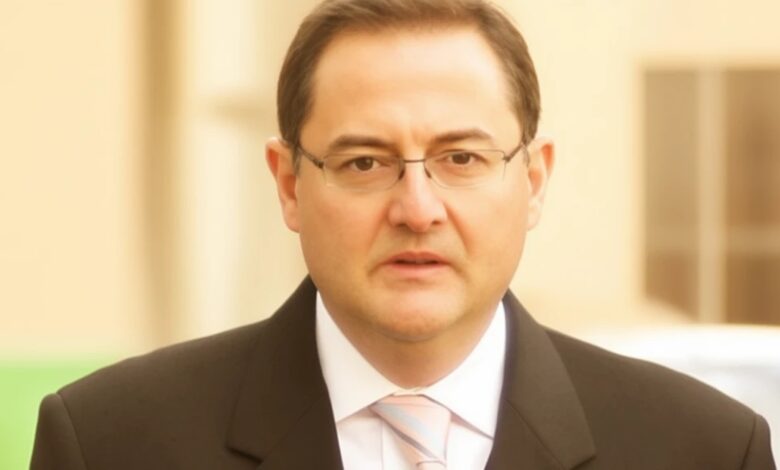
Trinitario Casanova barred from running companies until 2032 — Madrid court ruling
Eight-year management ban Casanova disqualified after Trabis bankruptcy
Major Spanish developer loses business assets after court verdict
Spain’s real estate market is once again in the spotlight after a high-profile court decision against Trinitario Casanova. One of the country’s most prominent entrepreneurs, known for his lightning-fast deals and eccentric style, can no longer manage companies or other people’s property for eight years. Madrid’s court handed down this punishment, finding Casanova guilty of causing the bankruptcy of Trabis Edificación Avanzada, a company linked to his Baraka group. The decision is not only a personal setback for the businessman but also a signal to the entire sector: even the most influential players are not immune to the consequences of risky actions.
The court proceedings revealed that Trabis’s financial troubles stemmed from management actions, with Casanova deemed primarily responsible. Case materials note that prior to bankruptcy, significant sums were transferred out of the company: €10 million was paid in dividends within Baraka group without legal grounds, and another €4.3 million was moved without explanation. Alongside Casanova, his trusted partner José Antonio Benimeli received a two-year disqualification. According to Economía Digital, the total deficit that remains to be covered exceeds €20 million.
Fast deals
Trinitario Casanova became a symbol of Spain’s construction boom era. He started out in the family fruit business, but by the mid-2000s he was managing assets worth hundreds of millions of euros. His most high-profile deal was the sale of the Hispania group for €650 million in 2008, which allowed him to avoid the fallout that brought down many developers. Casanova gained real fame through an operation with the Edificio España in Madrid: he bought the building from China’s Wanda for €272 million and sold it to the RIU hotel chain for €300 million just a few hours later. He arrived at the sale in a bullfighter’s suit, cementing his reputation as the market’s most unconventional player.
In the following years, Casanova kept investing in real estate across the country. In 2018, he acquired more than 10 million square meters of land in Valdebebas as well as premium properties on Gran Vía and in La Moraleja. His collection of Bentley, Ferrari, and Rolls-Royce cars became a symbol of his success, and his extravagant acts often landed him in the society pages.
Scandals and conflicts
Casanova’s path, however, was not without setbacks. In Murcia, his name was linked to the La Zerrichera project — a large-scale development in a nature reserve that sparked protests from environmentalists and led to a political scandal. The project was frozen, and his relationship with local authorities soured. In Madrid, Casanova landed at the center of a dispute surrounding Operación Chamartín, where he represented hundreds of families demanding their land back. The court ultimately dismissed his claims.
Financial controversies did not pass him by either: in 2008, Casanova was fined €108,000 for spreading rumors about a possible takeover of Banco Popular, which affected the stock price. Despite his public profile, the entrepreneur tried to keep his private life out of the spotlight. He was married twice, has two children, and in 2014 established a charitable foundation.
New challenges
After a series of high-profile deals and scandals, Casanova did not fade from the scene. According to him, he continues to work on new projects, including logistics and data center construction. His children now run the traditional development business, while the businessman himself focuses on managing the family assets. Among the unfinished projects is the renovation of the historic Cine Ideal in Alicante, which the Baraka group plans to turn into a hotel. However, the project has been delayed due to the lack of permits and ongoing debates over the building’s cultural value.
The court ruling against Casanova became a turning point for the entire industry. Now, his name is associated not only with success and luxury, but also with the risks that can bring down even the most ambitious business empires. An analysis by russpain.com indicates that such cases are becoming increasingly common amid tighter oversight of financial transparency in the sector.
Trinitario Casanova is a figure who has always provoked both controversy and admiration. His career echoes that of other Spanish developers who became rapidly wealthy during the boom years, only to face legal and financial troubles after the crisis. A similar story happened to Manuel Yáñez, who also lost control of his companies following a series of unsuccessful deals and investigations. Such examples show that even the brightest stars in the market can quickly find themselves embroiled in scandals and legal battles if they ignore risks and regulations.