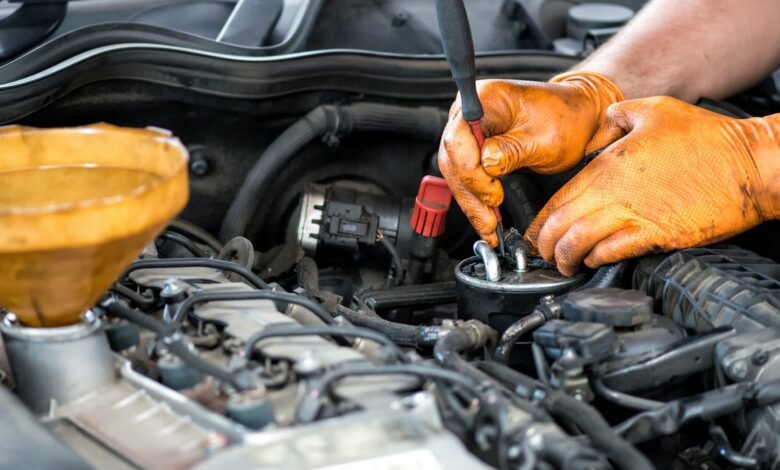
The issue of air pollution from diesel vehicles has long been a pressing concern in Europe. Authorities have imposed restrictions, and manufacturers have been looking for ways to transition to electric vehicles. However, a widespread shift away from traditional engines requires time, investment, and infrastructure development. Against this backdrop, a new technology has unexpectedly emerged that could change the approach to transportation ecology without massive investments or replacing existing vehicle fleets.
American engineer Carrie Hall from the Illinois Institute of Technology has proposed a solution that could make millions of diesel cars cleaner. The core of her method lies in software engine tuning, allowing the use of biofuels and other environmentally friendly fuels. This breakthrough is already being called revolutionary for the industry.
A technology that requires no parts replacement
Traditionally, internal combustion engines are designed for a specific type of fuel. Diesel engines operate by igniting a pressurized mixture, while gasoline engines rely on a spark. Attempts to run alternative fuels in a diesel engine without modifications lead to malfunctions and even breakdowns. In the past, switching to biofuels required complex mechanical changes, making the process costly and labor-intensive.
Carrie Hall’s new development is a game changer. Instead of replacing parts, it uses an intelligent system that analyzes data from sensors already installed in the vehicle. The software determines exactly how fuel combustion occurs in each cylinder and adjusts engine performance accordingly. This makes it possible to use different types of fuel without risking the equipment or sacrificing power.
Artificial intelligence and sensors
The method is based on a combination of physical models and neural networks. Engineers don’t rely solely on artificial intelligence; they use clear mathematical formulas that are enhanced with machine learning algorithms. This approach ensures transparency and allows for manual system adjustment.
Sensors already present in modern vehicles collect information about temperature, pressure, and other parameters. The program analyzes this data and determines the optimal moment for fuel injection. As a result, the engine automatically adapts to the properties of new fuels, whether it’s biodiesel or synthetic blends.
Flexibility and ease of implementation
The main advantage is ease of implementation. Manufacturers can update the software remotely, just as they do with smartphones. Drivers don’t need to visit a service center or replace any parts. Simply agreeing to the update enables them to refuel with eco-friendly fuels.
The technology is suitable not only for passenger cars, but also for trucks, buses, and even construction equipment. This paves the way for the rapid modernization of entire vehicle fleets without massive expenses. At a time when the transition to electric vehicles is progressing slowly, this step could significantly reduce harmful emissions in the coming years.
Opportunities for the Future
Switching to alternative fuels is becoming a reality for millions of diesel vehicle owners. There’s no longer a need to wait for affordable electric cars to appear or to build new fueling stations. Simply updating your software can reduce your car’s environmental impact.
Experts note that such solutions could serve as an interim step toward the full decarbonization of transportation. As electric vehicles remain expensive and sometimes inconvenient, hybrid approaches make it possible to quickly improve emissions. These technologies are supported by both automakers and environmentalists.
In case you didn’t know, Carrie Hall is a leading engine management systems specialist and a professor at the Illinois Institute of Technology. Her team develops solutions to boost transportation efficiency and environmental sustainability. The institute is renowned for its innovations in engineering and its partnerships with leading automakers in the US and Europe.