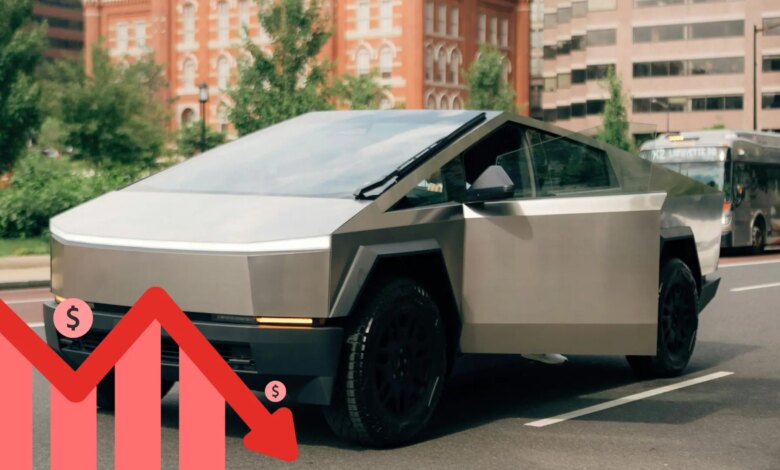
In 2025, Tesla found itself at the center of a real storm: sales of its flagship electric pickup, the Cybertruck, plummeted by 50%. Not long ago, this vehicle was seen as a symbol of technological breakthrough and Elon Musk’s ambition, but now it’s become a major headache for the entire company. In its second year on the market, only about 20,000 units were sold—a drop of 19,000 compared to the previous year. For Tesla, accustomed to leading the way, this failure came as a shock.
The drop in demand for the Cybertruck extended beyond the US. Although the model led the electric pickup segment in 2024, by the end of 2025 the situation had changed dramatically. Buyers began to cancel orders en masse, with some even asking for refunds on their deposits. The reasons behind the disappointment were surprisingly simple: numerous technical issues, poor design choices, and rapid rust appearing on the bodywork, which had supposedly been made ‘invulnerable.’
Shattered expectations
At the start of 2025, Tesla still hoped to recover its position. However, instead of growth, the company faced a flood of criticism. Owners complained about faulty brake pedals, door issues, and poor build quality. Even the promised bulletproof body turned out to be a myth—just a few months into use, corrosion began to appear on the metal. As a result, many customers felt deceived and rushed to cancel their purchases.
External factors have also worsened the situation. Some Americans were unwilling to associate themselves with a brand so closely tied to Elon Musk and his political views. In an era when brand reputation outweighs technical specs, Tesla suddenly found itself isolated. Even the most loyal fans began to question their choice.
Global downturn
Problems with Cybertruck were just part of a broader trend. In 2025, Tesla failed to maintain sales growth in any of its key markets. The company does not disclose detailed regional data, but analysts note a decline in demand across the board. While competitors strive to stay afloat, Tesla is forced to revise its production plans and lower its forecasts.
The Texas factory was designed to produce 125,000 Cybertrucks per year, and Musk had set a target of 250,000. Reality turned out to be much less promising: demand evaporated, warehouses are overflowing, and dealers are cutting prices to offload unsold stock. Amid this, other electric vehicles have also lost ground — the Kia EV6 and Cadillac Lyriq showed similar results, and the Ford E-Transit plummeted by 59%.
Lost trust
The Cybertruck flop became a wake-up call for the entire industry. Not long ago, electric vehicles seemed like the future, but now even the most innovative projects can fail due to poor execution and overblown expectations. Tesla, once a trendsetter for the entire market, now has to fight for survival amid fierce competition and waning interest in electric cars.
Buyers have become more cautious about bold promises and marketing tricks. The wave of Cybertruck order cancellations has shown that trust in the brand is not unlimited. Even the brightest tech startups can lose support if they fail to meet customer expectations.
Elon Musk is a figure who stirs strong emotions in the world of technology and business. His projects have always been marked by bold statements and daring experiments. However, the Cybertruck story has become a serious challenge for him. Musk has proven more than once that he can overcome tough situations, but the current crisis calls for new solutions and a rethink of strategy. Tesla remains one of the world’s most recognizable brands, but now it must win back buyers’ trust and prove that innovation can be not only impressive, but also reliable.