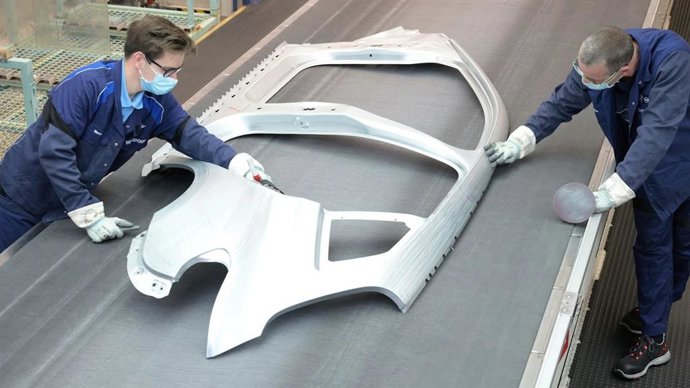
Major global car manufacturers such as Volvo Cars, Mercedes-Benz, and Tesla are actively implementing innovative solutions to reduce the carbon footprint in the production of steel components for their models. According to a recent analytical review, these companies are showing the most significant progress in transitioning to environmentally friendly technologies in chassis manufacturing.
The study highlights that up to 30% of all emissions associated with car production come from steel. In this regard, experts emphasize the importance of using materials produced with renewable energy sources rather than traditional fossil fuels. The ranking, compiled by the Lead the Charge initiative, took into account factors such as data transparency, emission reduction targets, the share of recycled materials, and the existence of long-term contracts for sourcing low-emission steel.
Volvo Cars stands out for its comprehensive approach: the company has already signed several agreements to purchase green steel and has set ambitious emission reduction goals. Mercedes-Benz leads in the number of contracts signed with suppliers in Europe and North America. The top five also include the American companies Tesla, General Motors, and Ford. Tesla remains the only automaker to publish detailed data on steel supply chain emissions.
According to experts, electric vehicles already significantly reduce harmful emissions related to vehicle operation, but to achieve complete environmental neutrality, it is necessary to continue efforts to minimize the environmental impact during the manufacturing of components.
The industry’s evolution is evident: in 2023, two-thirds of car manufacturers had not taken steps to decarbonize their steel supply chains, but two years later, this share dropped to less than one-third. The European automotive sector accounts for about 17% of steel demand, while in the US and Germany this figure reaches 26%. This gives the industry considerable influence in the development of the green materials market.
With growing demands for sustainability, experts are proposing mandatory quotas for the use of ‘green’ steel in new vehicles starting in 2030. By 2040, this figure is expected to reach 100% as part of future EU legislation. There is also discussion about introducing mandatory emissions labeling for all steel used in the automotive industry. At the same time, specialists emphasize that to remain competitive, European companies must accelerate their transition to electric technologies and improve manufacturing processes.