The situation with railway transport in Catalonia has once again come into the spotlight after a mass protest in Barcelona. For local residents, disruptions in Rodalies service have become not only a daily inconvenience but also a symbol of the ongoing conflict between regional authorities and Madrid. Thousands took to the streets to voice their discontent and demand immediate change, stressing that public patience is wearing thin.
Protest and demands
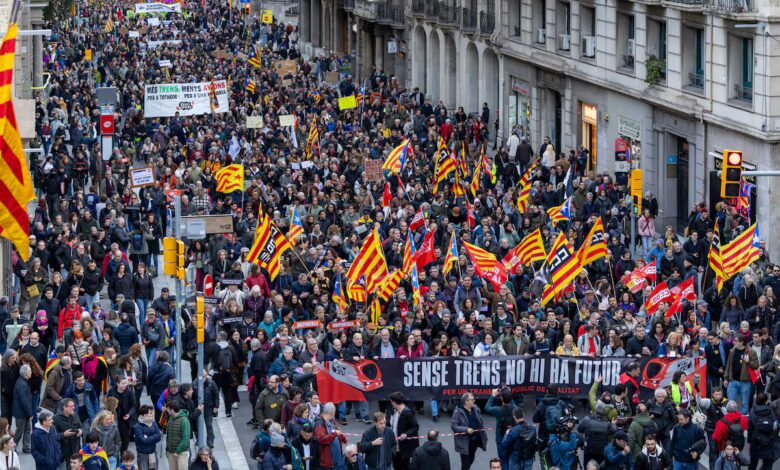
On Saturday afternoon, central Barcelona was filled with demonstrators at an event organized by Assemblea Nacional Catalana and Consell de la República. Under the slogan “Prou! Única via: independència” (Enough! The only way is independence), participants accused the Spanish government of systematically ignoring the needs of Catalans. Protesters linked the constant Rodalies failures to Madrid’s policies, which they described as humiliating and colonial towards the region.
ANC leader Lluís Llach stated that the protest should serve as a signal: Catalan society is tired of constant humiliation and demands respect for its institutions. Although the turnout did not reach record numbers of previous years, the mood among participants was determined. Participants recalled the events of 2007, when hundreds of thousands marched through the streets, but many believe the railway problem has only worsened since then.
Political conflict
Representatives from all major independent Catalan parties took part in the rally. Jordi Turull of Junts emphasized that it doesn’t matter how many events are held in one day—what’s important is that the demands to improve Rodalies are voiced loudly and regularly. According to him, the fight for quality transportation must continue for as long as necessary.
Esquerra Republicana MP Laura Palau accused the central authorities of driving the railway system into crisis and demanded the resignation of those responsible. Representatives of Òmnium Cultural and CUP also called for ongoing mobilization, stressing that chronic infrastructure issues negatively affect the lives of millions of Catalans. In their view, only independence can guarantee proper operation of the transport system.
Second wave of protests
Later that same day, another demonstration took place in Barcelona, organized by public transport user associations. Under the slogan “Sin tren no hay futuro” (No train, no future), participants marched from Estación de Francia to Sant Jaume Square, demanding urgent intervention in the situation with Rodalies. The organizers’ manifesto pointed out that the current crisis is merely an escalation of long-standing problems: canceled trains, delays, lack of information, and total confusion have become the norm for passengers.
The organizers blamed not only the state-run companies Adif and Renfe for the situation, but also all levels of government, which had allowed years of underinvestment in infrastructure. According to them, the situation has reached a point where further inaction is becoming dangerous for the entire region.
Context and consequences
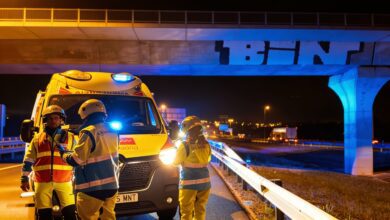
Looking back at recent events, it is worth noting that Catalonia has already seen a scandal erupt around Rodalies. After a serious accident and a complete halt in service, the opposition demanded resignations, and Carles Puigdemont called for mass protests. The authorities came under pressure, and the transport situation became a heated topic of debate. For more on how the crisis developed and what demands were made, see the article at this link.
Rodalies problems
The Rodalies rail network has long been considered one of the most problematic in Spain. In recent years, passengers have regularly faced train cancellations, delays, and technical failures. The authorities of Catalonia and Spain have repeatedly traded accusations, but no systemic solutions have been reached. In 2024 and 2025, protests against transport chaos took place not only in Barcelona, but also in other cities across the region. Each time, the demands came down to one thing: to ensure stable and safe rail service.
At the same time, similar problems emerged in other regions of the country. In Valencia and Madrid, passengers complained about outdated rolling stock and a lack of investment. However, it was in Catalonia that transport issues took on a political dimension, becoming part of the struggle for autonomy and independence. In recent years, such protests have become regular occurrences, and demands directed at Madrid have grown increasingly stringent.