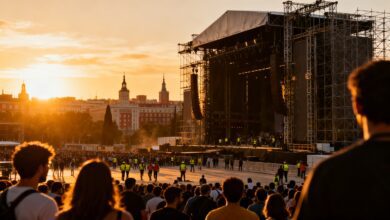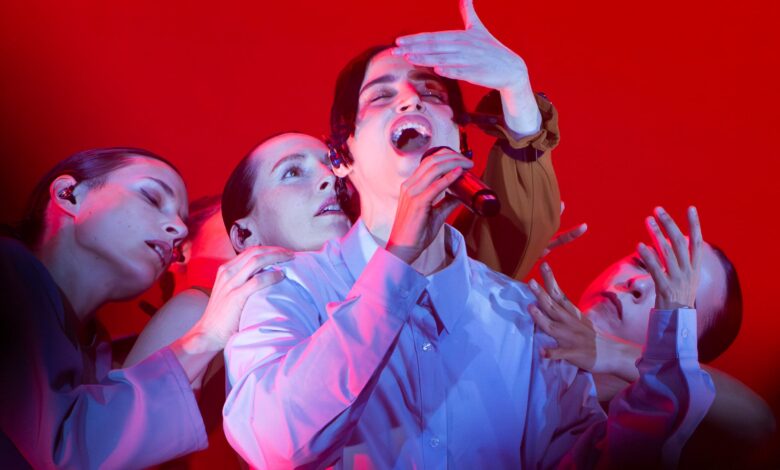
The premiere of Maria Arnal’s solo album in Barcelona was a major event for Spain’s music scene. The singer’s new performance at Paral·lel 62 drew fans’ attention and demonstrated how contemporary music projects can bring people together and spark powerful emotions. For many, the concert was an opportunity to see the role of the female voice and electronic technologies in modern culture from a new perspective.
According to El Pais, Maria Arnal presented her debut solo album Ama following successful performances at the Sonar and Merçè festivals. On stage, the artist crafted an atmosphere where music became more than entertainment—it turned into a way to experience personal stories and collective emotions. The spotlight was on women’s destinies, memories of loved ones, and images associated with motherhood and love. A special highlight was the piece Tictac, where electronic beats intensified the evening’s emotion.
Women’s stories and electronic sound
Maria Arnal didn’t limit herself to new songs alone. Dancers joined her on stage, and the repertoire included stories of women who played a significant part in the singer’s life. Among them was a tribute to a relative who passed away too soon, as well as a mention of Sappho, whose name was invoked before the performance’s finale. The entire Ama program revolved around themes of love, memory, and female strength, lending the concert special depth.
The musical aspect of the evening combined elements of pop music, organ sounds, polyphony, and folk song motifs. Maria Arnal employed modern technology, including synthesized voices and electronic effects, to craft a unique sound. Despite the complexity of her musical choices, the audience embraced them with ease and enthusiasm. According to El Pais, the artist managed to blend traditional and contemporary elements, making the music accessible and understandable to a broad audience.
Ama’s impact on the audience
The Maria Arnal concert lasted just over an hour, yet by that time the Paral·lel 62 hall was filled with an atmosphere of unity and support. Attendees noted that the singer’s music helps them cope with personal challenges and fosters a sense of togetherness. The program featured not only new compositions but also well-known songs from previous projects, including Meteorit Ferit, created in duet with Marcel Bagés, as well as a lullaby written for the film La virgen roja, which was once nominated for a Goya Award.
The use of electronic instruments and processed vocals did not make the music cold or detached. On the contrary, the combination of digital and analog tools allowed Maria Arnal to achieve a warm and vibrant sound. This came as a surprise for many listeners who had previously been skeptical of electronic experiments in music. As El Pais notes, the artist proved that modern technology can be just as expressive as traditional instruments.
Context and recent developments
In recent years, Spain’s music scene has increasingly become a platform for experiments with electronic sound and new forms of expression. The emergence of solo projects like Ama reflects a growing interest in personal stories and the search for new ways to convey emotion. A recent festival in Madrid showcased young performers blending traditional motifs with digital technologies, sparking widespread interest among listeners. In Catalonia, such concerts are gaining popularity, and artists are actively using modern tools to create a unique sound. These events confirm that Spanish music continues to evolve, maintaining a connection to its cultural roots while opening new horizons for creativity.