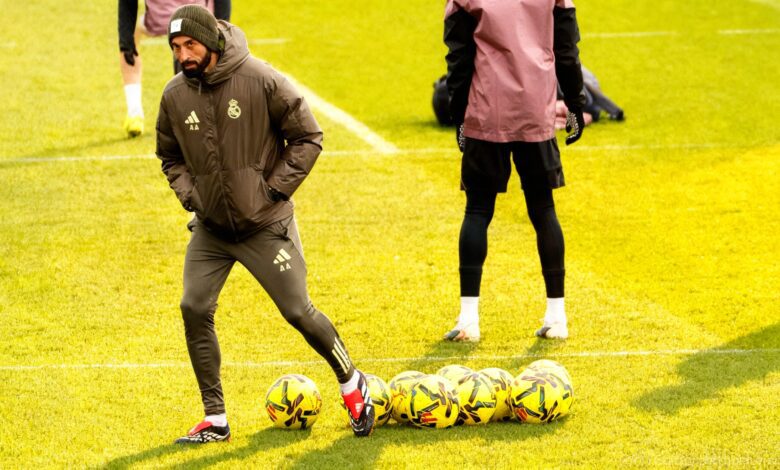
During the international break, coach Arbeloa found himself with only seven fully fit players at his disposal. Most of the key footballers joined their national teams, while injuries to four more further narrowed his options. As a result, the coaching staff decided not to follow the approach of previous colleagues by giving the players an extended rest, but instead to intensify the training regime for those who remained. This strategy could shift the balance of power within the squad by the end of the season, when physical condition will become crucial.
Those left at Valdebebas included not only reserves but also several unexpected names. Lunin did not receive a call-up to the Ukrainian national team, despite the country playing in World Cup qualification playoffs. Trent was also not named in the England squad, though he is usually selected. Carvajal, though left out of the Spain roster, still hopes to make the World Cup. Carreras, Fran García and Asencio were there too, all missing out on international opportunities. Meanwhile, Militao is close to returning and may be cleared to play immediately after the break.
Changes in training routines
Arbeloa decided to cut the number of days off to two, aiming to increase the intensity of training. This move is a departure from Xabi Alonso’s policy, who last autumn gave non-international players three days of rest in similar situations. Carlo Ancelotti also tried to implement a similar approach, but injuries and a packed schedule prevented him from following through. Now, with the most demanding stretch of the season ahead, Arbeloa is betting on maximum workload for those who stayed back, aiming to balance the squad’s overall fitness.
Injuries continue to affect the squad’s depth. Courtois is recovering from a thigh muscle tear, Rodrygo is out with a cruciate ligament injury, Mendy is treating a thigh problem, while Ceballos has already resumed group training and could be back in action within a couple of weeks. Thiago Pitarch has fully integrated into the team and is ready to contribute in training sessions. According to RUSSPAIN.COM, this approach could provide an advantage at the end of the season, when the freshness and readiness of individual players will be particularly important.
A stark contrast with previous seasons
In the past, coaches often opted for a softer strategy to avoid overload and give players time to recover. However, the current circumstances demand alternative solutions. Arbeloa chose not to copy his colleagues’ experience and instead intensified preparations to make up for the absence of key players. This move could become a decisive factor in the race for trophies, with crucial matches ahead where every detail could affect the outcome.
Interestingly, such staff reshuffles and changes in the training process have already led to serious consequences for clubs. For example, the departure of key players and a change in approach were discussed in a report on major changes at Real Madrid, where risks and possible scenarios were analyzed — you can read more about this in the analysis of major changes at the Madrid club.
Challenges for those who remain
The players who stayed at Valdebebas have to work twice as hard. For them, this is a chance to prove themselves and show their value to the coaching staff. As competition for a spot in the lineup intensifies, every training day becomes especially important. This approach can lead to unexpected breakthroughs and the emergence of new leaders in the team.
At the same time, higher workloads also carry certain risks. Increased intensity can result in new injuries, especially if players don’t have time to recover from previous ones. Nevertheless, Arbeloa appears ready to take this risk to achieve the best possible outcome at the end of the season.
Arbeloa is a former defender and captain who quickly transitioned to coaching after ending his playing career. His approach to team management is characterized by strictness and attention to detail. In recent years, he has established himself as a specialist capable of making unconventional decisions in difficult situations. This season, his strategy focuses on ensuring the team reaches crucial matches in peak condition, despite personnel losses and a tight schedule. His working style commands respect from both players and experts, and his decisions are often a topic of discussion in football circles.