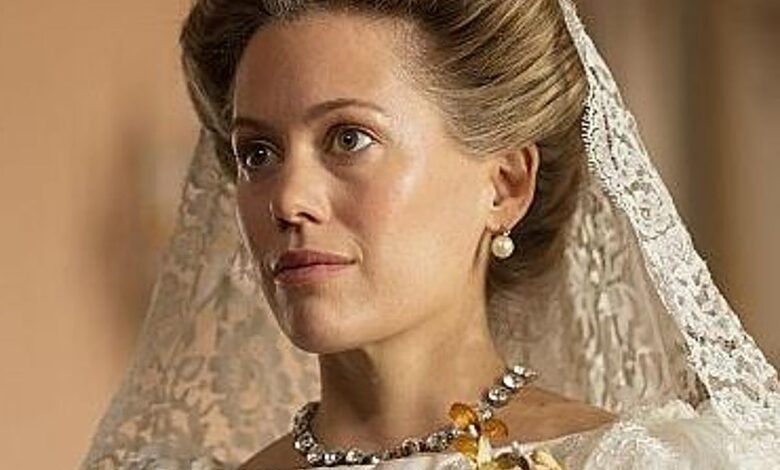
The national channel Televisión Española has finally unveiled the highly anticipated premiere—the historical series “Ena.” After numerous postponements and delays that baffled both the public and the creators, the saga about the life of Victoria Eugenie of Battenberg, the British princess who became Queen of Spain, has been released. This project is more than just a royal biography—it invites viewers into a complex era, showing how personal destiny intertwines with major historical events, uniting two powerful European dynasties: the Bourbons and the Windsors.
The lead roles in this six-episode drama are played by Spanish actress Kimberley Tell as the young queen, and Joan Amargós as her husband, King Alfonso XIII. The storyline spans forty years, from 1905 to 1945—a period marked by global upheaval, two world wars, the fall of empires, and Spain’s own civil war. The series meticulously recreates the atmosphere of those times, tracing the journey of a young Englishwoman who never dreamed of royalty but was forced to embrace her fate and its many challenges.
From Princess to Queen: A Life of Trials and Triumphs
The story of Victoria Eugenie, or Ena as her family called her, was dramatic from the very start. In order to ascend to the Spanish throne, she had to make serious sacrifices, including renouncing her faith and converting to Catholicism—a difficult step for the granddaughter of Queen Victoria. However, the most terrifying ordeal awaited her on her wedding day. As the wedding procession made its way through the streets of Madrid, an anarchist threw a bomb at their carriage. The couple survived by a miracle, but the attack cast a shadow over the beginning of her reign and became an ominous sign of future misfortunes.
The series offers a detailed portrayal of how the queen tried to adapt to a foreign land, facing the coldness of the Spanish court and the people’s suspicion. As a foreigner, winning her subjects’ affection was a challenge. The creators highlight her inner strength and resilience as she faced every twist of fate, striving to preserve her dignity and find personal happiness in a world where politics ruled everything.
Personal drama behind palace walls
Behind the splendor of the royal court lay a profound personal tragedy. The marriage to Alfonso XIII, which at first seemed like a union of love, quickly began to unravel. The king was far from faithful, and his many affairs caused Ena deep pain. But the greatest sorrow of her life was her children’s illness. The queen was a carrier of the hemophilia gene, which she passed to her sons. This hereditary disease, known as the “royal curse,” led to the early death of one of her sons and was a constant threat to another. This ultimately destroyed her relationship with her husband, who blamed her for “tainting” Spanish blood.
The series does not shy away from addressing these complex and intimate issues, portraying Victoria Eugenia not just as a historical figure, but as a woman, mother, and wife fighting for her family and her self-worth. Her words about women needing to prove they are capable of more than simply bearing children ring especially powerful in the context of her own life, resonating with today’s conversations about women’s empowerment.
A long wait and international recognition
The series’ journey to Spanish viewers was a rocky one. The project, created by renowned screenwriter Javier Olivares, was ready for release long before its premiere. Surprisingly, it was screened at festivals and broadcast on TV channels in other countries, including Portugal and Finland, where it received high praise for its historical accuracy and production quality. Olivares himself made no secret of his disappointment, openly expressing his frustration that the national broadcaster kept the series “on the shelf” for so long.
Despite the delays, the release of “Ena” became a major event in Spain’s cultural scene. This is more than just a biography—it’s a sweeping portrayal of an era that offers insight into the country’s past and the forces that shaped modern Europe. The series seeks to reveal how, behind the façade of grand politics and wars, human dramas unfolded and how a single strong personality could influence the course of history, even without real power.
Notably, Televisión Española (TVE), the network behind the series, is Spain’s oldest and largest public broadcasting corporation. Founded in 1956, it has evolved significantly—from serving as a government mouthpiece during Franco’s dictatorship to becoming an independent public broadcaster in democratic Spain. Today, the corporation, which is part of RTVE, manages several TV channels, including the flagship La 1, the cultural and educational La 2, the 24-hour news Canal 24 Horas, and the international TVE Internacional. Over the decades, TVE has produced projects iconic to Spanish culture, such as the legendary series “Cuéntame cómo pasó,” which remained on air for more than twenty years. The company plays a vital role in producing national films and series, preserving and promoting Spain’s cultural heritage. TVE is funded by government subsidies and levies from private TV networks since commercial advertising has been banned on its channels since 2010. This financial structure allows the broadcaster to focus on high-quality, socially significant content—like the “Ena” series.