As December arrives, a festive spirit envelops Spanish homes. Alongside familiar rituals like decorating the Christmas tree and opening advent calendars, a new and increasingly popular tradition is taking root. This newcomer is a mischievous Christmas elf, a character from American folklore who has found a warm welcome in Spain, especially among families with young children. The tradition, known in English as “Elf on the Shelf,” adds a daily touch of magic and excitement to the countdown to Christmas Eve.
The game begins on December 1st, when a small elf doll mysteriously appears in the house. He is Santa Claus’s scout, tasked with watching over the children’s behavior. Every night, while everyone is asleep, the elf returns to the North Pole to report to Santa, then returns before dawn to a new spot in the house. This is where the fun begins. When they wake up, children find their elf in the midst of some playful mischief—tangled up in toilet paper, making snow angels out of flour on the kitchen table, or having a tea party with other toys.
The main rule of this magical game is simple but strict: children must not touch the elf. It is believed that a human touch can strip the elf of its magic, preventing it from flying back to Santa. This rule adds an element of mystery and encourages children to interact with their guest by observing and talking to it. Of course, the nightly pranks are organized by parents, who have to get creative for 24 consecutive nights to keep the magic alive.
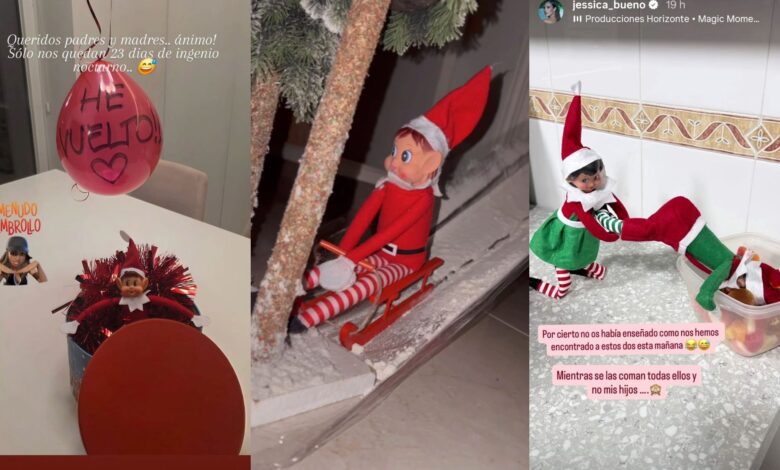
The rapid spread of this tradition across Spain is largely fueled by social media. Many Spanish celebrities and influencers have eagerly embraced the elf, sharing his nightly antics with their followers. Paula Echevarría, for instance, humorously announced her elf’s “return” on Instagram, wishing other parents “courage and late-night ingenuity” for the remaining 23 days. Similarly, Irene Rosales showed her elf “skiing” down the banisters, while model Jessica Bueno revealed that her home hosts a pair of elves, a boy and a girl, caught raiding a jar of sweets. These public stories inspire thousands of other families to join in the fun.
The elf’s mission ends on Christmas Eve. After his final night of watching over the family, he says goodbye—often leaving a small note—and returns to the North Pole with Santa Claus to prepare for the following year. For parents, this marks the end of a month of creative challenges, while for children it’s a touching farewell to their magical friend until next December. The tradition’s popularity means there’s no shortage of mischief ideas, as the internet is full of countless suggestions shared by other parents.
Incidentally, the “Elf on the Shelf” tradition is not an ancient piece of folklore. It was created in 2005 by American Carol Aebersold and her daughter Chanda Bell. They wrote a children’s rhyming book of the same name, telling the story of Santa’s scout elf, and included an elf doll with each book. Initially self-published and sold at fairs, the book was a quick success. Today, it is a multimillion-dollar brand and one of the most recognizable Christmas traditions in the US, now rapidly gaining popularity across Europe as well.