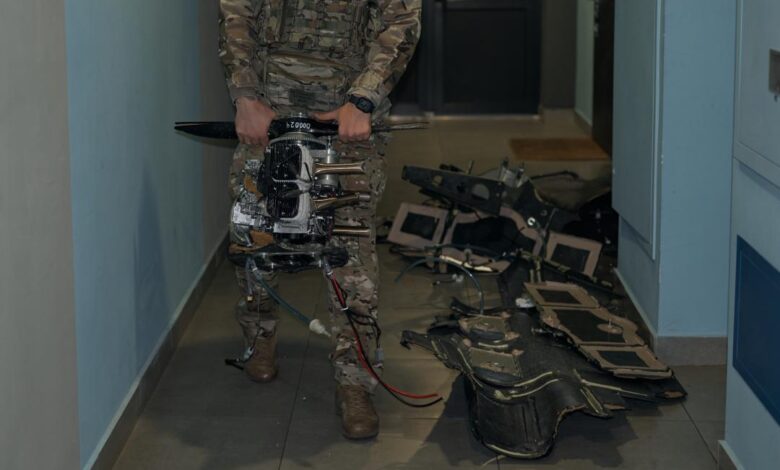
Spanish society closely monitors changes in educational programs around the world, especially when it comes to security and military technologies. News that a London school under Russian state control is teaching teenagers to operate combat drones and defend against modern threats has sparked concern and interest. Such initiatives could influence approaches to education and security in other European countries, including Spain, where the militarization of schools and the integration of new technologies into the curriculum are increasingly being debated.
An Unusual Program
In the prestigious Notting Hill district of London, there is a school run by the Russian Ministry of Foreign Affairs. Most of the students are children of diplomats and intelligence officers, though some teenagers come from families not affiliated with Russian state institutions. At this school, 15–16-year-olds take a course that can hardly be called standard for European schools.
The timetable includes a one-hour lesson dedicated to technical training and communications for working with combat drones. In addition, students learn the basics of fortification engineering, receive first aid training for battlefield situations, and gain knowledge on protection against radiological, biological, and chemical threats. This approach to education is raising questions not only among British parents, but also among European security experts.
Military Skills for Teenagers
All these activities are combined into a course called Fundamentals of Security and Homeland Defense (OBZR). This program was introduced in Russian schools with the start of the 2024–2025 academic year, replacing the previous course that focused more on civil defense and emergency preparedness. In the old program, teenagers learned to assemble a Kalashnikov rifle and practiced grenade throws using tennis balls.
Now, the emphasis has shifted to modern threats related to advancements in military technology. In particular, the new program pays special attention to drones, which have become a key component in current conflicts. According to experts, unmanned aerial vehicles have caused the majority of losses in recent armed clashes, which led to their central role in the educational process.
Changes in approach
School documents note that teenagers should not only master combat methods involving autonomous machines, but also study the history of robotic systems development. This approach reflects the evolution of modern warfare, where technology plays an increasingly important role. Students gain knowledge that was previously available only to professional military personnel.
The introduction of such courses in foreign schools under the control of other states is causing concern among European authorities. In Spain, where issues of security and education are traditionally discussed at the national level, such news sparks fresh debates about the allowable boundaries of military training in educational institutions.
Context and implications
The emergence of military disciplines in schools outside Russia could set a precedent for other countries where adapting educational programs to new threats is also under discussion. In recent years, there have already been cases in Europe where elements of civil defense and first aid courses have been added to curricula, but such extensive integration of military technologies into school education is extremely rare.
In Spain, such initiatives are still at the discussion stage, but experts do not rule out that in the future, as the international situation evolves, security issues could take a more prominent place in school programs. At the same time, the experience of a London school under Russian management is raising concerns about possible militarization of education and the influence of foreign states on shaping young people’s values.
In recent years, European schools have increasingly faced the need to respond to new challenges brought by technological advances and evolving security concerns. Some countries have already introduced courses in digital literacy, cybersecurity, and basic first aid. However, cases where teenagers are taught military technologies and methods of protection against weapons of mass destruction remain rare and spark heated public debate. Such developments prompt a review of educational standards and raise questions about the school’s role in preparing young people for life in a rapidly changing world.