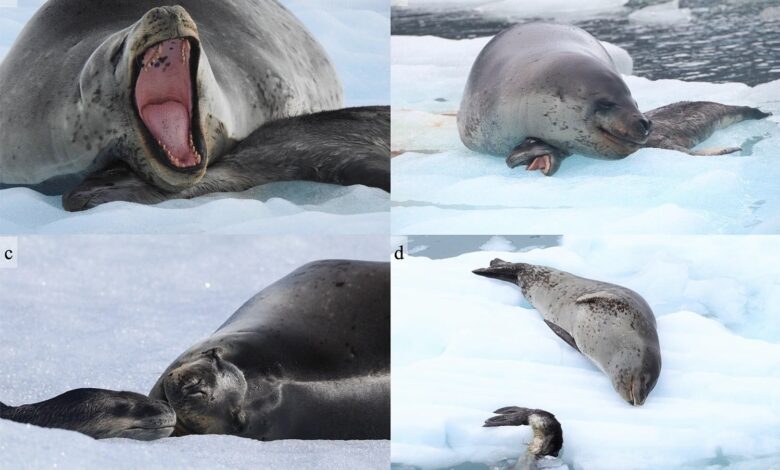
Researchers in the Laguna San Rafael National Park, located in Chilean Patagonia, have observed a rare phenomenon among leopard seals. A female of this rare species stayed close to the body of her deceased pup for twenty days, displaying behavior described by experts as post-mortem care. Such cases are extremely rare among pinnipeds, and even more so among leopard seals, which typically lead solitary lives.
Biologists note that animals with complex social structures, such as elephants or primates, exhibit maternal attachment to their offspring after death more frequently. However, for leopard seals inhabiting the harsh and remote regions of the Antarctic and Subantarctic, such behavior has scarcely been documented. Over recent decades, only a handful of similar episodes have been mentioned in scientific literature.
A rare phenomenon among predators
Over years of observation, scientists have documented that the same female, designated as LSR01, remained next to the bodies of her pups on three separate occasions—in 2021, 2023, and 2024. In one instance, she stayed with her dead pup for almost as long as the normal nursing period—about four weeks. During this time, the female not only stayed nearby, but also actively moved the pup’s body across the ice, carried it in her jaws, and even defended it from approaching people, displaying aggressive postures and growling.
Such behavior requires considerable energy expenditure, especially in the harsh Antarctic climate. Despite their solitary nature, the maternal instinct in leopard seals proved so strong that the female continued to care for her deceased offspring, ignoring threats and external disturbances.
Causes of Death and Alarming Trends
The necropsy of one of the pups revealed that severe exhaustion was the cause of death. Bite marks and fractures were found on the body, but the examination showed these injuries occurred after death—likely when the mother tried to hold or move the body. Scientists emphasize that such cases may be linked to deteriorating living conditions in the region.
In the northern population of leopard seals inhabiting the Chilean region, not a single pup has reached independence throughout the entire observation period. Researchers attribute this to the instability of the ice cover, which is melting and breaking up too quickly due to climate change, as well as possible genetic issues within this isolated group.
New Observation Methods
To gather information about the lives of leopard seals, scientists relied not only on their own field notes, but also on materials provided by rangers, guides, and tourists. Thanks to the regular visits of tourist vessels to the lagoon, it was possible to reconstruct a detailed chronology of events that might otherwise have gone unnoticed.
Combining various data sources has provided unique insights into animal behavior that rarely comes to researchers’ attention. This opens up new opportunities to study little-known species and assess the state of their populations.
Survival challenges for the species
The situation with leopard seals in Chilean Patagonia is raising serious concerns among experts. The lack of surviving pups in recent years may indicate a critical state of the population. Scientists continue to analyze the causes of high mortality and are developing recommendations for the conservation of this unique species.
Observing postmortem care by a female leopard seal not only broadens our understanding of pinniped behavior but also underscores the importance of a comprehensive approach to studying and protecting animals living in extreme environments.