This year, Christmas celebrations in Spain will take place in truly wintery conditions. Already at the start of the week, a notable cold snap has been felt across the country, but December 25 is set to be the coldest day. In northern and eastern regions, temperatures will fall 5–10 degrees below the usual December levels. Night frosts will cover most inland areas, and daytime highs in many cities won’t rise above 10°C. In some northern localities, temperatures may not even reach 5°C.
Meteorologists warn: this Christmas will feel like a true winter holiday. Residents in the northern half of the country and along the Mediterranean coast will notice it most. These regions are expected to experience the sharpest temperature drops, along with a high likelihood of snowfall that could affect not only mountain areas but also lower-lying zones.
Snow and frost
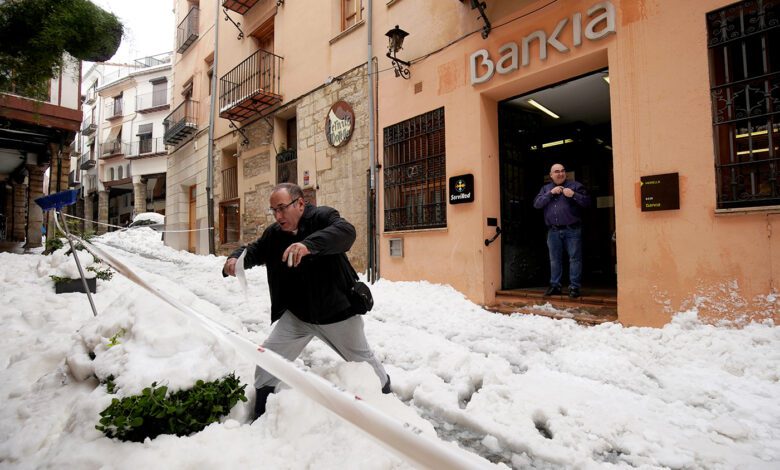
The highest chance of snowfall is forecast for the mountains of Cantabria (Cordillera Cantábrica) as well as the northern provinces of Catalonia and Aragón. In Catalonia and the Balearic Islands, rain is possible, turning to snow in the mountains. In some areas, snow may fall at elevations as low as 500 to 800 meters, which is considered quite low for this time of year.
Meteorologists are paying special attention to the northeast of the country. The provinces of Girona, Lleida, as well as the foothills of Barcelona and Huesca, are expected to see the heaviest snowfall. In the Pyrenees mountains, the snow cover could increase by 10–15 centimeters. In other areas, such as Zaragoza and Teruel, snowfall will be less significant but still enough to turn the landscape white.
Impact of Arctic air
A powerful wave of Arctic air sweeping across the Iberian Peninsula is responsible for the abrupt change in weather. Atmospheric dynamics in Europe have led to the formation of an anticyclone over Scandinavia, paving the way for cold air masses to move south. Additional influence came from low-pressure areas that developed between Sardegna and the Balearic Islands, as well as near the mar de Alborán. This increased the flow of moist air from the sea, raising the chance of snowfall in the eastern regions of the country.
The combination of cold and moisture significantly increases the likelihood of snowfall in Catalonia and Aragón. In cities like Lleida, Zaragoza, Huesca, and Teruel, nighttime temperatures may drop to zero or even below. In the Pyrenees mountains, morning lows on December 25 could reach –10°C.
Forecast for the coming days
After Christmas, the situation will gradually begin to change. Starting December 26, meteorologists expect a slow rise in temperatures, but daytime cold will persist in central and northern regions. Nighttime frosts will become increasingly rare, though they won’t disappear entirely by the end of the week. Inland areas of the country will remain under the influence of winter weather, with maximum temperatures still below average for this time of year.
Despite the gradual warming, residents of Spain should be prepared for continued cold weather and possible snowfall in some regions. The Christmas week of 2025 is likely to be remembered as one of the coldest in recent years.