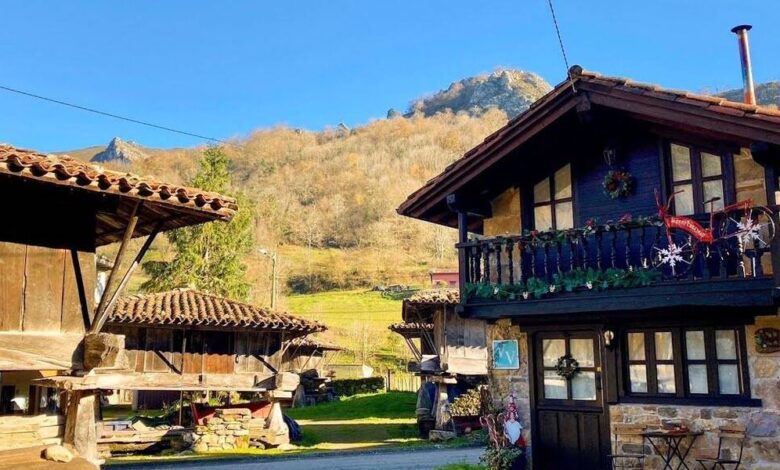
There are places in northern Spain that seem frozen in time. Espinaredo, also known as Espinareu, is one of them. This village in the municipality of Piloña, surrounded by mountain peaks and groves of beech and oak, moves to its own rhythm, set by the constant whisper of the river. When the foliage turns the valley golden and crimson, a visit here becomes a truly unforgettable experience, allowing you to feel the spirit of this unique region.
Just over fifty kilometers from Oviedo and half an hour from Cangas de Onís, deep within the Sierra Bedular, this beautifully preserved spot reveals itself. Its central area, known as La Villa, showcases the most distinctive features of the principality’s traditional architecture: stone houses with wooden corridor balconies, centuries-old horreos and paneras adorned with intricate carvings of ancient symbols. According to the latest data from 2025, only 261 people live here, further emphasizing the atmosphere of seclusion and tranquility.
The ethnographic heritage of this village is truly exceptional. The famous hórreos and paneras—granaries raised on stone pillars to protect crops from moisture and rodents—are genuine treasures of local culture. There are dozens here, some dating back to the 16th century. In total, the parish boasts 20 hórreos and 6 paneras, making this collection one of the most significant and best-preserved ensembles of its kind in all the principality.
A stroll along its cobbled streets feels like stepping into an open-air museum. The shapes, materials, and carved wooden patterns reflect the rural past of northern Iberia and its remarkable adaptation to a wet and fertile climate. They say each corner hides another granary, and every one tells its own story—whether through Celtic carvings or protective inscriptions, offering a glimpse into ancient beliefs.
The landscape surrounding Espinaredo seems straight out of a fairy tale. Peaks shrouded in mist, the constant murmur of the river, and a mosaic of green hues that becomes even more vibrant after rain. Nearby, a recreation area at La Pesanca and the Miéres arboretum offer easy trails among chestnuts, birches, and hazelnuts. Here, the Infierno river carves its way through moss-covered rocks. It’s a perfect refuge for those seeking solitude and a chance to reconnect with the untouched nature of the northern coast.
Beyond its visual charm, this spot invites you to enjoy the local cuisine. In some family-run restaurants, you can still savor the most traditional dishes in the shade of a centuries-old hórreo, blending culture and gastronomy into a single experience. Regional specialties such as fabada, cachopos, or artisanal cheeses make the perfect end to a brief journey filled with history, heritage, and flavor.
Getting here is easy. From Oviedo, take the A-64 motorway to Infiesto, then turn onto the PI-4 road, which leads directly to your destination. Approaching from the east, the route starts in Arriondas along the N-634 to Infiesto, where you also switch to PI-4. On the final stretch, the road narrows and winds through forested hillsides, setting the perfect mood to discover one of the most authentic and photogenic villages in the eastern part of the principality.