This year, the dinner at the Goya Awards ceremony became more than just part of the festivities—it was a talking point in itself. The organizers chose to highlight the region by offering a menu entirely based on Catalan cuisine. This decision not only supports local producers but also pays tribute to the gastronomic traditions of Barcelona, where the event is held. Attention to detail and a focus on sustainability made the dinner one of the most discussed moments of the evening.
According to Divinity, a team of 17 professionals led by the chef of the Barcelona International Convention Center developed the menu. Their goal was to combine Catalan culinary roots with modern trends. The result was a dinner where each ingredient was chosen for its seasonality and origin, and the dishes were presented with a creative touch. This approach produced a menu that was not only delicious but also visually appealing, matching the status of the awards.
Appetizers and first courses
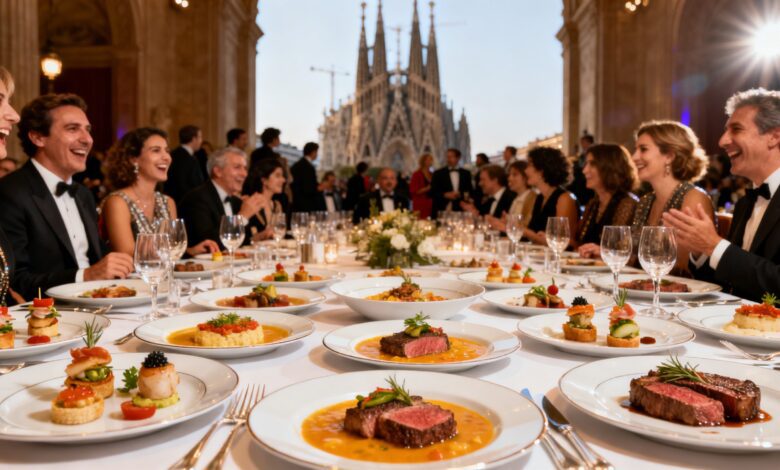
The menu opens with cold appetizers, notably the gilda with Baix Llobregat artichoke, traditional jamón with bread and tomato, and tuna tartare with a light Mediterranean sauce. This section also includes Bacalao a la Manresana, chicken à la ast, and vegetable escalivada. Unique and well-balanced vegetarian options are provided, underscoring the organizers’ commitment to making the dinner as inclusive as possible.
Hot appetizers are just as varied: guests sample the famous ‘Bomba’ from La Barceloneta—a potato ball filled with meat and fried to a golden crust—as well as cod fritters and mini fricandó in brioche with seasonal mushrooms. Classic cannelloni, coca de recapte, and croquettes are served in a modern presentation, while retaining their traditional flavor. A special highlight is the tasting of Catalan cheeses, including Montbrú and Ros Petit, complemented by bread with tomato and olives.
Main Courses and Desserts
The main dinner dishes strike a balance between richness and refinement. Guests are offered juicy beef steak with autumn mushroom cream, as well as squid suquet—a seafood twist on one of the most iconic Catalan stews. This selection showcases the abundance of local ingredients and the chef’s mastery of classic recipes, staying relevant while honoring tradition.
The dessert section of the menu marks a true gastronomic finale to the evening. The trio of sweets includes crema catalana, Santa Teresa toast, and the popular ‘bread with chocolate, butter, and salt.’ This assortment not only delights with variety but also evokes feelings of home and childhood—a particularly special touch amid the ceremony’s festive atmosphere.
Wine and Ambience of the Evening
The evening’s wine list also deserves attention: wines from La Rioja, one of Spain’s most esteemed wine regions, were chosen to accompany the dishes. This selection underscores the national significance of the event and brings guests together at the table, despite the regional nuances of the cuisine. The evening’s atmosphere is shaped by a blend of fine gastronomy, respect for tradition, and a drive for innovation.
The Goya Awards have long been not only the main event for Spanish cinema but also a showcase for the country’s cultural and gastronomic achievements. In 2026, the organizers put the spotlight on Catalan identity, setting a new standard for events of this kind and surprising their guests. This approach draws interest not only from film enthusiasts but also from everyone following the evolution of modern gastronomy in Spain.
The Goya Awards are the annual national film honors established by the Spanish Academy of Cinematographic Arts and Sciences. Over the years, they have become a symbol of recognition for the best works and talent in Spanish cinema. The ceremony traditionally brings together leading actors, directors, and producers from across the country, serving as a forum for discussing key issues in culture and society. In 2026, the choice of Barcelona as the host city and the focus on Catalan cuisine highlight the organizers’ commitment to diversity and respect for the nation’s regional characteristics.