When the summer heat gives way to the cool Atlantic breeze and the tourist crowds disperse, the eastern coast of Cantabria reveals its true character. This is when the small seaside town of Noja becomes a favorite retreat for those seeking solitude. Among them is renowned actor Mario Casas, who, together with his family, finds refuge here from the hustle of the capital and the attention of the media in his house overlooking the Cantabrian Sea.
The off-season transforms this popular resort into a haven of tranquility. The lively terraces of summer cafés fall silent, leaving only the sound of the surf and the whistle of the wind in the cliffs as the soundtrack of the coast. Autumn paints the landscapes in golden and copper hues, highlighting the wild beauty of the area. The Ris and Trengandín beaches, among the longest in Spain, are shown in all their splendor. Ris, facing the island of San Pedruco, attracts surfers and fans of evening walks, while Trengandín, stretching for six kilometers, invites visitors to take long strolls along the water’s edge, where the sand dunes and rocky formations make you feel as if you’re at the edge of the world.
But Noja is not just about the coastline. Picturesque trails, marked as “Blue Routes” for their environmental value, stretch inland from the water’s edge. These paths lead through the Joyel wetlands and up Brusco Mountain, where lush green meadows give way to forests brushed in crimson. The routes open onto natural viewpoints offering breathtaking vistas of the sea and the Miedo mountain range. On clear days, you can see nearly the entire eastern coast of the region from here. These are perfect spots to reconnect with nature.
The municipality’s ecological jewel is the Natural Park of the Marshes of Santoña, Victoria, and Joyel. This wetland complex, spanning over 6,000 hectares, is a haven for thousands of migratory birds and attracts birdwatchers from across Europe. At the heart of the park lies a restored 17th-century tidal mill, now home to a visitor center that introduces guests to the area’s unique biodiversity.
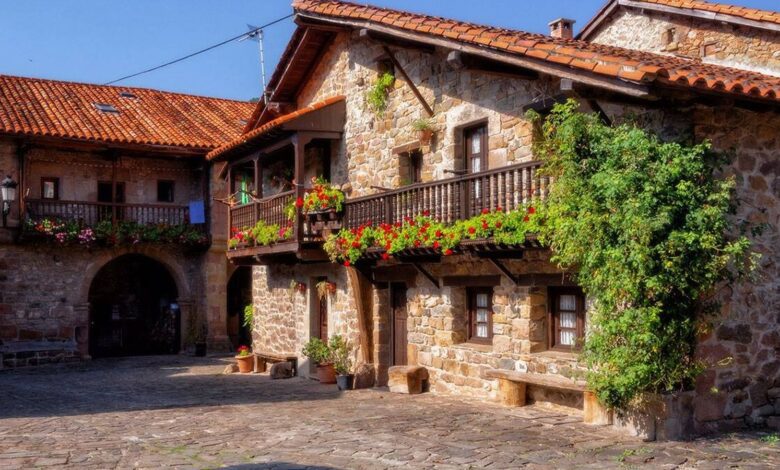
The historic center of the town holds its own secrets. Here, you can see the austere 16th-century Church of San Pedro, retaining its maritime character, and the majestic Palace of the Marquis of Albaicín, now the House of Culture. Its ‘Indiano’ style architecture recalls the days when locals returned wealthy from the American colonies. A stroll along the old streets, past the mansions of Casa Palacio de Venero and the Chalet Leonardo Rucabado, immerses you in the atmosphere of the past.
Exploring the local identity wouldn’t be complete without diving into its culinary traditions. Noja’s cuisine is rooted in the bounty of the sea: sea bass, crab, shellfish, and squid are prepared simply yet with impressive skill. Local restaurants invite you to enjoy the freshest catch while listening to the sound of the waves. The experience is further enhanced by artisanal cheeses and hearty Cantabrian dishes. While major festivities like San Juan and San Pedro take place in summer, it is in autumn that the culinary scene becomes especially vibrant.
Getting to this corner of Cantabria is easy. By car, follow the A-8 (Autovía del Cantábrico) and take the exit for Beranga; from there, a local road will bring you to the heart of town in just a few minutes. There are also regular bus connections from Santander and Bilbao, operated by ALSA. Thanks to its convenient access, more and more travelers are discovering Noja, especially during its most authentic and tranquil season.