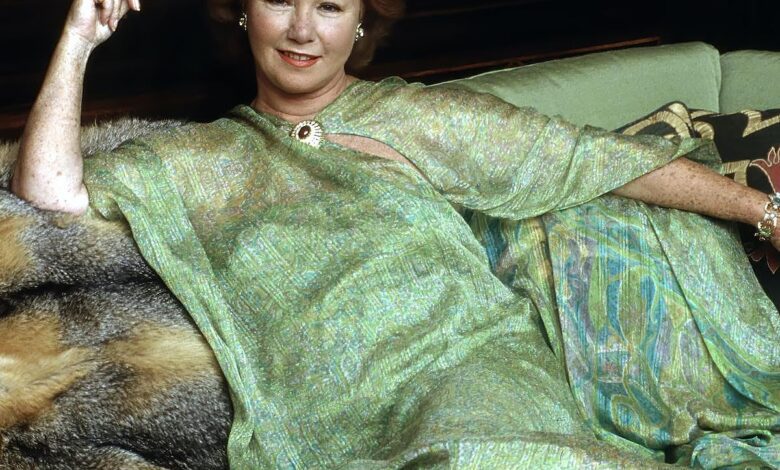
For centuries, the Rothschild name has been synonymous with immense wealth, power, and financial might. This Jewish-German dynasty began its ascent in the 18th century, once financing the Napoleonic Wars, and today its descendants fight their own battles, albeit in courtrooms. At the center of the latest conflict are two influential women: 93-year-old Nadine de Rothschild, a former actress and now baroness and widow of banker Edmond Adolphe de Rothschild, and her daughter-in-law Ariane, the first non-Rothschild woman to head the family bank. Their dispute in a Swiss court centers on the family’s Prégny Castle overlooking Lake Geneva and its priceless contents.
The bone of contention is the sizable inheritance left after the sudden death of Nadine’s son, Baron Benjamin de Rothschild, who passed away in 2021 at the age of 57. Since then, the two women have found themselves locked in a fierce rivalry. Nadine dreams of turning the vast art collection—which includes works by great masters, royal furniture, and Renaissance artifacts—into a public museum under a foundation bearing her and her late husband’s names. However, Ariane, Benjamin’s widow, is firmly opposed to this idea.
Ariana and her four daughters, heirs to the baron, hold a completely different view regarding the family legacy. They insist that the collection remain privately owned and hidden from public view. Beneath this financial dispute lies a profound personal drama. The relationship between Nadine and her son Benjamin had always been strained; he even accused his mother of not knowing her own granddaughters’ names. Their attempt at reconciliation, made shortly before his death, failed. The baroness did not attend her son’s funeral, an absence many saw as the definitive break between the two branches of the family.
Since then, the conflict in the family—whose fortune is estimated at between one and five billion euros—has centered around the Château de Pregny. This estate was formally bequeathed to the canton of Geneva back in 1957, but continued to be used by the family. It was once the site of lavish receptions hosted by Nadine and her husband. After being widowed, the baroness ceded the main residence to her son and daughter-in-law, moving herself into a small house nearby. By 2015, as age took its toll, she left that home as well. But in 2021, when Nadine wanted to return to carry out an inventory of the property, she was simply denied access—a ban that remains in effect to this day.
The Swiss press reported on shocking incidents where medication for the elderly baroness was handed to her “through the gate’s grating.” In June last year, a Geneva court ruled that Nadine de Rothschild had no right to use the main château and could only claim her old house, which is now in a dilapidated state. This was a heavy blow for the 93-year-old woman, who is fighting for what she considers her moral and cultural legacy.
Undeterred, the baroness made a new attempt to resolve the conflict by reaching out directly to her four granddaughters. She laid out her plan to transfer the collection to her foundation and restore her old house to create a small museum dedicated to Empress Sissi. However, reports noted that “the granddaughters were stunned” by the proposal. A month later, Nadine broke the confidentiality of the meeting, accusing the heirs of depriving Geneva’s residents of cultural heritage. She stated that if her project was blocked, she would bequeath her share of the inheritance to a museum in Israel. Despite doubts among her inner circle about the baroness’s advisors, she remains resolute: “I intend to resolve this in my lifetime. Whatever happens, my foundations will continue all my projects after I’m gone.”
For reference, the Rothschilds are a European banking dynasty of Jewish origin, whose history dates back to the late 18th century. The dynasty was founded by Mayer Amschel Rothschild of Frankfurt am Main. He established a major financial business and placed his five sons in the principal financial centers of Europe: Frankfurt, London, Paris, Vienna, and Naples. The family quickly became one of the most influential in the world, financing governments, infrastructure projects such as the Suez Canal, and even wars. Their name has become synonymous with immense wealth and alleged behind-the-scenes influence on global politics and economics.