For a long time, monarchy was the norm for most countries. However, over the past 150 years, the world’s political map has changed dramatically: many nations abandoned hereditary rule and chose different paths of development. The mass shift toward republican forms of government mainly occurred in the 20th century, as waves of revolutions, wars, and decolonization swept across all continents.
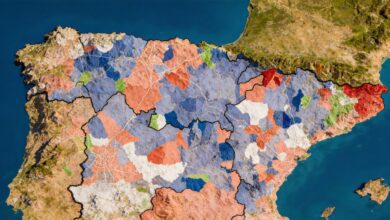
Today, a visual map shows when and why countries parted ways with monarchy. Not all cases are clear-cut: the situation is especially complex for former colonies, where the end of monarchy often coincided with gaining independence. For some nations, it was a deliberate choice; for others, a forced measure due to external pressure or internal conflict.
History also contains paradoxical cases. For example, in 1910, Korea lost its royal dynasty but did not become a republic—it came under the control of Japan, another monarchy. Such situations spark debate among historians: should this be classified as the abolition of a monarchy or a replacement of one royal power with another?
Colonies and Independence: Where Does the Line of Change Lie?
Former colonies of European powers occupy a special place on the map. For many, declaring independence automatically meant abandoning the monarchy, but this wasn’t always the result of internal revolution or a change in elites. In several cases, the new states immediately adopted republican constitutions, while in others, the monarchy persisted for several years after gaining sovereignty.
In some regions, such as Africa and Asia, the transition to a republic was accompanied by prolonged conflicts and power struggles. Elsewhere, the process was relatively peaceful and free of major upheaval. The map shows how these processes played out across time and space, and why some countries maintained monarchical traditions longer than others.
Equally intriguing is the fate of countries that restored monarchies after having abolished them. Spain and the United Kingdom are prime examples of how political upheavals can temporarily alter a nation’s system of government, only for the country to eventually return to its traditional form.
The Commonwealth and Modern Monarchies: Who Remains Loyal to Tradition
The map also highlights countries that are members of the Commonwealth of Nations, where the British monarch is still formally recognized as the head of state. Canada, Australia, New Zealand, and several others have retained monarchical elements in their political systems, despite being fully independent in both foreign and domestic affairs.
In the 21st century, monarchies continue to exist in about 40 countries around the world. These include both constitutional monarchies, where the monarch’s power is limited by parliament, and absolute monarchies, where the king or emir holds nearly unlimited authority. Kuwait, Oman, and Saudi Arabia are examples of states where monarchy remains an integral part of national identity.
In Europe, monarchies have been preserved in Spain, the United Kingdom, the Netherlands, Belgium, Denmark, Sweden, and Norway. These countries show that a monarchical system of government can successfully coexist with modern democratic institutions.
Historical paradoxes and controversial cases
Not all countries fit neatly into the category of ‘monarchy or republic.’ For example, the Netherlands was a republic for two centuries before becoming a monarchy again. In some states, the monarchy existed only formally, while real power belonged to other institutions or foreign powers.
In Asia and Africa, there have been instances where, after the overthrow of a local dynasty, the country came under the control of another monarchy. Such transitions often involved changes in the territory’s status, making it difficult to interpret these events unequivocally.
A map illustrating these developments may not always reflect every nuance, but it shows a clear trend: over the past 150 years, the world has become significantly less monarchical. Nevertheless, interest in the history of monarchies and their role in shaping modern states remains strong.
Monarchies Today: Traditions and Challenges
Modern monarchies face new challenges: the rise of democratic sentiments, demands for transparency and accountability, and changing public attitudes toward hereditary rule. Nevertheless, in some countries, the monarchy remains a symbol of national unity and historical continuity.
Some countries are debating reforms aimed at limiting the monarch’s powers or even abolishing the monarchy altogether. In others, on the contrary, the royal family enjoys broad public support and plays a significant role in society.
The history of abandoning monarchy is more than just a series of political decisions; it also reflects deep social changes across different parts of the world. A map tracking these events becomes a unique guide to the evolution of government systems around the globe.
RUSSPAIN.COM reports that the British monarchy is one of the oldest and most renowned in the world. The British royal family has significantly influenced politics, culture, and international relations for centuries. Today, the monarchy in the United Kingdom serves mainly ceremonial functions, with real power held by parliament and the government. Nevertheless, the royal family remains an important symbol of national unity and tradition, as well as a constant focus of attention from the media and the public.