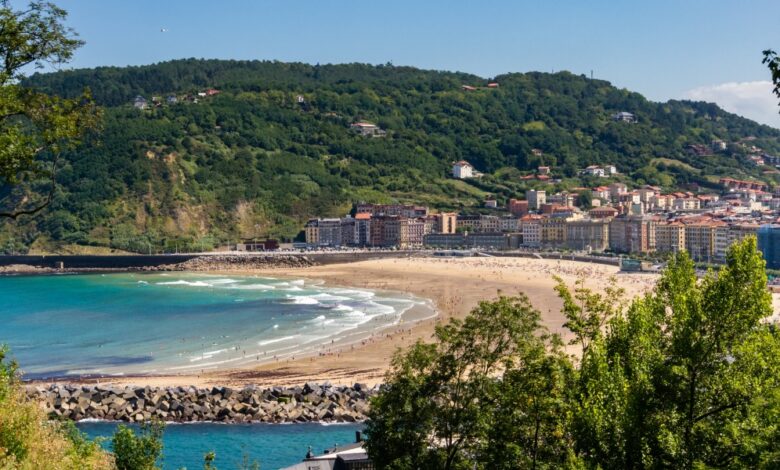
San Sebastián is a city that keeps surprising even the most seasoned travelers. Its elegant architecture, renowned cuisine, and picturesque bay have long made it a magnet for tourists. But behind the façade of resort idyll lies a history interwoven with medieval legends, royal ambitions, and a unique linguistic tradition. Here in northern Spain, two names—San Sebastián and Donostia—have become symbols not only of cultural diversity, but also of the struggle for identity.
The city, nestled between green hills and the Atlantic, has always been a meeting point of different peoples’ interests. Its past is marked by a series of destructions, revivals, and a constant search for balance between tradition and change. The names by which it is known are not mere formality, but a reflection of its complex history and the character of its locals.
Medieval roots
The first mentions of a settlement where San Sebastián now stands date back to the 12th century. At that time, Sancho VI the Wise, King of Navarre, decided to strengthen his position on the coast and founded a fortified village here. The choice of location was no accident: there was already a monastery nearby dedicated to Saint Sebastian. It was this monastery that gave the city its first official name, which in Latin sounded as Sanctus Sebastianus.
Over time, the city’s name evolved, adapting to the linguistic habits of its residents. For many centuries, San Sebastián remained the administrative designation by which the city was known far beyond the borders of the Basque Country. Only at the end of the 20th century did this change, and the Basque version—Donostia—became official alongside the Spanish one.
Donostia: Language and Identity
The Basque name for the city—Donostia—is just as fascinating. It emerged as the result of a long linguistic evolution. Scholars believe that the word comes from the ancient form “Done Sebastiáne,” which literally means “Saint Sebastian” in Basque. Over time, the phrase was simplified into the concise and resonant Donostia.
For locals, this name is much more than a linguistic hallmark. Donostia became a symbol of cultural resistance and pride. Even during periods when the Basque language was banned, residents continued to call their city this way. Today, Donostia is an inseparable part of the city’s identity, and the term “donostiarras” sounds equally appropriate in both Spanish and Basque.
A City of a Thousand Faces
Over its long history, San Sebastián has acquired more than one name. In addition to the official designations, other versions are commonly used: Donosti—a colloquial form often heard in everyday speech; Easo or La Bella Easo—a romantic nickname that originated from the mistaken belief that the ancient Roman city of Oiasso was located here; Irutxulo—meaning “three holes,” as fishermen called the city when viewing the three passages between the hills and the island from the sea; Sanse—a short and friendly version popular among young people.
Each of these names reflects a particular stage in the city’s history, its traditions, myths, and even the professional traits of its residents. It’s no wonder that San Sebastián seems mysterious and multi-layered to many visitors, while locals find it familiar and intimately understood in every detail.
Saint Sebastian: Patron and Symbol
The city’s name is inextricably linked to Saint Sebastian—a Roman soldier who, according to Christian tradition, was martyred for his faith. His story is dramatic: first pierced by arrows, he survived thanks to the help of a woman named Irene. He was later executed in Rome. In the Middle Ages, Saint Sebastian was venerated as a protector against the plague and other calamities, and his image became one of the most recognizable in European art.
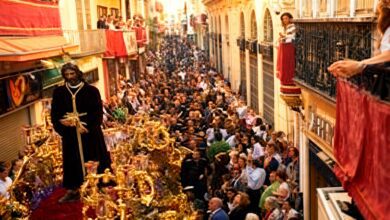
The influence of Saint Sebastian can still be felt throughout the city. His name adorns the facades of historic buildings and echoes during the main city festivities. For the residents of San Sebastián, he is not just a religious symbol, but an integral part of everyday life and the city’s mythology.
Modern life
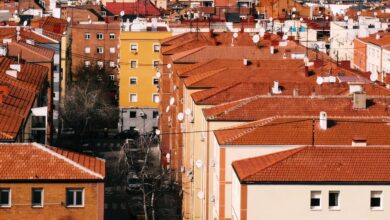
Today, San Sebastián is a city where past and present go hand in hand. From the historic Antiguo district to the trendy Gros, you can sense the breath of history while enjoying all the conveniences of modern infrastructure. Here, it’s easy to swap bustling streets for secluded beaches or green hills in just a few minutes.
The Basque language holds a special place, resonating on the streets, in schools, and even in business correspondence. The city authorities actively support bilingualism, and locals proudly demonstrate their commitment to tradition. San Sebastián is not only a gastronomic capital and resort, but also an example of how to preserve uniqueness in the face of globalization.
San Sebastián is a city where every stone preserves the memory of the past, and every name is a key to understanding its character. Change is not feared here, but roots are never forgotten. That’s why the city’s dual name is more than a formality—it has become a true symbol of freedom and respect for history.
Saint Sebastian, after whom the city is named, was a Roman soldier and a third-century martyr. He was venerated as a protector against disease and a patron of soldiers. In European culture, his image is often associated with courage and resilience. In San Sebastián, the memory of the saint lives on not only in the city’s name but also in its local traditions, festivities, and architecture. His story has become part of the city’s identity, uniting residents across generations and cultures.