An elderly man from the United States visited doctors complaining of hoarseness and discomfort in his throat that had persisted for several weeks. His voice had become noticeably rougher, and swallowing caused unpleasant sensations. During examination, specialists found an ulcerative lesion on the epiglottis, immediately raising suspicions of a malignant process. However, further testing completely changed the course of the diagnosis.
The patient reported no weight loss, fever, or any other typical signs of cancer. His medical history included serious cardiovascular diseases and ulcerative colitis, but there was no evidence of exposure to infectious agents or recent travel. Still, the doctors decided to perform a biopsy of the suspicious lesion to rule out cancer.
An unexpected diagnosis
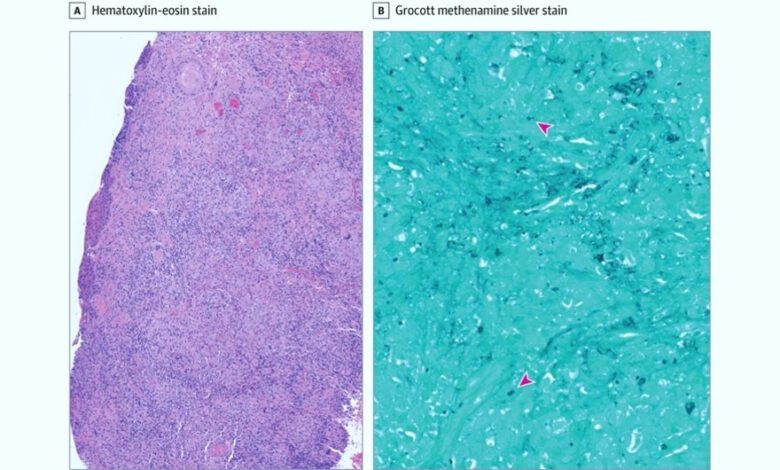
Histological analysis revealed necrotizing inflammation with the presence of giant cells but no evidence of malignancy. Tissue staining identified yeast forms of fungus, which came as a surprise to the entire medical team. Further tests confirmed that the patient had developed laryngeal histoplasmosis—an extremely rare form of fungal infection usually seen in people with weakened immune systems.
Histoplasmosis is caused by the fungus Histoplasma capsulatum, which lives in soil contaminated with bird or bat droppings. The infection usually affects the lungs, but in rare cases it can spread to other organs, including the larynx. In this case, the fungus invaded the tissues of the epiglottis, causing an ulcer and persistent hoarseness.
Course of the disease
The man was not taking immunosuppressants and had not been exposed to radiation, making this case even more unusual. His symptoms persisted for two months, gradually worsening. The doctors noted the absence of enlarged lymph nodes and other signs of disease spread, which was also atypical for cancer.
To confirm the diagnosis, a blood test for histoplasma antigen was performed, which showed a significant elevation above normal. This allowed doctors to definitively rule out cancer and begin targeted antifungal therapy. The patient was given a course of intravenous amphotericin B, followed by a long-term regimen of oral tablets.
Response to treatment
Within just a few weeks of starting therapy, the man reported a significant improvement in his condition. His hoarseness subsided, swallowing became less painful, and the ulcer on his epiglottis gradually healed. Three months after beginning treatment, the symptoms had almost completely disappeared, as confirmed by follow-up examinations.
Medical professionals emphasize that such cases require special attention and thorough differential diagnosis. Fungal infections of the larynx may mimic tumors, often leading to misdiagnosis and unnecessary surgeries. It is especially important to consider the possibility of histoplasmosis in patients from endemic regions or those with risk factors.
The Importance of Diagnosis
Doctors remind us that extrapulmonary histoplasmosis is extremely rare, but its manifestations can be highly diverse. Symptoms are often nonspecific and may resemble other diseases, including cancer. Therefore, if persistent hoarseness, mucosal ulcers, or other unusual signs appear, comprehensive evaluation is needed, including mycological and immunological tests.
In this case, prompt identification of the fungal infection helped avoid severe complications and preserved the patient’s quality of life. The medical community urges people not to ignore even minor changes in voice and to seek consultation at the first warning signs.
In case you didn’t know, Tala Maya is a leading specialist at the University of Louisville School of Medicine, focusing on head and neck diseases. Her team researches rare infections and complex clinical cases involving the respiratory tract. Their work has described unique manifestations of histoplasmosis, helping doctors worldwide to recognize and treat such conditions promptly.