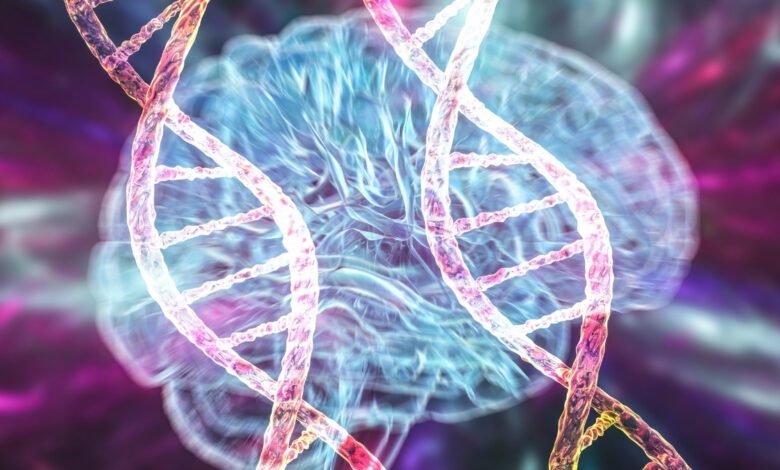
The human genome contains vast regions long dismissed as useless — once dubbed “junk” DNA. But scientists at the University of New South Wales (UNSW), Australia, have proved these very areas may harbor mechanisms that trigger Alzheimer’s disease. In a large-scale experiment, the researchers identified over 150 unique regulatory signals within astrocytes — specialized brain cells that support neuron function and, as it turns out, can both help and harm the brain.
Astrocytes aren’t just maintenance workers for neurons. Under certain conditions, they become a source of problems, contributing to the death of nerve cells. Scientists have long suspected that malfunctions in these cells could be linked to the development of neurodegenerative diseases. Now, they have pinpointed specific DNA segments that act like switches, controlling gene activity in astrocytes. This finding could serve as a starting point for new strategies to combat Alzheimer’s.
Instead of looking for mutations within the genes themselves, the researchers focused on so-called enhancers — DNA segments that don’t code for proteins but regulate the activity of other genes. It was in these so-called “empty” regions of the genome that they found key elements capable of altering the fate of brain cells.
Genetic traps
To search for these elusive regulators, the team used CRISPRi technology—a tool that allows scientists to temporarily “switch off” specific DNA segments without destroying them. In lab conditions, the researchers tested nearly a thousand potential enhancers in astrocytes to determine which of them truly influence gene expression.
The results were striking: about 150 DNA segments proved to be genuine control centers, governing the activity of genes associated with Alzheimer’s disease. Many of these enhancers are located far from the genes they regulate, making their discovery especially challenging.
Interestingly, most of the identified regulators were previously unknown to science. This proves our genome is far more complex than we thought just a few years ago. The so-called “junk” DNA hides an entire network of signals capable of triggering or stopping pathological processes in the brain.
New horizons
The discovery of these enhancers is more than just a scientific breakthrough. It offers a real chance to understand why some people develop Alzheimer’s disease while others do not. Now that scientists have mapped these genetic switches, researchers can teach artificial intelligence to recognize new regulatory elements and build more accurate models of brain function.
At this stage, we’re not talking about creating medications, but without understanding how the brain’s cellular ‘wiring’ works, it’s impossible to move forward. Each newly identified enhancer is a potential target for future therapies that could correct astrocyte function and possibly prevent the progression of the disease.
However, scientists emphasize that all identified regulators have only been studied in normal astrocytes. It’s unknown whether they retain their function when cells become hyperactive—which is precisely what happens in Alzheimer’s. The next step is to examine how these enhancers behave under pathological conditions.
Fine-tuning
Alzheimer’s disease is much more than just memory loss. It’s a complex cascade of changes involving dozens of cellular and molecular mechanisms. When astrocytes spiral out of control, they can trigger a chain reaction leading to neuron death and the breakdown of connections between them.
New findings show that targeting enhancer function could be the key to managing these processes. If we learn to ‘switch’ specific DNA regions, there may be a chance to slow down or even halt disease progression. But this is still a long way off—many experiments lie ahead, and it’s crucial to ensure that interventions won’t lead to unpredictable consequences.
Nevertheless, the very notion that so-called ‘junk’ DNA contains the switches that influence the fate of brain cells is turning conventional genetics on its head. This may hold the answer to why some people retain mental clarity into old age, while others face the tragedy of Alzheimer’s.
In case you didn’t know, the University of New South Wales (UNSW) is one of Australia’s leading research centers, specializing in biomedical sciences and genetics. The university is renowned for groundbreaking work in neuroscience and molecular biology, and its labs are often a hub for major international collaborations. It was here that key experiments were conducted, offering a new perspective on the role of ‘junk’ DNA in the development of neurodegenerative diseases.