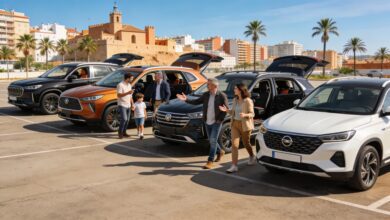
In 2026, buying a city car has become a real challenge for those who value not only savings but also compliance with new environmental standards. With stricter entry regulations for city centers and fuel prices steadily rising, choosing a car with an ECO or CERO DGT label is no longer just a preference, but a necessity. Spanish drivers face a dilemma: how to avoid overpaying for trendy technologies and still not end up among those unable to enter low-emission zones?
The situation is further complicated by manufacturers launching new models en masse, promising the perfect blend of price, quality, and eco-friendliness. Yet behind flashy advertising slogans, there are often trade-offs: some cut corners on equipment, others on performance, and sometimes even on actual driving range. This review covers ten city cars that stood out in 2026 for their balance of cost, practicality, and compliance with modern standards.
Market and trends
Segments A and B, traditionally dominated by compact and affordable cars, are now undergoing transformation. With tougher environmental standards and new subsidies for electric vehicles, manufacturers are forced to seek compromises between price and technology. As a result, the market is seeing updated versions of familiar models as well as entirely new players, often from China.
In Spain, special attention is paid not only to the purchase price, but also to operating costs. As parking and driving in city centers become increasingly expensive, compactness and fuel efficiency are crucial. At the same time, many car owners are not willing to sacrifice comfort and modern features, even in the most budget-friendly segment.
Best-sellers
Among the favorites, Dacia Sandero remains a top seller, holding its leading position in Spain for several consecutive years. Despite the minimalist approach to equipment in the basic version, the Sandero features an ECO-G engine compatible with gas (LPG), which allows it to receive the ECO badge and reduce fuel costs. Prices start at €13,490, making it one of the most affordable options on the market.
Fiat Pandina, a renamed classic Panda, continues to draw attention for its simplicity and reliability. Its three-cylinder Mild Hybrid engine delivers 70 hp, providing adequate performance for city driving, while its €15,147 price tag remains competitive. Despite the age of its platform, the Pandina stays relevant thanks to excellent visibility and practicality.
Electric newcomers
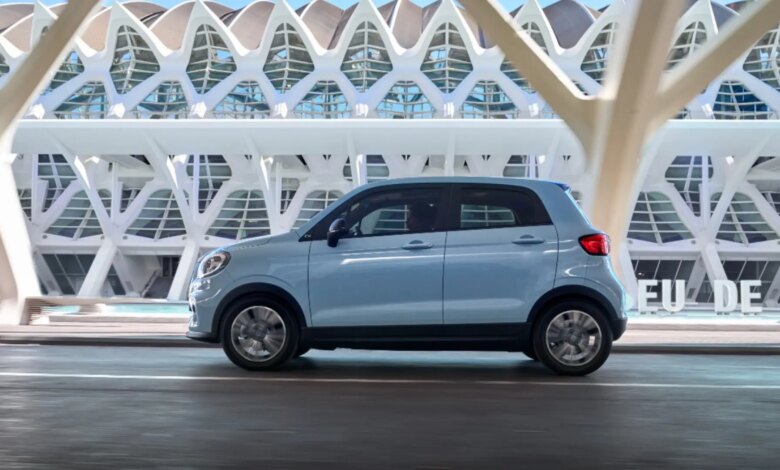
By 2026, electric vehicles were no longer an exotic choice, even in the budget segment. The Dacia Spring is the most affordable electric car with the CERO badge, offered at €17,890, and the price becomes even more appealing with government subsidies. Its 45 hp engine and range of 230 km make the Spring an optimal choice for short city trips.
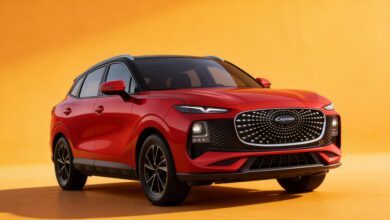
BYD Dolphin Surf and Leapmotor T03 are representatives of Chinese brands rapidly conquering the European market. The Dolphin Surf stands out with its bold design and spacious interior, while its 88 hp engine and 30 kWh battery provide up to 220 km of range. The Leapmotor T03, though less well-known, offers 95 hp and a 265 km range, and with the right purchase scheme, its price can drop to 13,700 euros. However, the T03’s energy consumption is higher than one might expect for such a compact car.
Hybrids and alternatives
Hybrid technologies are becoming increasingly accessible. The MG3 Hybrid is the first hybrid from the Chinese brand MG, priced at 20,590 euros and offering 194 hp with low fuel consumption. It is the most affordable non-plug-in hybrid on the market, making it attractive for those who do not want to rely on charging.
Toyota Yaris, a traditional rival in this segment, starts at 21,500 euros for the 120H version (116 hp), while the more powerful 130H (136 hp) comes at a higher price. The Yaris boasts a modern interior with a digital dashboard and advanced multimedia features, which are especially appreciated by young drivers.
Practicality and budget
For those looking for the most affordable option, EVO 3 offers a straightforward solution: a 1.5-liter gasoline engine (113 hp), manual transmission, and a starting price of 16,400 euros. There is also a gas-powered version with an ECO badge, allowing savings on fuel and peace of mind regarding city restrictions.
The Opel Corsa rounds out the top ten thanks to its attractive price (from €18,600), a modern three-cylinder engine with a mild hybrid system, and a respectable level of equipment. The Corsa remains one of the most well-balanced options for daily city driving.
Dacia, the Romanian brand within the Renault Group, has become a symbol of affordability and practicality in the European market in recent years. The Sandero model, though simple, is regularly updated and adapted to new standards, allowing it to maintain its sales leadership. In Spain, the Sandero is valued for its reliability, low operating costs, and the choice between petrol, gas, and hybrid versions. Thanks to this, Dacia remains one of the few brands able to offer truly advantageous solutions for urban residents without compromising on quality or modern technology.