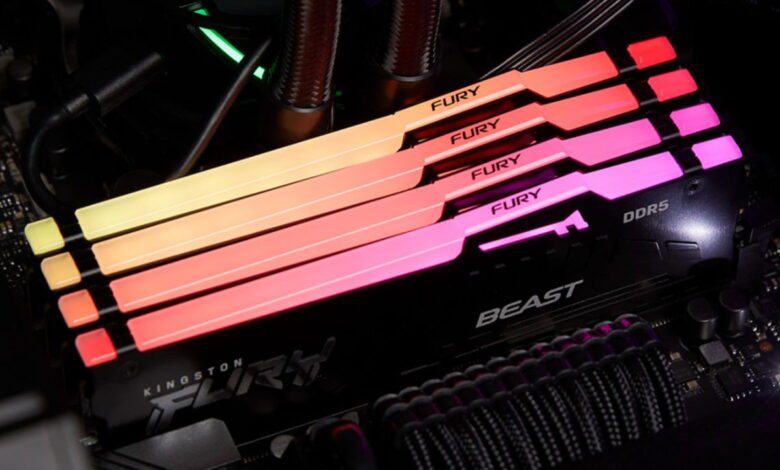
In recent months, the computer hardware market in Spain and around the world has undergone unprecedented changes. The driving force has been the rapid expansion of artificial intelligence, which has completely upended traditional supply chains. Major manufacturers of memory and other critical components have focused all their efforts on meeting the demand from data centers and cloud platforms, leading to a severe shortage of products for regular consumers. As a result, the prices of RAM, solid-state drives, graphics cards, and even smartphones have begun to rise at a pace that seemed impossible until recently.
Experts note that the demand for AI computing power has become so high that traditional market segments have been pushed into the background. Investments in artificial intelligence infrastructure now amount to hundreds of billions of dollars, and this is where the industry’s main resources are currently being directed. This has already led to DRAM prices more than doubling within a few months, while exclusive contracts between manufacturers and major technology companies are effectively siphoning off a significant share of the world’s component supplies.
At the same time, concerns are mounting among ordinary consumers. While just a year ago it was easy to buy a laptop or graphics card at a reasonable price, now even basic models are becoming increasingly out of reach. Analysts warn: if this trend continues, by 2026 the cost of many devices could become unattainable for the average consumer.
The Impact of Artificial Intelligence on the Memory Market
Memory is one of the key components in any modern electronic device. It is used not only in computers but also in smartphones, gaming consoles, servers, and even household appliances. However, manufacturers are now being forced to redirect their resources toward the most profitable sectors—primarily, to address the demands of artificial intelligence. As a result, production of DDR5 modules and other solutions for home PCs and laptops is being reduced.
As a result, according to industry analysts, over the past four months the price of RAM for end users has increased 2.5 times. Prices for other components—SSDs, graphics cards, motherboards—are also rising, though not as rapidly. The situation is felt most acutely in the gaming segment: console makers are already considering raising prices, and experts predict that new models of gaming PCs and consoles will be significantly more expensive than previously expected.
Another challenge is the priority service given to large corporate clients. Companies developing and implementing AI get access to the best product batches, while ordinary buyers face delivery delays and limited options. This applies not only to memory, but also to graphics accelerators: GPU manufacturers are increasingly prioritizing major data centers over the retail market.
Global investment and consumer impact
Large-scale AI projects are putting enormous pressure on the entire industry. For example, a single contract between OpenAI and leading memory manufacturers stipulates monthly deliveries of nearly a million DRAM wafers, equivalent to a 40% reduction in global supply. As a result, even giants like Samsung and SK hynix are being forced to completely redirect their production lines to specialized AI solutions.
At the same time, there is a sharp increase in demand for high-speed HBM memory used in server and cloud computing. Manufacturers like Micron have already stated that all of their products for 2026 will be reserved solely for this segment. This means regular users will face even greater shortages and higher prices for standard components.
Financial reports from the industry’s largest companies confirm these trends. For example, NVIDIA reported record revenue and profit in the last quarter, a direct result of booming demand for AI accelerators. At the same time, sales of graphics cards for home PCs have barely grown and in some cases are even declining.
Market outlook and forecasts for 2026
Analysts agree: in the coming years, the situation is unlikely to improve for ordinary consumers. The industry cannot adapt fast enough to the sudden surge in demand, and building new production facilities requires both time and massive investment. For now, all resources are being funneled into servicing corporate clients and developing AI infrastructure.
As a result, forecasts indicate that prices for memory and related components will keep rising through 2026. This will affect not only computers and laptops but also smartphones, gaming consoles, and other devices that use modern microchips. Consumers are left with two options: stock up on components in advance or brace for new price records.
Experts recommend closely monitoring the market and not delaying the purchase of necessary devices. With ongoing shortages and rising prices, even basic tech models could soon become a luxury.
By the way: what we know about NVIDIA
Notably, NVIDIA is one of the world’s leading producers of graphics processors and artificial intelligence solutions. Founded in 1993 in California, the company originally specialized in developing graphics cards for personal computers. As technology advanced, NVIDIA became a key player in the market for accelerators for data centers, cloud platforms, and machine learning systems. In recent years, the company has actively invested in developing specialized AI chips, which has secured its dominant position in this segment. NVIDIA’s financial success is directly tied to the growing demand for AI computing power, and its products are used in both scientific research and commercial projects worldwide. Thanks to its innovative solutions and strategic partnerships, NVIDIA continues to expand its influence on the global high-tech market.