The automotive market in China is shifting the balance of power in the global industry. In recent years, local manufacturers have not only caught up but have surpassed traditional players in the speed of adopting new technologies and organizing production. This has already led to a significant drop in sales for giants like Honda and has put their future on the world’s largest car market at risk.
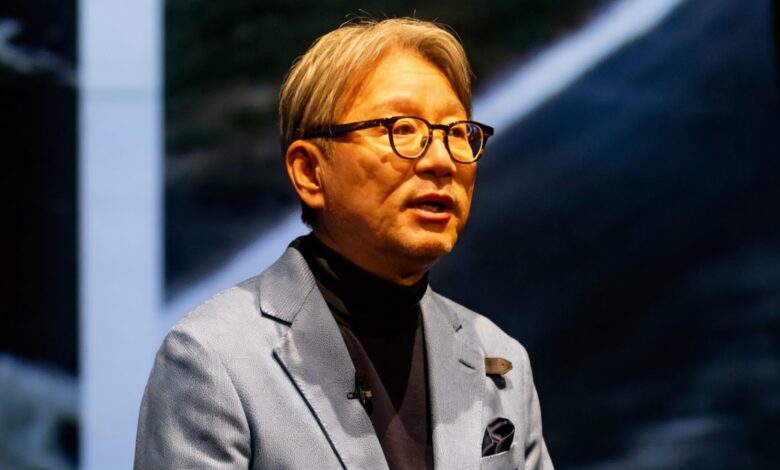
After a recent trip to Shanghai, Toshihiro Mibe, head of Honda, openly admitted that the Japanese company cannot keep up with the pace set by Chinese competitors. His impressions from visiting modern factories and supply chains in China were so strong that he effectively questioned Honda’s ability to compete equally with local brands. According to Nikkei Asia, Mibe was struck by how quickly and cheaply Chinese companies develop and release new components, and by how flexibly they adapt to changes in the market.
Sales decline
Honda is already feeling the effects of this technology race. In five years, the company’s sales in China have dropped nearly threefold: from 1.62 million vehicles in 2020 to a projected 640,000 in 2025. This decline is driven not only by increased competition but also by the fact that Chinese manufacturers like BYD are actively leveraging their strengths in batteries and software. They rapidly bring new models to market focused on electrification and digital services, which are especially in demand among local buyers.
While traditional automakers spend four years or more developing a new car, Chinese companies accomplish this in two years or even faster. This pace allows them to respond instantly to trends and adapt their product lines to market demands. This is the so-called ‘China Speed’ that even European brands like Renault are now trying to emulate by accelerating the launch of new models.
Internal changes
Realizing that radical changes are necessary, Honda began to restructure its internal processes. The company is returning a key role to engineers, reducing bureaucracy, and speeding up development stages. The goal is to match the pace of Chinese competitors and recover some lost advantage. This approach should help implement innovations faster and adapt to a new reality where success depends not only on quality, but also on the speed of response to change.
But the issue is not limited to Honda. European and American manufacturers are also facing the fact that Chinese companies can quickly saturate the market with new cars using integrated supply chains and government support. As Nikkei Asia notes, many Western executives already openly speak about the risk of losing market positions and the urgent need to overhaul their business strategies.
A global challenge
The situation in China has become a warning sign for the entire global automotive industry. Leaders of other major companies, such as Ford and Toyota, have also raised concerns about the expansion of Chinese brands. In their view, unless the pace quickens and new technologies are implemented, traditional manufacturers could find themselves out of the game. Chinese factories are now capable of supplying vehicles not only to the domestic market but also exporting products to other countries, pushing out competitors.
In these circumstances, adaptation becomes the only way to survive. Companies are forced to rethink strategies, invest in digitalization and electrification, and look for new ways to reduce costs. The Chinese experience shows that success comes to those who can change quickly and are not afraid to take risks.
Toshihiro Mibe is one of the most prominent executives in the Japanese automotive industry. He has led Honda since 2021 and is regarded as a proponent of technological innovation. Under his leadership, the company has actively invested in the development of electric vehicles and digital services, but has faced serious challenges in the Chinese market. Mibe is known for his direct statements and desire for reforms within the company, making him a key figure in Honda’s fight for the future.