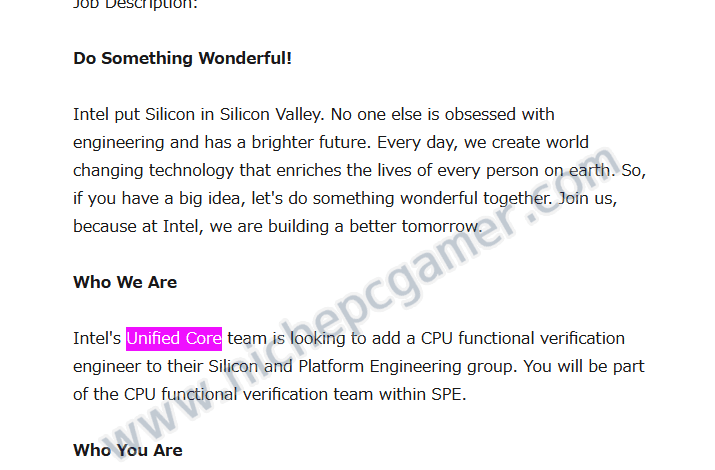
Intel’s shift to a Unified Core architecture could completely change the conventional understanding of modern processors. For the first time in many years, the company has decided to abandon the hybrid model that combined different types of cores with varying power in a single chip. The new focus is on uniformity: each processor will contain only one type of core, which could lead to noticeable changes in device performance and energy efficiency.
This move sparked a strong reaction among experts and users alike. Many believe that moving away from mixed cores is more than just a technical decision—it’s an attempt by Intel to reclaim its market leadership as competition intensifies. According to MuyComputer, confirmation of these plans appeared in a job posting for an engineer tasked with testing the logic of these new processors before production. This suggests the project is already in an active phase.
Reasons for the change
Previously, Intel integrated two or sometimes even three types of cores into its chips: powerful P-cores, energy-efficient E-cores, and ultra-efficient LP-cores for mobile devices. This approach allowed tasks to be distributed flexibly between cores, boosting overall efficiency. However, in recent years, E-cores have improved so much that the difference between them and P-cores has become much less pronounced. This led engineers to conclude that further separation no longer delivers the same benefits as before.
As a result, according to MuyComputer, Intel has decided to focus on producing processors featuring only one type of core. This approach will enable the company to create simpler and more predictable chips, as well as reduce development and manufacturing costs. For users, this could mean more stable operation and fewer unexpected software compatibility issues.
What’s next for users
The first processors with the new architecture are rumored to appear no earlier than 2028. We’re talking about the Titan Lake lineup, which is expected to mark a real breakthrough for Intel. However, due to delays with previous generations, it’s possible the timeline could be pushed back by another year or two. Until then, the company will continue releasing hybrid chips that feature both P- and E-cores.
The last such lineup will be Razer Lake, which uses Griffin Cove and Golden Eagle architectures. After that, Intel will completely switch to homogeneous processors. It’s expected that only high-performance cores will be used for desktops and servers, while laptops and energy-efficient devices will rely exclusively on low-power cores.
The question of choice
There’s still intrigue: which type of core will form the basis for future processors? In recent years, E-cores have performed so well that some experts believe they’re a worthy replacement for P-cores. However, Intel is unlikely to abandon either option. The company plans to offer different models: high-performance cores for demanding tasks and power-efficient cores for mobile devices.
This approach will help maintain diversity in the product line and meet the needs of different user groups. At the same time, it eliminates the complexity of balancing workloads between different core types, an issue that has often raised questions among software developers.
Intel is one of the world’s largest processor manufacturers, renowned for its innovations and role in advancing computer technology. The company has repeatedly changed its chip architecture strategies to keep pace with the times. The decision to switch to a single core type could mark a new milestone in Intel’s history, shaping industry development for years to come.