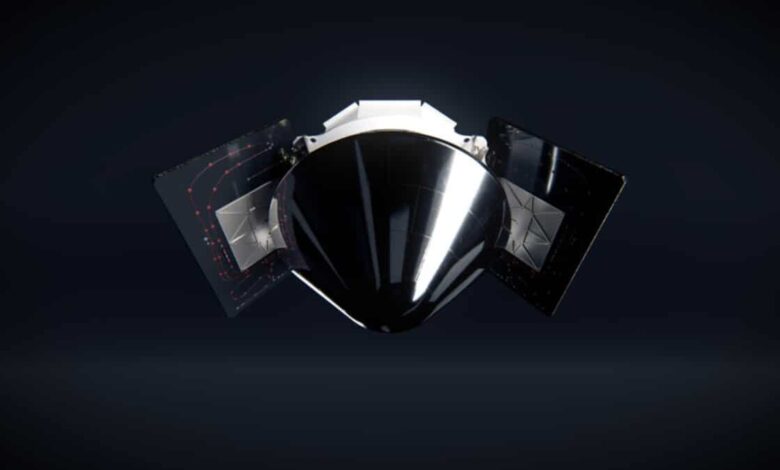
The young company Reditus Space, founded in October 2024, has surprised the space technology market by announcing the imminent completion of its first reusable descent vehicle, ENOS. Despite its brief history, the team of 13 employees and six interns is already preparing the craft for launch as a secondary payload on a SpaceX mission scheduled for summer 2026. This rapid pace and ambitious agenda have immediately attracted the attention of investors and industry experts.
To date, Reditus Space has secured more than seven million dollars in initial funding. This financial backing has allowed the company to focus on the swift development of ENOS Mk 1, which is set to become the first step toward fully reusable space flights. In its upcoming mission, the vehicle will spend two months in orbit, transporting a pharmaceutical research payload, before executing a controlled re-entry and splashdown off the coast of Florida for subsequent recovery.
Technology and Innovation
ENOS Mk 1 is designed to test several new technical solutions that will enable Reditus Space to conduct regular reusable missions in the future. While the company’s proprietary heat shield, engineered for multiple uses, will only be ready for later missions, engineers are already planning to reuse key internal components of the vehicle. These include the propulsion system, control and power supply systems, as well as avionics.
This approach will significantly reduce production and operational costs, as well as speed up preparations for new launches. In the long term, Reditus Space expects that the reusability of its vehicles will make it possible to offer clients more affordable orbital delivery and retrieval services—particularly relevant for scientific and commercial projects.
Economy and Prospects
Reditus Space’s financial model is based on the idea of cutting costs by reusing expensive components. This will allow the company not only to save resources but also to scale up production more quickly without needing to maintain a large fleet of vehicles. As a result, the cost of space missions for customers should drop significantly, opening up new opportunities for research and manufacturing in orbit.
ENOS Mk 1 will become one of the largest autonomous reusable re-entry vehicles ever launched into orbit. Its payload capacity on the maiden flight will be 40 kilograms, with future versions designed to perform more than 20 missions over their lifespan. This endurance makes the project especially attractive to companies interested in regular experiments and manufacturing in microgravity conditions.
Market and Competition
The reusable spacecraft segment is developing rapidly: more and more startups and major companies worldwide are announcing their own projects in this area. However, Reditus Space believes that demand for such solutions will only increase, especially with the upcoming decommissioning of the International Space Station (ISS) in the 2030s. After the closure of the ISS, there will be a significant vacuum in orbital research and manufacturing, which reusable spacecraft are uniquely positioned to fill.
The company notes that their project is aimed at a wide range of clients—from pharmaceutical and biotechnology companies to universities and startups looking to conduct experiments in space. The ability to quickly return research results to Earth will provide ENOS with a key competitive advantage over other solutions.
The future of reusable missions
Reditus Space’s plans are not limited to the first launch of ENOS Mk 1. The company is already developing future generations of the spacecraft, which will be able to handle more complex tasks and offer even greater reliability for multiple flights. By 2027, the company expects to launch regular fully reusable missions, marking a new stage in the evolution of commercial spaceflight.
In the coming years, Reditus Space plans to expand its team, attract new investors and partners, and further advance its technology to maintain a leading position in the reusable spacecraft market. The successful launch of ENOS Mk 1 will mark an important milestone and demonstrate the promise of the chosen strategy.
In case you didn’t know, Reditus Space is a private aerospace company founded in 2024 to develop reusable descent vehicles for commercial and scientific missions. The company is headquartered in the United States, and its team consists of experienced engineers and young specialists who previously worked at leading aerospace corporations. Reditus Space focuses on innovative technologies and agile manufacturing processes to offer the market new solutions for orbital cargo delivery and return.