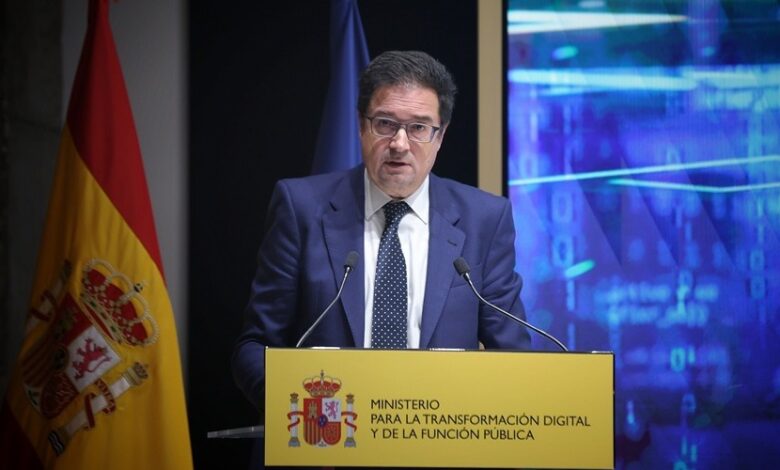
After lengthy and intense negotiations, Spain’s Ministry of Public Administration and labor unions have finally reached a definitive agreement regarding the salaries of more than 3.5 million civil servants. The agreement ends the salary ‘freeze’ that had been in effect since 2024 and paves the way for a phased income increase of 11% through 2028. Public sector employees will see the first changes in their December payslips, when they will receive a retroactive 2.5% raise covering the entire year 2025.
The outlook for the following years is equally promising. In 2026, base salaries will rise by 4%, which could increase to 4.5% if the annual consumer price index is equal to or above 1.5%. However, this additional 0.5% will only be paid retroactively during the first quarter of 2027. The most significant raise—an increase of 4.5%—is set for 2027, which also happens to be an election year. The final boost will come in January 2028, with an additional 2% increase. While the total agreed raise for 2025-2028 stands at 11%, union calculations suggest that, accounting for the compound effect of yearly adjustments, the real cumulative income growth for civil servants over these four years could reach 11.5%.
Beyond salaries: new working conditions
In addition to direct salary increases, the agreement includes a number of significant improvements to working conditions for public sector employees, according to the Independent Trade Union Center for Civil Servants (CSIF). One of the key measures is the elimination of the current staff replacement ratio. This step is intended to strengthen teams in the most critical sectors and reduce the proportion of temporary contracts, making employment more stable.
Furthermore, the timelines for competitive selection for government positions will be shortened so that final decisions on candidates are made within a year. The agreement also expands and improves opportunities for internal career advancement and employee mobility between departments. There are plans for a comprehensive update to job classification so that it better reflects the actual tasks performed, taking into account experience and required qualifications. Exclusive internal promotion processes will be launched, and merit-based competitions will be encouraged.
Throughout 2026, allowances for living in certain regions and on the islands, as well as compensation for business trips, will be reviewed and increased to address existing inequalities. Particular focus will be placed on strengthening the workforce serving the public and ensuring appropriate salary increases. In addition, vacation policies will be updated and measures introduced to improve work-life balance. The package of measures includes reinforced guarantees of equality and non-discrimination, actions to combat sexual harassment and violence, and improved workplace health and safety, including psychological support.
Income gap: Public sector vs. private sector
Data from the National Institute of Statistics (INE) paints an interesting picture. In 2024, the average gross monthly salary for nearly 15 million private sector employees was €2,182. This is €1,052 less than their counterparts in the public sector, where the average income reached €3,232. For only the second time since this statistical record began in 2006, the difference has exceeded one thousand euros.
Such a significant gap is partly explained by structural features of the labor market. The public sector employs far fewer people than the private sector, but their average level of qualification—and thus pay—is higher. This smaller workforce with higher average salaries creates the statistical gulf between the two sectors.
Responses to the agreement
Union and government representatives praised the agreements reached. “CSIF is signing this deal out of a sense of responsibility and commitment to the interests of public servants. We have achieved the best possible outcome, given the country’s current difficulties, political instability, budgetary gridlock, and economic constraints imposed by the European Union and NATO due to defense spending,” said union leader Miguel Borra.
UGT union secretary general Isabel Araque called it a “fantastic agreement” that “benefits not only public employees.” In her view, “it will improve the quality of public services, benefit citizens, and strengthen the country as a whole.” The ministry led by Óscar López also stressed that the agreement represents “a major step forward for public servants and guarantees their purchasing power through 2028.”
It’s worth noting that Spain’s public sector is a vast and complex system, encompassing not only central government officials but also employees of regional administrations (autonomous communities) and municipalities. The status of “funcionario” (civil servant) has historically been regarded in the country as highly prestigious and desirable, thanks to the lifelong job security and stability it offers. For many Spaniards, securing such a position is a top career goal. In addition to their salaries, civil servants have access to a special health insurance system known as MUFACE, which differs from the general social security system and provides a wider choice of doctors and clinics. That’s why any changes to their pay or working conditions generate significant public attention.