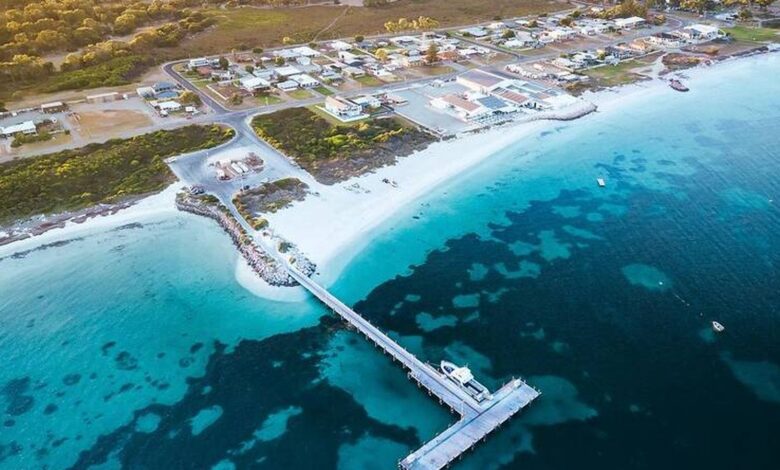
Imagine traveling to the other side of the planet—to Western Australia. You’re driving along the coast, breathing in the salty sea air, when you suddenly find yourself in a place that feels strangely familiar. The street signs read “Avenida Barcelona,” “Seville Place,” and “Valencia Street.” This is neither a mirage nor a tourist gimmick. It’s the reality of the small fishing town of Cervantes—a true cultural curiosity that has unexpectedly linked a distant continent with Spain.
A Spanish Corner at the End of the World
Cervantes, with a population of just around 500, is located a couple of hours north of Perth. For many tourists, it’s merely a stopover en route to the famed Nambung National Park, known for the otherworldly Pinnacles Desert. But those who choose to linger discover something remarkable: the town’s map is dotted with names echoing Spanish geography—not just Barcelona and Seville streets, but also Galicia Loop, Aragon Road, and Toledo Crescent.
The highlight of this toponymic spectacle is Catalonia Park—a modest yet charming park that has become a magnet for tourists from Catalonia. With surprise and delight, they snap photos beside the sign bearing the name of their homeland, located 14,000 kilometers away. This story recently gained a fresh wave of attention thanks to viral social media videos, where bloggers shared their amazement at finding such a Spanish enclave deep in the Australian outback.
A Mistake That Gave a Name
It would seem logical to assume that the city was named in honor of the great author of Don Quixote. But the truth is far more prosaic—and fascinating. The story of Cervantes began not with literature, but with a maritime disaster. In 1844, an American whaling ship called ‘Cervantes’ was wrecked off these shores. Many years later, when a fishing settlement was established here in the 1960s, it was named in memory of the sunken vessel.
Over time, the original meaning faded, and city planners mistakenly assumed that the town was named after Miguel de Cervantes. This very misconception led to a unique idea—to theme all the streets with connections to Spain. And so, due to a simple misunderstanding, a town appeared on the map of Australia, its character shaped by a literary association born from an error.
More than just streets
Beyond its unusual name, Cervantes boasts proximity to unique natural wonders. The Pinnacles Desert, located just 17 kilometers away, is a surreal landscape punctuated by thousands of limestone pillars rising from yellow sands like a petrified forest. Nearby is Lake Thetis, famous for its stromatolites—some of the oldest living fossils on Earth.
The ironic twist of this story greets visitors right at the entrance to the town. Here stand sculptures of Don Quixote and his faithful squire Sancho Panza, as if cementing the very literary misunderstanding that shaped this place’s identity. Cervantes is a remarkable example of how chance and error can create something unique: an Australian fishing village with an elusive, yet now inseparable, Catalan soul.