In autumn, Extremadura reveals a unique side, offering travelers tranquility and peace. Among its treasures lies a special place that has proudly held the status of ‘picturesque landscape’ since the mid-20th century. This is not just a village, but a true historical ensemble, where traditional half-timbered architecture and a maze of winding streets preserve the untouched spirit of the mountain region. Nestled in the northern part of the province of Cáceres, this corner is perfect for those seeking authentic places with character, where history and nature blend into one.
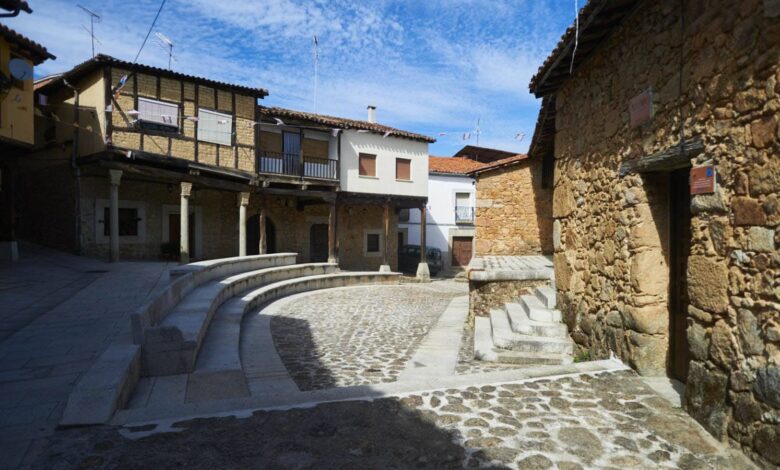
This is Cuacos de Yuste, located in the comarca of La Vera. In 1959, the settlement was officially designated as a ‘Paraje Pintoresco,’ today equivalent to Cultural Heritage status. Its winding streets, mountain houses with wooden features, and lively squares form a cityscape of outstanding architectural value. Strolling through this place is like stepping back into centuries past, where every stone seems ready to tell its story.
The heart of La Vera
The heart of community life is found in several plazas, each with its own unique character. The main square, Plaza Mayor, is surrounded by arcades and features the famous Four Spouts Fountain at its center. Just as remarkable is Plaza Juan de Austria, home to the well-known Casa de Jeromín. Plaza de España and Plaza de los Chorros also boast a distinct local charm and are beautiful examples of the region’s traditional urban design.
The architecture of Cuacos de Yuste is a vivid example of how people have adapted to the mountainous landscape over centuries. Houses built from stone, clay, and wood, with overhanging balconies, line cozy, shaded streets that are a delight to wander at any time of day. This seamless blend of buildings and natural surroundings is what makes the village one of the most appealing destinations for domestic tourism.
The emperor’s final refuge
The undisputed jewel of the municipality is the majestic Monasterio de Yuste. This site is inextricably linked with the Spanish crown, as it was here that Emperor Charles I chose to retire after abdicating the throne. The monastery owes its international fame to being the setting for the final years of one of Europe’s most powerful rulers. The complex gracefully combines Gothic and Renaissance cloisters, along with a modest palace built especially for the monarch.
Since 2013, Pauline monks have once again resided within the monastery walls, maintaining the spiritual life and historical heritage of this site. The well-kept gardens and the way the monastery blends into the surrounding La Vera landscape make it a must-see destination. Here, time seems to slow down, allowing visitors to connect with a remarkable history.
Beyond the monastery walls
Yet the charm of Cuacos de Yuste goes beyond its monumental heritage, which, incidentally, includes a rather unusual German cemetery. The municipality also boasts natural attractions, such as the Garganta de Cuacos gorge, surrounded by the Sierra de Tormantos mountains and San Simón hill. Walks through the area, visits to traditional chapels, and encounters with the local flora and fauna enhance the overall experience.
Strolling through the streets, pausing in the plazas, and taking in the stone and adobe houses, you start to understand why this enclave in the province of Cáceres continues to captivate travelers. It’s the perfect destination for an autumn getaway, where history, nature, and tradition come together to create a unique and unforgettable atmosphere.
Incidentally, Charles I of Spain, also known as Charles V, Holy Roman Emperor, was one of the most powerful monarchs in European history. His domains stretched from Spain and its American colonies to territories in Central Europe. After decades of wars and political intrigue, he voluntarily abdicated the throne in 1556. He chose the secluded monastery of Yuste as his final refuge, seeking peace away from worldly affairs.