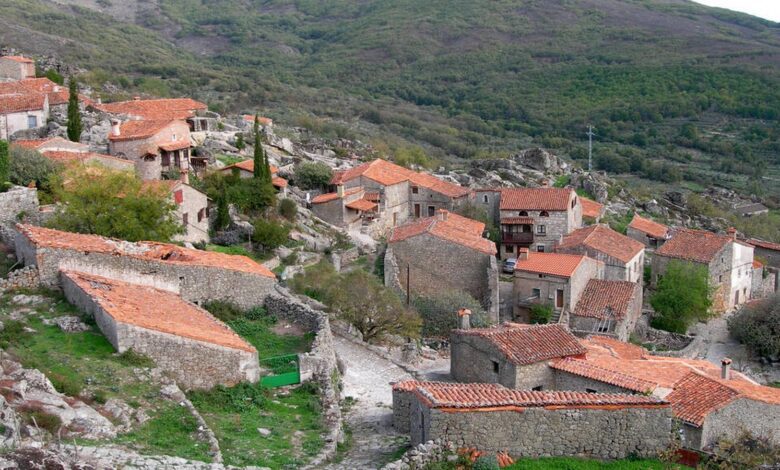
High in the mountains of northern Extremadura, beneath the watchful gaze of ancient fortress ruins, sits a tiny medieval village that looks as if it were plucked straight from the pages of a fairy tale. What makes it truly unique is that its houses are built from the stones of the very fortress that was once destroyed by Napoleon’s troops. This miniature and silent settlement has become a true gem of rural tourism in the region. Visitors come here for peace and quiet, breathtaking mountain views, and the rare chance to literally touch history.
This remarkable place is Trevejo, located in the province of Cáceres, at the heart of the Sierra de Gata mountain range. In this small village, home to only a few dozen permanent residents, there is a special ambiance. It is no surprise that, starting in 2024, Trevejo was officially listed among the most beautiful villages in Spain and is protected as a historical and artistic site. The village makes a lasting impression on travelers even as they approach, when its silhouette with the castle’s tower dominating the mountainous horizon comes into view. Cars must be left at the entrance, as from there, the only way in is on foot—through steep cobbled streets where it seems time has stood still since the distant Middle Ages.
The main charm of Trevejo lies in its architecture. Many of the homes were built from the stones of the old castle, after it was blown up by Napoleon’s army. The French destroyed it to deprive the local guerrilla partisans of a secure refuge. Today, all that remains of the fortress’s former might are the main tower (torre del homenaje) and a few stretches of its defensive walls. Even so, a walk to the top of the hill—especially at dusk when the lights come on—rewards visitors with breathtaking panoramic views over the entire comarca. At the foot of the ruins awaits another mystery: anthropomorphic tombs carved directly into the granite rock. Scholars still debate their origins, linking them to ancient necropolises or to the burials of warrior monks. This only adds to the site’s mystery and the sense of connection to ancient legends.
In addition to the castle, the severe church of San Juan Bautista, dating back to the 16th century, and its unusual espadaña bell tower, built on the foundation of an old defensive tower, are noteworthy. Both structures were designated as sites of cultural interest (Bien de Interés Cultural) as early as 1982. From the main square and Pizarro Street, which serve as the hub of the village’s social life, narrow, winding alleys branch off in all directions. These lead to scenic viewpoints overlooking the breathtaking Sierra de Gata or to traditional stone shepherd huts known as ‘saurdones.’ The granite architecture, small population, and picturesque surroundings of vineyards, chestnut groves, and olive trees make Trevejo a must-visit destination for those seeking to experience the authentic, time-preserved medieval Extremadura.
For reference, Extremadura is an autonomous community in western Spain, bordering Portugal. The region is known for its natural parks, such as Monfragüe, and its rich historical heritage, including Roman ruins in Mérida, which is the capital of the community. Extremadura is also famous as the birthplace of many conquistadors, including Hernán Cortés and Francisco Pizarro. The region is a major producer of Iberian ham and other delicacies.
Previously, we reported that Spain has other fascinating places where history intertwines with nature. For example, in the Rioja region, there is a village where traces of dinosaurs lead directly to medieval streets. This unique place offers a true journey through time, showcasing the heritage of both the prehistoric era and the Middle Ages.