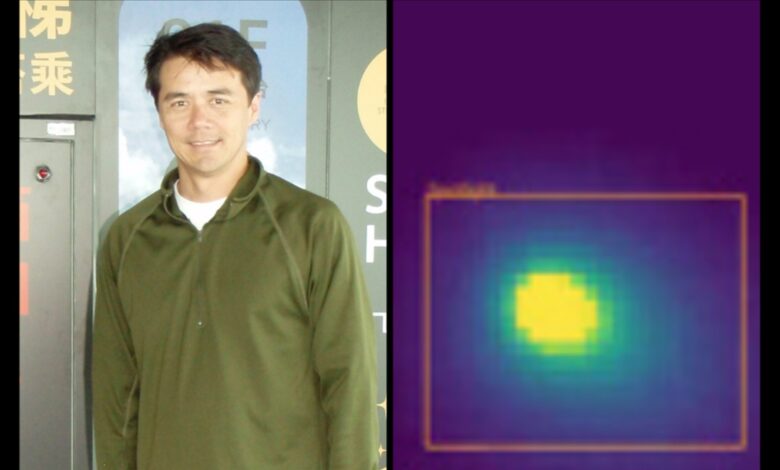
The evening of July 1, 2025, began like any other for Larry Denneau, a senior software engineer and astronomer at the University of Hawaii’s Institute for Astronomy. The ATLAS (Asteroid Terrestrial-impact Last Alert System) telescopes were scanning the sky, tracking even the slightest motions among the stars. Designed to detect near-Earth asteroids, the system automatically analyzed images to single out moving dots—potential asteroids, comets, or something else. After automated filtering, objects were sent to a specialist for final verification and submission to the Minor Planet Center.
That evening, one such candidate appeared on Denneau’s screen. At first glance, the object seemed unremarkable—just another new near-Earth asteroid. Following protocol, Larry confirmed the find and submitted the data. But soon this ‘ordinary’ object sparked heated debate among astronomers worldwide.
A sudden sensation
While Denneau was working atop Mauna Loa, servicing the telescope, his inbox was filling up. In just one day offline, interest in the strange object had exploded. When he returned, he found hundreds of messages: astronomers everywhere were trying to make sense of this body moving along an unusual path through the Solar System.
The Minor Planet Center classified the discovery as 3I/ATLAS—only the third interstellar object ever spotted near Earth, following 1I/’Oumuamua and 2I/Borisov. Unlike ordinary comets and asteroids, interstellar visitors are not bound by the Sun’s gravity: they arrive from other star systems and quickly vanish from sight.
A trajectory without boundaries
The ATLAS system searches for any moving points against the background of stars, but the final decision is always made by a human. It was Dennyo who pressed that very button, sending the data on 3I/ATLAS. Only after that did it become clear: the object’s orbit did not obey the laws of the Solar System. The models showed that the trajectory was too fast and unusual for local bodies.
When specialists from the Jet Propulsion Laboratory (JPL) and the Minor Planet Center tried to refine the orbit, all calculations proved inconclusive. The object was clearly not related to the Sun. The search for additional observations began to confirm the comet’s interstellar origin.
Human and code
Larry Dennyo did not come to astronomy by a traditional route. His career began with programming and engineering, not with studying the stars. He later earned a doctorate in astrophysics at Queen’s University Belfast, but it was his software development skills that defined his role in modern astronomical projects.
While working on software for Pan-STARRS, and later joining ATLAS, Dennyo became one of the key specialists in automating asteroid searches. According to him, once the telescopes are built, all the work turns into a software project: it’s the algorithms that make it possible to process massive volumes of data and find rare objects.
The power of automation
Every night, ATLAS telescopes take thousands of images, covering an area of the sky equivalent to more than a hundred moons. Over the course of a day, the system analyzes almost the entire visible sky, repeatedly returning to the same regions. All images are automatically transmitted, compared, and filtered by special software to detect even the slightest movement.
The data volume is staggering: four to five telescopes generate up to a terabyte of information in one night. The project has already accumulated several petabytes. For Denne, as an engineer, it’s a constant challenge to ensure the safety and processing of such vast data sets. At the same time, the system must be highly reliable to avoid wasting other astronomers’ resources on false alarms.
Search challenges
Interestingly, a few months before the discovery of 3I/ATLAS, Denne was also on duty when the near-Earth asteroid YR4 was detected. He also confirmed the reality of that object, which was initially considered potentially hazardous but was later determined to be safe for Earth.
In the case of 3I/ATLAS, the task was complicated by the fact that the object was moving through a very dense part of the sky, where the multitude of Milky Way stars made it difficult for the automation to identify it. Official ATLAS confirmation requires four clear observations, which were hard to obtain in such a ‘noisy’ region. Only when the comet moved into a less crowded area was the system able to capture it and even find earlier images confirming its unusual orbit.
A rare visitor
Since 3I/ATLAS was classified, interest in the object has remained high. Interstellar bodies are so rare that each one becomes a major event for science and a topic for media discussion. Such discoveries offer a glimpse into the past of other star systems, as the material making up the comet formed far beyond the boundaries of our Solar System.
This time, it all began not with a striking telescope image, but with software, data, and a well-timed click. For Dennehy, astronomy is a daily joy and a constant challenge where technology and human attention work hand in hand.
If you didn’t know, Larry Dennehy is one of the lead engineers and astronomers on the ATLAS project, funded by NASA. The ATLAS system is a network of telescopes designed for the early detection of near-Earth asteroids and other fast-moving objects. Thanks to its unique combination of automation and human oversight, ATLAS has already produced several sensational discoveries, including interstellar objects. Dennehy also contributed to the development of software for Pan-STARRS, another major astronomy project in Hawaii.