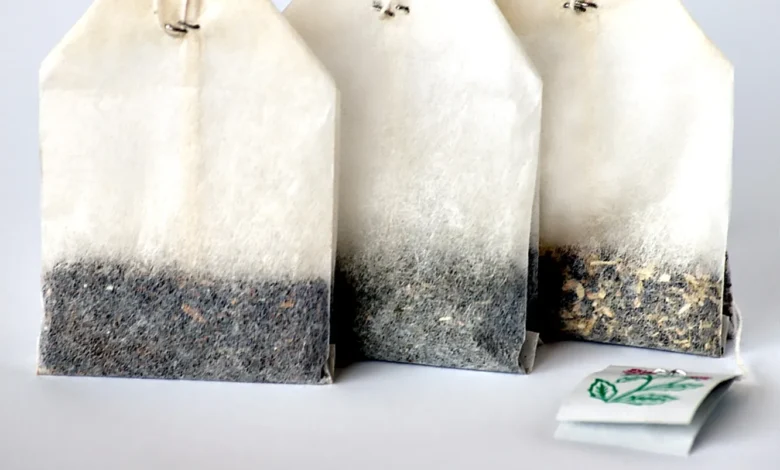
Today, it’s hard to imagine an office, a trip, or even a tea party at home without the familiar tea bag. Few people realize, however, that this everyday item emerged thanks to a mix of chance, ingenuity, and even military needs. The journey from the earliest clumsy pouches to the modern filter tea bag took nearly a century and was filled with unexpected discoveries.
In the early 20th century, New York merchant Thomas Sullivan began sending tea samples to customers in small silk pouches. His idea was simple: make delivery more convenient and appealing. However, customers, not bothering to remove the tea, started steeping it directly in these bags, which turned out to be surprisingly convenient. This gave birth to a new tradition, even though Sullivan had never intended to revolutionize the market.
The first experiments
At first, tea lovers were unimpressed with the silk bags: the brew was weak, and the flavor unremarkable. Sullivan quickly realized that both the material and design needed improvement. He soon switched to using gauze and cotton, making tea infusions more effective. By 1930, the United States alone was consuming miles of gauze for tea bag production, and the concept quickly spread worldwide.
Interestingly, as early as 1880, American Thomas Fitzgerald received a patent for similar packaging, but his invention never caught on. Only decades later, with mass production and new technologies, did tea bags become a standard household item.
Military innovations
World War I became a catalyst for the development of tea bags. The German company Teekanne was the first to produce tea in gauze sachets for soldiers on the front lines. This brewing method turned out to be a real lifesaver: the drink was ready in just seconds, and the dishes stayed clean. Soldiers nicknamed these sachets ‘tea bombs’ for their simplicity and effectiveness.
In 1929, Teekanne engineer Adolf Rambold created the first machine for automatic tea bag packaging. The Pompadour machine produced 35 bags per minute, and subsequent models increased productivity several times over. By the mid-20th century, tea bags had become a mass-market product accessible to everyone.
Materials and shapes
American engineer Fay Osborne played a key role in the development of tea bags. Working at C. H. Dexter & Sons, he experimented with various materials to create the perfect filter paper. After many attempts, Osborne settled on Manila hemp — a strong, porous fiber that was ideal for brewing tea.
Initially, tea bags looked like small pouches tied with string. Later, square and two-chambered versions appeared, as well as nylon pyramids for whole-leaf tea. In the United Kingdom, round stringless bags are popular, while large kettles use oversized ‘caddies’ with cardboard holders.
Spread in Russia
Tea bags were known in Russia as early as the beginning of the 20th century. Elena Molokhovets’ 1901 cookbook described a method for brewing tea in a muslin bag. However, tea bags only began to spread widely across the country in the 1990s, when they appeared in cafés and canteens. For a long time, this type of tea was considered exotic, but by 2015, its popularity surged and tea bags became market leaders.
Today, the market offers a variety of options: classic square, double-chamber, pyramid, sachet, round, stick-shaped, and even special bags for brewing an entire teapot. Each type caters to different tastes and occasions, making the choice as wide as possible.
Benefits and unexpected uses
The main advantages of tea bags are quick preparation, convenient storage, and hygiene. They are easy to carry, require no special utensils, and are always ready to use. Moreover, tea bags are often used for more than just making tea: they can serve as eye compresses, a natural skin toner, a deodorizer, a fertilizer for plants, and even a natural dye for fabrics and paper.
Tea bags have become an essential part of modern life, making tea drinking simpler and accessible in any setting. With a variety of formats and blends, everyone can find their perfect choice.
In case you didn’t know, Teekanne, founded in Germany in 1882, is considered one of the pioneers of mass-produced tea bags. This is where the first automatic packing machines were developed, as well as the patented double-chamber tea bag, which is still used worldwide. Teekanne continues to innovate in packaging technology and remains one of the leaders in the tea bag market.