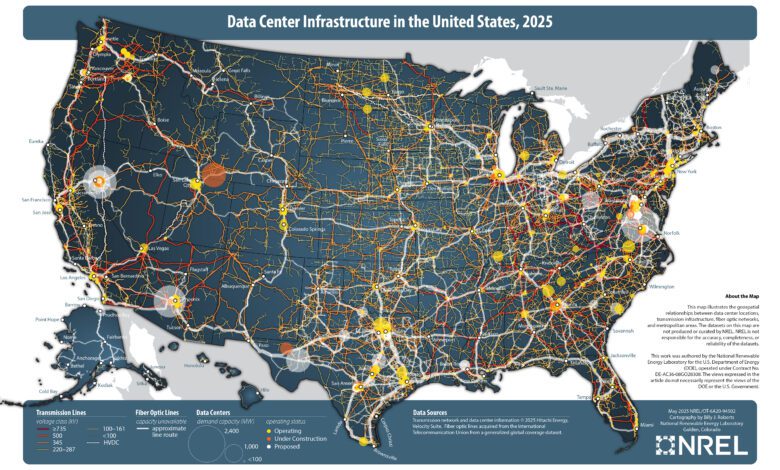
The Scale of Cloud Infrastructure: New Challenges
In recent years, the world’s leading cloud companies have been forced to invest in infrastructure at an unprecedented scale. While they have tried to optimize costs through more powerful servers and software solutions, demand for new data centers keeps growing. The reasons go beyond technical requirements—economic, political, and social factors also play a significant role.
Even as server computing power increases, it doesn’t drastically reduce the number of facilities needed. Major market players like Amazon Web Services, Google Cloud, and Microsoft Azure keep expanding their regional networks to ensure reliability, resilience, and compliance with customer requirements worldwide.
Redundancy and Resilience: Why One Data Center Isn’t Enough
In theory, a single large data center per region could meet all the needs. In practice, though, this isn’t possible due to risks from disasters, accidents, and technical failures. To guarantee uninterrupted service, at least two—and more often three—independent facilities are required in each region. This architecture minimizes the impact of incidents and ensures data safety.
As user load and demand grow, the need arises for additional data centers to avoid a scenario where a single facility becomes a critical point of failure, potentially causing widespread outages. As a result, some regions now have more than a dozen data centers, and this trend continues.
Geography and speed: how latency shapes infrastructure
Limitations related to data transfer speed and physical distances are also key factors. Minimal latency is critical for many industries. This forces cloud providers to locate their facilities closer to end users, opening new regions and points of presence.
Even the most advanced technologies cannot overcome the laws of physics, and intercontinental delays remain significant. Delivering high-quality service requires an extensive network of data centers spanning all major markets and cities.
Economics and politics: additional drivers for growth
Economic and political factors are just as important. Different countries and regions have their own rules and restrictions regarding data placement, forcing companies to build local facilities. In addition, characteristics of the telecommunications market, monopolization, and high data transfer rates push providers to seek alternative solutions, including building their own networks and caching points.
In some cases, cloud companies collaborate with local operators by placing their equipment directly within the operators’ infrastructure. This approach helps reduce costs and improve service quality for end users.
Social and Legal Aspects: Localization Requirements
Many cloud service clients insist on storing and processing information within their own country or even region. This is driven both by legal requirements and corporate policies. As a result, providers have to open additional data centers to meet these expectations and retain their market share.
Some countries enforce strict personal data protection laws that prohibit transferring information outside national jurisdiction. This is another factor fueling the global growth in the number of facilities.
The Future: How Many Data Centers Will We Need Tomorrow?
Taking all these factors into account, experts predict that in the coming years, the number of data centers required to support global cloud services will increase dramatically. While today we’re talking about hundreds or thousands of sites, in the future this number could reach hundreds of thousands.
Each region will have several independent centers, and the largest regions will host dozens. This will drive further investment in infrastructure and intensify competition among leading market players.
Attempts by individual companies to cut costs through unique technical solutions are not enough to fundamentally change the situation. All major providers invest in developing their own hardware platforms and optimizing software, but underlying limitations remain.
Ultimately, the only way to ensure high quality and reliability of cloud services is large-scale deployment of data centers worldwide. This requires significant financial investment and long-term strategic planning.