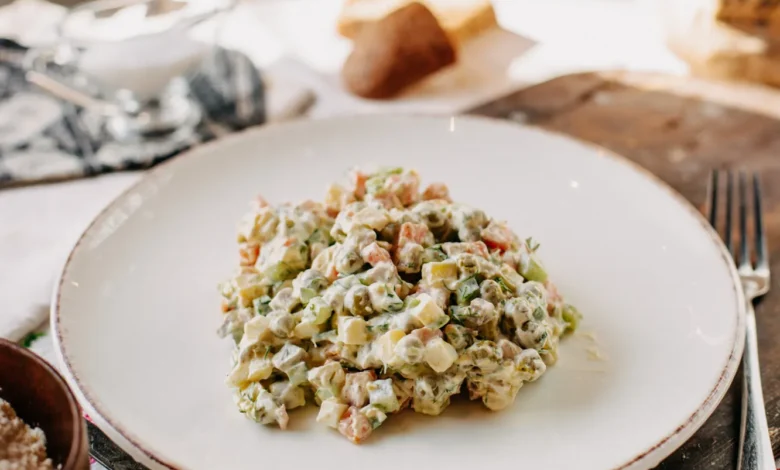
Olivier salad is a traditional dish that frequently appears on tables during holidays and family gatherings. However, few people realize that this popular salad can pose serious health risks if proper storage guidelines aren’t followed. Olivier contains ingredients that spoil quickly and create an ideal environment for dangerous bacteria to multiply. Even if the dish looks appetizing and doesn’t smell off, that doesn’t guarantee it’s safe to eat.
Mayonnaise, boiled vegetables, eggs, and meat make up the perfect combination for rapid bacterial growth. Bacteria multiply especially quickly at room temperature. Food safety experts emphasize that these ingredients require special attention to storage times. Ignoring these rules can lead to food poisoning, which may cause nausea, vomiting, diarrhea, and even more serious consequences.
Many believe that if the salad has only been left out for a couple of hours, it’s still safe to eat. However, experts warn that at temperatures above +4°C, harmful microorganisms can start to multiply actively within just 1–2 hours. That’s why it’s strongly discouraged to leave Olivier out for longer than this. Even if you refrigerate the salad, it can only be safely stored for 18–24 hours. After that, eating it becomes risky, even if it still looks fresh.
Food poisoning caused by improper storage of mayonnaise-based salads is quite common. This is especially true during hot weather, when indoor temperatures can easily exceed safe limits. Doctors recommend preparing Olivier salad right before serving and avoiding making it in large quantities. If there are leftovers, they should be placed in the refrigerator as soon as possible, tightly covered with a lid or plastic wrap.
For extra safety, experts advise using only fresh ingredients and thoroughly washing all components before preparation. Do not add leftover sausage or eggs from the previous day—this increases the risk of bacterial growth. It’s also important to remember that refreezing and thawing the dish is not allowed: it only speeds up spoilage and makes the salad dangerous to health.
If you’re not sure whether your Olivier salad is fresh, it’s better not to take any chances and avoid eating it. Even the slightest change in taste, smell, or texture should be a reason to throw the dish away. Food poisoning can be especially dangerous for children, the elderly, and those with weakened immune systems.
Incidentally, the Olivier salad was invented in the 19th century by the French chef Lucien Olivier, who worked in Moscow. Today, this dish has become an essential part of holiday celebrations in many countries, including Spain. RUSSPAIN.COM reminds you: taking care of your health starts with simple food storage and preparation rules. Don’t forget to check expiration dates and storage conditions to ensure your holiday dishes bring only joy.