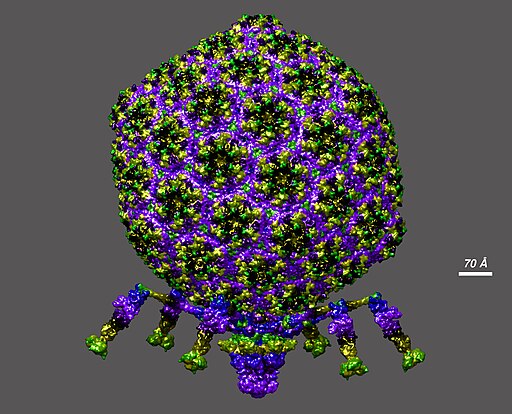
In the confined environment of the International Space Station (ISS), microbial life takes on an entirely different character than it does on Earth. Here, in microgravity, even familiar inhabitants like bacteriophages—viruses that infect bacteria—behave differently. A research team from the University of Wisconsin-Madison set out to discover exactly how microgravity affects the relationship between viruses and their bacterial hosts. To do this, they carried out a unique experiment: identical samples of bacteria and bacteriophages were sent to the ISS, while others remained on Earth for comparison. The results were not just unexpected—they opened new frontiers for medicine and biotechnology.
Viruses that on Earth destroy bacteria within minutes seem to slow down dramatically in space. Infections progress more slowly, and the evolution of viruses and bacteria takes on new, previously unseen traits. This isn’t just a scientific curiosity—such changes could be the key to developing breakthrough methods for fighting drug-resistant infections.
An experiment beyond Earth
To rule out random variables, scientists prepared identical samples: Escherichia coli (E. coli) bacteria and T7 bacteriophages were placed into special sealed cryovials. One batch was sent to orbit in 2020, while the other stayed in the lab. All samples were kept under identical storage conditions, including freezing and thawing, in accordance with NASA requirements.
On Earth, T7 bacteriophages eliminate E. coli in an hour. In zero gravity, however, the process slowed: the viruses attacked bacteria at a lower rate, and fewer cells were destroyed. Researchers attribute this to the specifics of microgravity—under weak fluid mixing and altered bacterial receptors, viruses have more difficulty finding and infecting their targets.
Genetic surprises
After 23 days in orbit, scientists found that bacteriophages do still successfully infect bacteria, but employ different tactics. Genetic analysis revealed mutations that emerged only in microgravity. The changes in genes responsible for the structure of viral particles and their ability to recognize bacterial cells were especially striking. This suggests that evolution in space follows its own, largely unknown rules.
The bacteria did not stand aside: under viral pressure, they began mutating more actively, particularly in genome regions responsible for the structure of the outer membrane. Such changes can make it harder for viruses to attach to cells, increasing the bacteria’s survival odds. It turns out that the ISS is hosting a true evolutionary arms race—just with different rules than back on Earth.
Potential for medicine
Using advanced deep mutational scanning methods, scientists have identified mutations that make bacteriophages particularly effective against antibiotic-resistant strains of E. coli in microgravity. This paves the way for developing new therapeutic viruses capable of combating infections that are currently considered nearly invincible.
In space, microbes adapt at a remarkable pace. This can affect not only their resistance to medications but also their ability to cause illness. For future long-duration space missions, such knowledge is crucial: crew health will depend directly on how quickly and effectively any potential outbreaks can be contained.
Trials and challenges
Conducting these kinds of experiments on the ISS involves a host of technical and logistical challenges. Strict safety protocols, limited space, and the need for meticulous oversight at every stage make the research expensive and labor-intensive. Nonetheless, the data already collected is reshaping our understanding of how space conditions can be used to discover new medical solutions.
It may be in zero gravity that scientists are able to find gene combinations allowing the creation of ‘killer’ viruses targeting dangerous bacteria. However, this will require many more experiments and time. Still, the very idea of using space as a laboratory for microbial evolution is becoming increasingly attractive.
RUSSPAIN reminds readers that the International Space Station (ISS, International Space Station) is a joint project of the United States, Russia, Europe, Japan, and Canada, operating in orbit since 1998. The station regularly hosts experiments in biology, medicine, physics, and materials science. The ISS is regarded as a unique platform for studying the effects of microgravity on living organisms and technological processes. Over the years, the station has become not only a symbol of international cooperation but also a vital laboratory for finding new solutions that could transform life on Earth.