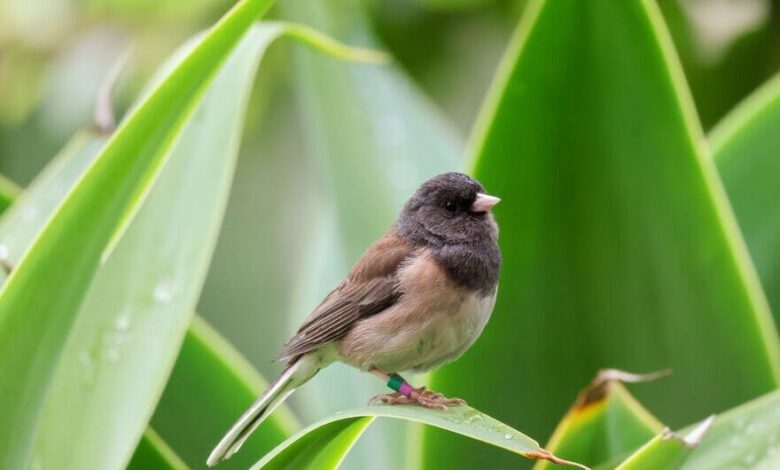
In Los Angeles, a city that rarely pauses, the COVID-19 pandemic unexpectedly became a catalyst for change—not only for people, but for the city’s birds as well. Ornithologists monitoring populations of the dark-eyed junco (Junco hyemalis) on the University of California campus recorded a surprising phenomenon: birds hatched during the height of the lockdown developed noticeably longer and thinner beaks than those of previous cohorts. This change turned out to be temporary—once restrictions were lifted, beak morphology returned to previous city standards.
A study conducted from 2018 to 2024 tracked just how quickly and flexibly urban wildlife responds to changes in the environment driven by human activity. The focus was not only on the birds themselves, but also on their ability to adapt when familiar food sources suddenly disappear.
The pandemic and the urban environment
In 2020, as Los Angeles emptied out under strict quarantine measures, city juncos faced a shortage of their usual edible scraps. Restaurants and cafés were closed, cutting off a major food source for many urban birds. Under these conditions, birds with beaks resembling those of their wild relatives—long and slender, ideal for foraging for seeds and natural foods—had the advantage.
Ornithologists note that such morphological changes are extremely rare and typically require decades of evolution. However, in this case, the changes became noticeable in the very next generation. Chicks hatched in 2021 and 2022 differed from their urban peers born before the pandemic: their beaks were better adapted to finding natural food sources rather than scavenging human leftovers.
The impact of lockdown on behavior and morphology
Alongside the changes in Los Angeles, similar processes were observed in other cities around the world. For example, in San Francisco, white-crowned sparrows (Zonotrichia leucophrys) began singing more quietly because city noise had disappeared, while in London, peregrine falcons (Falco peregrinus) changed their diet, hunting other birds after their usual prey—pigeons—became scarce.
In Los Angeles, juncos that were used to an abundance of food waste suddenly found themselves in new conditions. Researchers Eleanor S. Diamant and Pamela J. Yeh recorded that during the lockdown, the individuals that survived were mainly those whose beaks allowed them to forage from natural sources. This quickly influenced the morphology of the next generation.
Return to previous conditions
When restrictions were lifted, the city returned to its usual rhythm—and with it, an abundance of edible waste. Among juncos hatched in 2023 and 2024, beaks once again became shorter and thicker, similar to those of their ancestors before the pandemic. This confirms that the morphological changes were directly linked to food availability, and not to the arrival of new individuals from the wild.
The alternative hypothesis, which suggested a mass migration of wild juncos into the city, was not supported. The birds observed on the university grounds displayed typical urban population behavior—they were unafraid of people and actively used city infrastructure to search for food.
Urban wildlife adaptability
This case vividly illustrates how quickly urban animals can adapt to changing conditions. In just a few years, the junco population demonstrated reversible morphological changes driven solely by human activity. As soon as their usual lifestyle returned, these unusual traits disappeared.
Such observations raise important questions about how closely the destinies of urban animals and humans are intertwined. Even brief changes in a metropolis’s rhythm can trigger unexpected evolutionary shifts among the inhabitants of city parks and squares.
If you didn’t know, the University of California, Los Angeles (UCLA) is one of the largest research centers in the United States, conducting extensive studies of urban wildlife. Ornithologist Eleanor Diamant and her colleague Pamela Ye are well known for their projects monitoring how birds adapt to life in major cities. Their research is regularly discussed in the scientific community and helps us better understand how quickly nature responds to changes caused by human activity.