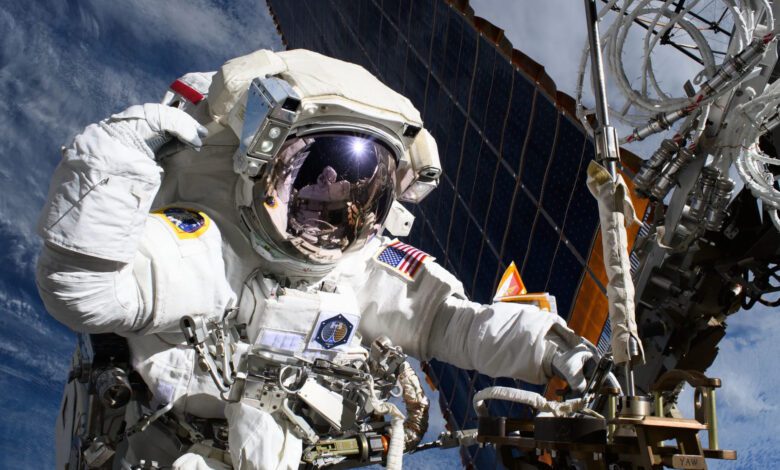
A sudden change in the schedule aboard the International Space Station (ISS) has drawn global attention: NASA announced the postponement of a spacewalk originally set for January 8. The reason was a medical issue affecting one of the crew members, whose identity was not disclosed. Despite the unexpected difficulties, agency officials have assured that the situation is stable, there is no threat to life or health, and all necessary measures have already been taken.
Initially, Mike Fincke and Zena Cardman were scheduled to spend about six and a half hours outside the station, starting at 8 a.m. Eastern Time. For Cardman, this would have been her debut spacewalk, while for Fincke, it was to be his tenth—a milestone that would place him among the elite group of NASA astronauts with the most spacewalks. However, those plans had to be postponed just one day before the scheduled start.
Unexpected turn of events
NASA released its official statement on the evening of January 7. The agency emphasized that details regarding the astronaut’s condition would remain confidential for medical privacy reasons. Nevertheless, they assured the public that the situation is under control and the crew’s health is the top priority. A new date for the spacewalk will be announced soon.
It’s worth noting that such postponements are not uncommon in the history of space exploration. Even the most meticulously planned missions can be adjusted due to unforeseen circumstances. This time, the issue is not technical malfunctions but the human factor, which only highlights the vulnerability and complexity of working in orbit.
Mission objectives
The postponed spacewalk was part of preparations to install a new iROSA (International Space Station Roll-Out Solar Array) panel. This system is designed to significantly enhance the station’s energy capabilities and ensure its safe operation until its controlled deorbit. Fincke was set to work in a spacesuit with red stripes, while Cardman was to wear a standard unmarked white suit.
Meanwhile, NASA is preparing another extravehicular activity scheduled for January 15. This time, different astronauts will venture into open space to replace a high-resolution camera and install new navigation equipment for docking incoming spacecraft. Both spacewalks will be the first of 2026 and will go down in history as the 278th and 279th for the ISS.
People and records
For Mike Fincke, this spacewalk could have been his milestone tenth. So far, only five Americans have reached that mark: Bob Behnken, Stephen Bowen, Chris Cassidy, Michael Lopez-Alegria, and Peggy Whitson. The world record belongs to Russian cosmonaut Anatoly Solovyov with 16 spacewalks.
Every spacewalk is not only a technical challenge, but also a test of human psychology and physical endurance. Even minor discomfort can lead to the cancellation or postponement of the operation. This time, NASA chose not to take risks, which certainly deserves respect.
The future of the mission
While a new date for the spacewalk has not been set, the crew continues their work in other areas. There is always something to do aboard the station: scientific experiments, technical maintenance, and preparations for future missions. Meanwhile, both experts and the public remain focused on the astronaut’s health, which forced the schedule to be adjusted.
There have already been instances on the ISS when medical issues required adjustments to the plans. Yet each time, the team displayed high levels of professionalism and cohesion. There’s hope that this time, too, everything will end well and the astronauts can soon return to working outside the station.
RUSSPAIN reminds readers that NASA (National Aeronautics and Space Administration) is the United States’ national agency for aeronautics and space exploration, founded in 1958. The agency is responsible for the country’s civil space program as well as research in aviation and space. The International Space Station is the largest joint project of NASA, Roscosmos, ESA, JAXA, and CSA, operating in orbit since 1998.