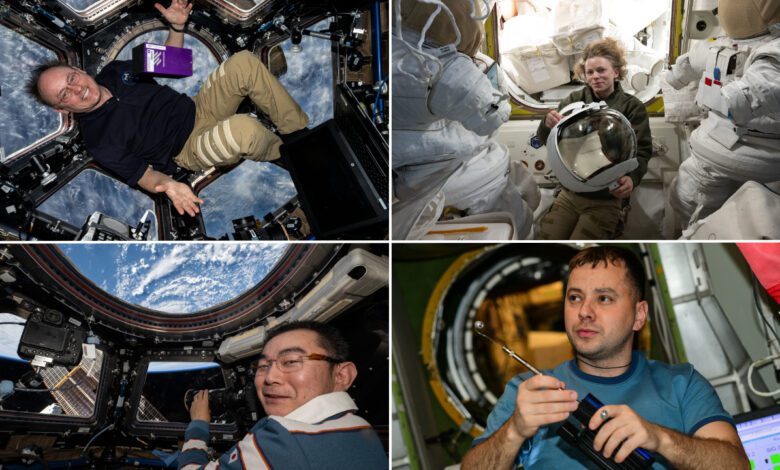
A new chapter is unfolding in the history of the International Space Station (ISS): for the first time in a quarter-century of the orbital complex’s operations, NASA has decided to bring a crew home early due to medical circumstances. The four astronauts of the Crew-11 mission, who arrived at the station aboard SpaceX’s Crew Dragon Endeavour in August 2025, will be ending their expedition ahead of schedule. The reason—a sudden deterioration in the health of one of the crew members. Although the astronaut’s life is not in danger, NASA specialists have determined it is necessary to expedite the team’s return to Earth.
This decision is more than just a formality or a precaution. The ISS does not have advanced medical facilities for diagnosing and treating complex cases, and in microgravity even minor issues can quickly escalate. Agency officials emphasize that this is not an emergency situation, but any delay could present a risk to the astronaut’s health.
A Sudden Turn of Events
The alarm was raised on January 7, when NASA announced it was postponing a scheduled spacewalk. The reason was a medical issue involving one of the astronauts slated for the operation. The astronaut’s name and condition remain undisclosed—citing confidentiality, the agency has withheld details. It is known, however, that the incident is not related to spacewalk preparations or day-to-day operations aboard the station.
NASA’s chief medical officer James Polk clarified that this is not an injury, but a medical condition that manifested in microgravity. Doctors on Earth can provide only limited advice to the crew, and proper diagnosis and treatment require resources that simply aren’t available on the ISS.
Who is coming back
The Crew-11 team includes Americans Zena Cardman and Michael Fincke, Japanese astronaut Kimiya Yui, and Russia’s Oleg Platonov. Their mission was planned for six months and only weeks remained until its completion. However, the team is now preparing for an early return, marking the first medical evacuation in the station’s history.
NASA administrator Jared Isaacman noted that the agency and its partners routinely practice emergency return scenarios, but have never had to use them in real situations until now. Statistically, such cases are expected to occur about once every three years, but so far they’ve been avoided.
What’s next
After Crew-11 departs, only three crew members will remain on the ISS: American Christopher Williams and Russian cosmonauts Sergey Kud-Sverchkov and Sergey Mikaev. Williams will temporarily become the sole NASA representative aboard, but according to the agency, he has undergone all necessary training and will be able to handle operations until the next crew arrives.
The Crew-12 mission, which is set to replace the current crew, is scheduled to launch in mid-February. NASA is considering speeding up the launch, but the chances of the new crew arriving before Crew-11 returns are extremely slim. In the coming weeks, the station will operate with a reduced team, which should not affect its functionality.
Medical risks in orbit
The Crew-11 situation serves as a reminder of how vulnerable humans are in space. Even with modern technology and constant support from Earth, crew health remains one of the most difficult challenges for space programs. Microgravity, limited resources, and the impossibility of quick evacuation make even a common illness potentially dangerous.
NASA and its partners continue to improve medical support systems, but for now, returning to Earth remains the only reliable way to address serious problems. This incident will undoubtedly prompt a review of protocols and may speed up the development of new medical technologies for space missions.
RUSSPAIN reminds readers that NASA (National Aeronautics and Space Administration) is the United States’ national agency for aeronautics and space research, founded in 1958. The agency is responsible for the country’s civil space program as well as aviation and space research. The ISS is the largest international project in the history of space exploration, involving the United States, Russia, Japan, Canada, and European countries. Operating in orbit since 2000, the station serves as a unique laboratory for scientific experiments and international cooperation.