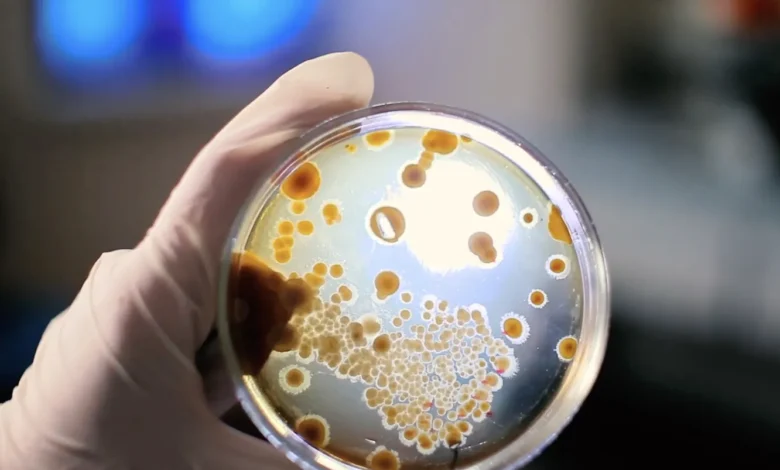
In Scotland, a team of researchers in collaboration with designer Katie Tubbing has introduced an unusual innovation—a fabric capable of detecting radiation without the use of electronic devices. The core of the material is a unique technology: living microorganisms are embedded within the fabric’s structure, and they react to radiation by changing color. This approach opens up new possibilities for protecting people working in environments with elevated radiation risks, as well as for space missions.
The creation of this innovative fabric became possible thanks to a combination of 3D printing and multilayer pigment application. Each layer contains bacteria that lose their color when exposed to radiation. As the dose of radiation increases, the layers gradually fade, allowing the level of danger to be determined visually. The entire system operates autonomously, requiring no batteries or complex sensors.
Testing in space
The first fabric samples are expected to be sent into orbit in the near future. To do this, scientists will use a miniature satellite, which will allow them to observe the fabric’s color changes under prolonged exposure to cosmic radiation. This experiment will help determine how effectively the fabric performs in real-life conditions, where radiation levels are much higher than on Earth.
If the tests are successful, the development is planned to be sent to the Moon in 2028. There, the material will undergo even more rigorous trials, allowing researchers to assess its suitability for future lunar missions and long-term expeditions.
Benefits on Earth
However, the applications of the new fabric are not limited to space. On Earth, it could become indispensable for medical professionals working with X-ray equipment, as well as for nuclear power plant workers and emergency responders dealing with accidents. Clothing made from this material would make it possible to quickly and clearly determine whether a person has been exposed to dangerous levels of radiation, enabling timely protective measures.
In addition, scientists are exploring the use of the fabric to monitor solar radiation. This is particularly relevant for individuals at risk of developing skin cancer due to prolonged sun exposure. The material could become part of everyday clothing, alerting the wearer if ultraviolet levels exceed safe limits.
A fusion of science and design
The project brought together experts from various fields—biology, engineering, and fashion. This interdisciplinary approach enabled the creation of a product that is not only functional, but also aesthetically appealing. Designers paid special attention to the appearance of the fabric, ensuring it could be used both in professional settings and daily life.
The use of organic materials for radiation monitoring opens new horizons in science and industry. Researchers are confident that their development will lay the groundwork for a range of new products aimed at improving safety across a wide array of fields.
In case you didn’t know, Katy Tubbing is a well-known British designer specializing in innovative materials and technologies for the fashion industry. Her projects often bring together science and art, and her collaborations with scientists from Scotland have repeatedly led to unique solutions. The company involved in the development actively supports research in the field of biotechnology and new materials, striving to make them accessible to a broad audience.