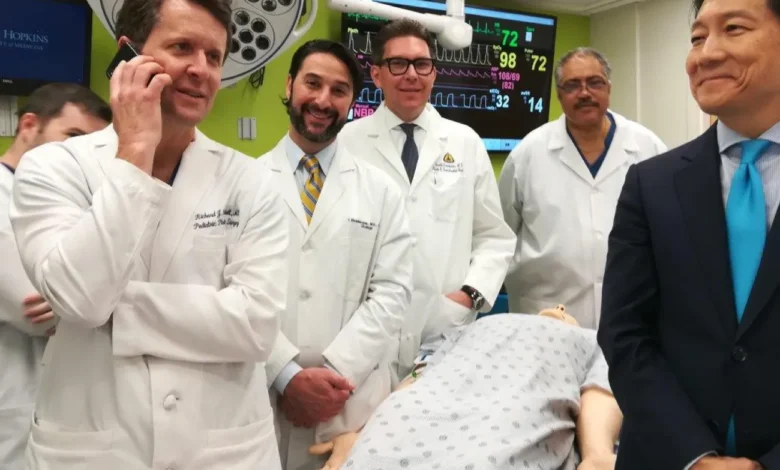
Radical changes in the lives of people with severe injuries become possible thanks to bold medical decisions. The penis and scrotum transplant operation performed by American surgeons was not only a breakthrough in transplantology but also gave the patient a chance to regain lost dignity and confidence. For the first time in medical history, doctors managed to restore not only the patient’s physical functions, but also their psychological well-being after suffering a catastrophic loss.
In 2010, an American soldier, whose name is not disclosed, was severely wounded in Afghanistan. A mine explosion cost him both legs and almost all of his genitals. For many veterans, such injuries present not only a physical challenge but also a deep emotional trauma. Conventional methods of reconstruction, such as phalloplasty, do not always restore full function and require erection prostheses. This solution did not satisfy the patient, who was searching for a way to feel like a complete man again.
The road to surgery
For several years, the patient was offered standard reconstruction options, but none provided hope for returning to his former life. In 2013, a team of surgeons from Johns Hopkins University proposed a unique approach—a transplant of the penis and scrotum from a donor. This solution was a true medical challenge: until then, there had been no successful operations of this scale anywhere in the world.
The man’s psychological state deteriorated. He struggled to cope with the pain, abused painkillers, and even contemplated suicide. The absence of genitalia turned out to be a more difficult ordeal for him than losing his legs. Doctors note that similar feelings are common among many soldiers with such injuries: the issue of regaining male dignity becomes a key matter for them.
A surgical breakthrough
A donor was found only five years after the patient agreed to the operation. On March 25, 2018, a team of 11 surgeons began the highly complex procedure, which lasted 14 hours. The doctors transplanted not only a penis but also a scrotum without testicles, as well as part of the abdominal wall. Such an extensive transplant had not been attempted in any previous similar operation.
The complexity lay not only in the technical aspects but also in the need to find a donor with tissues and skin tone as closely matched as possible. In addition, the transplant had to be performed within two hours of harvesting; otherwise, the tissues would die. The doctors used an innovative approach: the patient was injected with donor stem cells, which allowed for a reduced dose of immunosuppressants and minimized the risk of rejection.
Results and consequences
A year and a half later, doctors confidently stated that the operation was a success. The patient was able to regain not only urinary function, but also erection and the ability to experience orgasm. He needs special medications to maintain his erection, but his quality of life has improved significantly. The man admitted that he once again feels complete and self-assured.
The psychological impact proved to be just as important as the physical one. The patient was able to return to normal life, leaving behind feelings of shame and isolation. He noted that from the very first days after the operation, he didn’t feel the transplant as a foreign organ—on the contrary, he quickly accepted it as part of himself.
The future of transplantology
The doctors who participated in the operation are convinced: such procedures could be a lifeline for many people who have lost their genitals due to injuries or illnesses. However, finding a suitable donor is extremely difficult. Alongside matching tissue and skin color, the donor’s family must give consent for the transplantation of such an intimate organ. Interestingly, families are more likely to agree to this procedure if the recipient is a veteran.
Technology continues to advance, and the success of this operation opens new horizons for transplantology. Doctors plan to further improve methods to reduce risks and make such procedures more accessible. However, for now, these operations remain rare and each case requires an individualized approach.
This patient’s story has become a symbol of hope for many people facing severe injuries. It demonstrates that medicine is capable not only of saving lives, but also of restoring lost dignity and self-belief.
The Johns Hopkins University School of Medicine, where this unique surgery was performed, is renowned for its innovative approaches in transplantology. It was here that the world’s first penis and scrotum transplant using donor stem cells to reduce rejection risk took place. The surgical team behind this case specializes in highly complex reconstructive operations that are reshaping perceptions of what modern medicine can achieve. Their expertise and courage open new possibilities for patients who once thought their injuries were irreversible.