The question of what happens to a person after death has always sparked debate and anxiety. Today, Spanish researchers suggest a different perspective: viewing the problem not through the lens of religion or mysticism, but from the standpoint of reason and science. Their approach promises not only comfort but also practical value for those seeking meaning in a world where everything seems finite.
Five pathways
The book’s authors—a philosopher and a psychologist—argue that there are five real ways for people to overcome the fear of ceasing to exist. They do not offer empty promises, nor do they call for blind faith or adherence to traditional religious dogmas. Instead, they build their arguments on scientific evidence, philosophical reflection, and personal experience.
At the heart of their concept lies the idea that the human self is not limited to biology alone. In their view, consciousness is not merely the product of brain activity, but something more—capable of existing independently from the physical body. This perspective allows for a new understanding of the soul, treating it not as a purely religious concept but as a unique form of individual knowledge that can survive even after death.
Consciousness beyond the body
The book provides an in-depth analysis of issues related to the nature of consciousness and its potential existence beyond biological processes. The authors explore the phenomenon of reincarnation, discuss personality transformation, and critique modern forms of spirituality, which in their view fail to offer a genuine sense of overcoming finitude.
Special attention is given to the practice of meditation and prayer, but not in the traditional religious sense. Prayer here is seen as a dialogue between individual and universal consciousness, capable of giving a person hope and inner support. Meditation, in turn, is regarded as a tool to go beyond everyday thinking, allowing one to feel connected to something greater than just their own body and thoughts.
A New Spirituality
The authors note that in recent years, public interest in spirituality has grown noticeably. However, they believe that most modern practices fail to provide a genuine sense of immortality. Instead, they suggest a rational and practical approach to spiritual seeking that does not require abandoning a scientific worldview.
The book emphasizes that true spirituality must be free from dogma and superstition. Only in this way can we find answers to the most complex questions about life and death without losing touch with reality. According to the authors, such an approach can transform not only an individual’s life but society as a whole.
Technology and Eternity
Interestingly, the authors do not deny the role of modern technology in the search for immortality. They take an optimistic view of the development of artificial intelligence and other innovations, but caution that no technology can replace inner work on oneself. Technological progress can only serve as a complement to spiritual practices, not a substitute.
As an example, the myth of Sisyphus is cited, illustrating humanity’s endless struggle for meaning. The authors are convinced: only striving for something greater than fleeting pleasure can bring true fulfillment and a sense of eternity.
Science versus pseudopsychology
The book draws a clear line between evidence-based support and popular pseudopsychological practices. The authors emphasize that genuine help should be grounded in facts, not attractive but hollow promises. This is the only way to help someone cope with the fear of death and find their own path to inner harmony.
Their approach is the result of years of work, in-depth research, and personal observation. This perspective makes it possible not only to revisit old questions but also to offer real solutions for those unwilling to accept the idea of their own mortality.
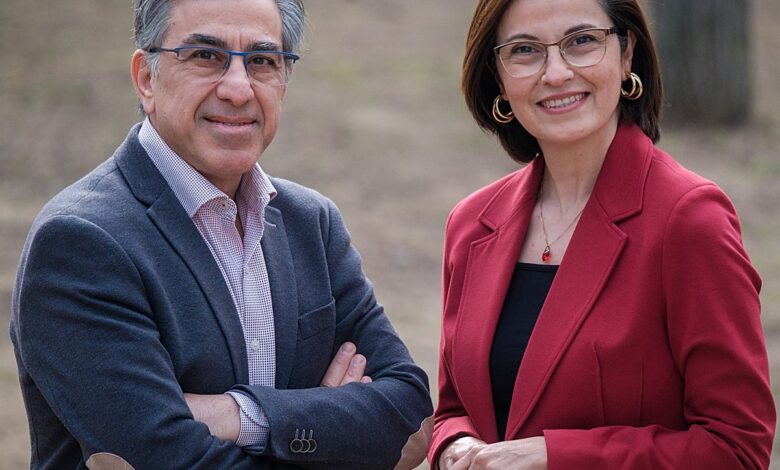
Philosopher Arash Arjomandi is one of the most prominent representatives of contemporary humanities in Spain. His work focuses on questions of consciousness, identity, and the meaning of life. Together with psychologist Rosa Rabbani, known for her research in social psychology and gender studies, they have created a unique project that combines scientific rigor with profound personal experience. Their joint book has made a notable impact on Spain’s intellectual scene, sparking lively debate about the boundaries of human potential and the nature of immortality.