High in the mountains of Galicia, far from the well-trodden tourist paths, lies one of the most enigmatic places in the northwest of the Iberian Peninsula. This is a land where archaeological discoveries are closely intertwined with ancient myths, and a tangible energy still draws travelers seeking something special and authentic. Those who have visited speak unanimously of a unique, almost palpable atmosphere created by the ceaseless wind and deep symbolism rooted in a past that stretches back more than three thousand years. This corner, steeped in old rituals and local superstitions, has become a must-visit destination for anyone eager to discover a completely different, off-the-beaten-path side of Galicia.
Gateways to the Otherworld
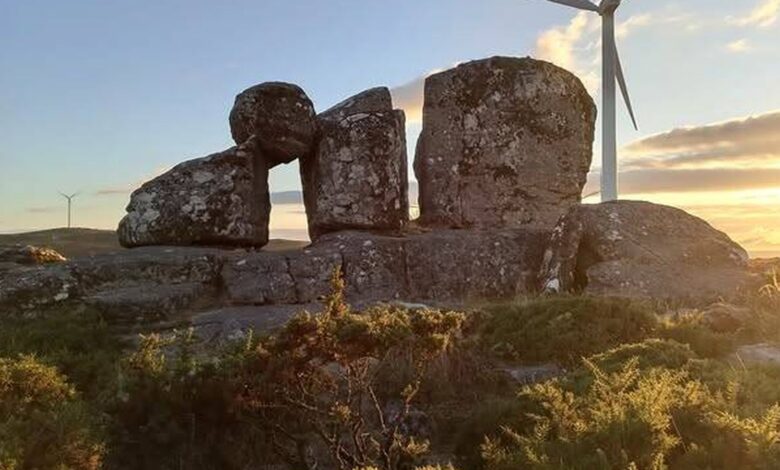
We’re talking about Portalén, also known locally as A Porta do Alén, which can be translated as “Gateway to the Otherworld.” This striking megalithic structure is located in the Serra do Cando mountain range, within the municipality of A Lama in the province of Pontevedra. It consists of a cluster of massive granite rocks, cracked by time, which have naturally or artificially come together to form something resembling giant gates, oriented strictly to the west. According to centuries-old legends, this placement is no coincidence and symbolized the passage from the world of the living to the world of the dead. Between the end of the Bronze Age and the beginning of the Iron Age, the site served as a sacred location for farewell burial ceremonies. Ancient Celtic tribes, adhering to their complex beliefs, carried out ritual processions here from east to west, symbolically guiding the souls of their chiefs and noble warriors into the afterlife.
The mystery of its origins and its silent watch
The unique granite structure of Portalén, with its massive stone lintel that appears deliberately placed, continues to stir heated debate among researchers and megalithic culture enthusiasts. On the one hand, erosion, ancient earthquakes, and the quirks of the terrain have certainly shaped these rocks over millennia. However, the almost perfect positioning of the top stone leads many to believe in deliberate human intervention. Standing nearby is the Marco do Vento, a solitary menhir whose height is variously reported as between three and six meters. Its purpose remains shrouded in mystery. Some historians link it to ancient Roman boundary markers, while others see it as a sacred object, marking a place of power in the Celtic universe. In any case, its silent presence only adds to the mystical aura of the entire archaeological complex.
Living Traditions of the Ancient Sanctuary
Oral traditions, passed down through generations, claim that Portalén still maintains its invisible connection to the spiritual world. Remarkably, many modern visitors continue to perform the ancient ritual: they cross the stone opening from north to south, silently ask an important question, and listen for an answer said to be carried by the wind. It is important to remember to retrace your steps afterward, returning the same way so as not to disturb the symbolic boundary between worlds. The harsh, wild landscape—often shrouded in thick mist—adds a dramatic atmosphere to this site, where simple offerings of wildflowers, melted candles, or pieces of bread can still be seen: touching evidence of popular reverence that has endured for centuries. Whether myth, archaeological monument, or a mysterious blend of both, Portalén rightfully ranks among the most extraordinary and memorable prehistoric landmarks to be found on Spanish soil.